





















Odoo Magento 2 Connector
The Odoo Magento 2 Connector module seamlessly integrates your Magento 2 store with Odoo to import products, categories, customers, sales orders, taxes, and payments, while exporting products, invoices, inventory, and orders. Featuring a powerful interactive dashboard, queue management, log history, and real-time Magento 2 webhooks.
Key Features
Import Operations (Magento 2 → Odoo)

Import Product
-
 Attributes
-
Images
-
Description
-
Categories
-
Price
-
Tax

Import Customer
-
Email
-
Phone
-
Billing
and shipping addresses

Import Sales Order
-
Customer
-
Payment
Methods
-
Shipping
Method
-
Order
Lines
Export Operations (Odoo → Magento 2)

Export Product
-
Attributes
-
Images
-
Description
-
Categories
-
Price
-
Tax

Export Inventory
-
On-hand
product stock quantities
-
Sales
price

Order Shipment Export
-
Export
order fulfillment details, shipping carrier codes, and tracking numbers from
Odoo to Magento 2 in real time upon delivery.

Order Invoice Export
-
Export
customer invoices from Odoo to Magento 2 automatically as soon as an invoice is
posted or payment is registered in Odoo.
Automation, Dashboards & Core Infrastructure

Integration Hub Dashboard
-
A
centralized view to track the status of all connectors, recent activities, and
synchronization stats.

Magento Dashboard
-
Monitor
overall connector metrics, queue outcomes, mapped record counters, and active
integration statuses.

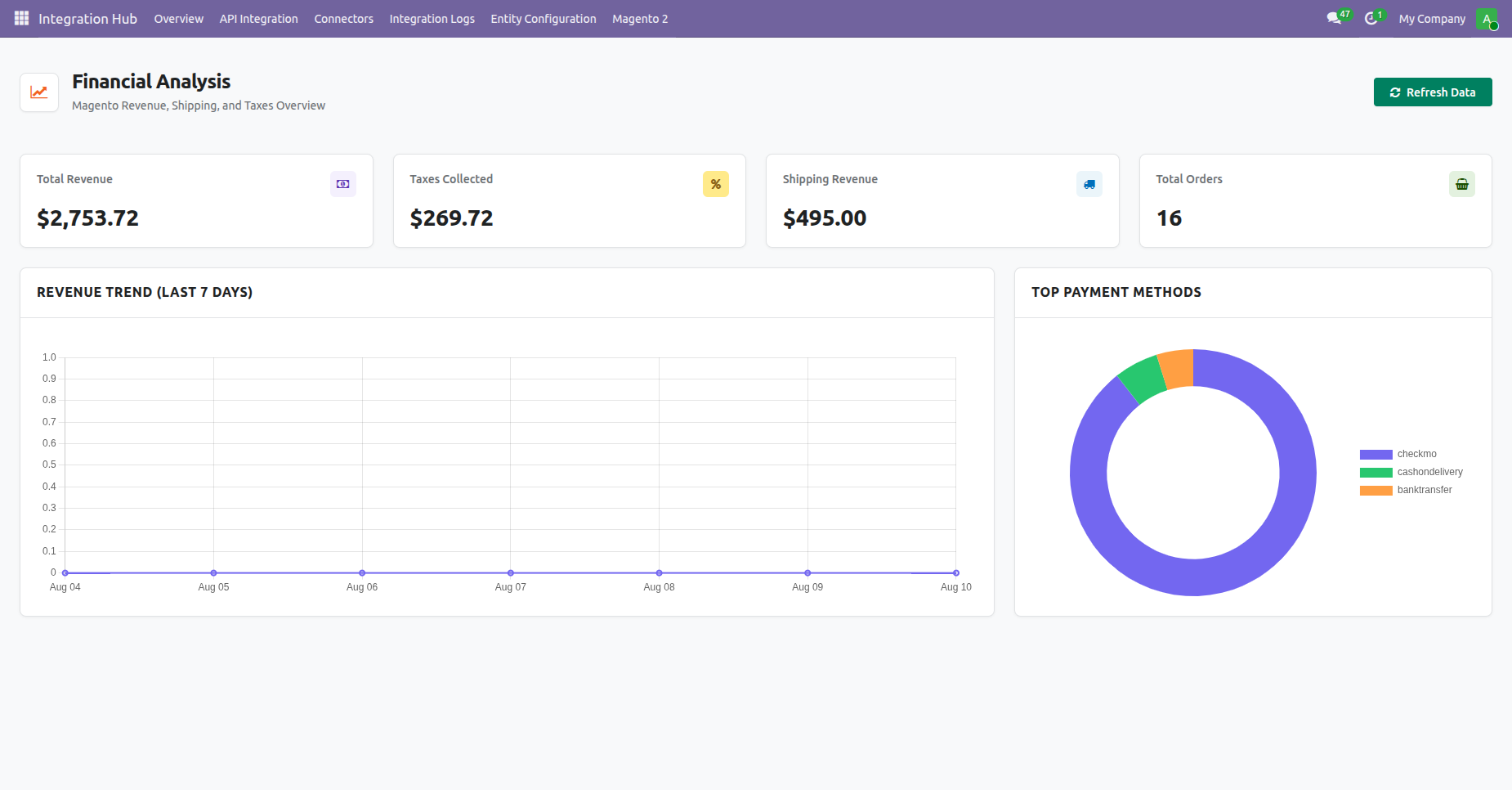
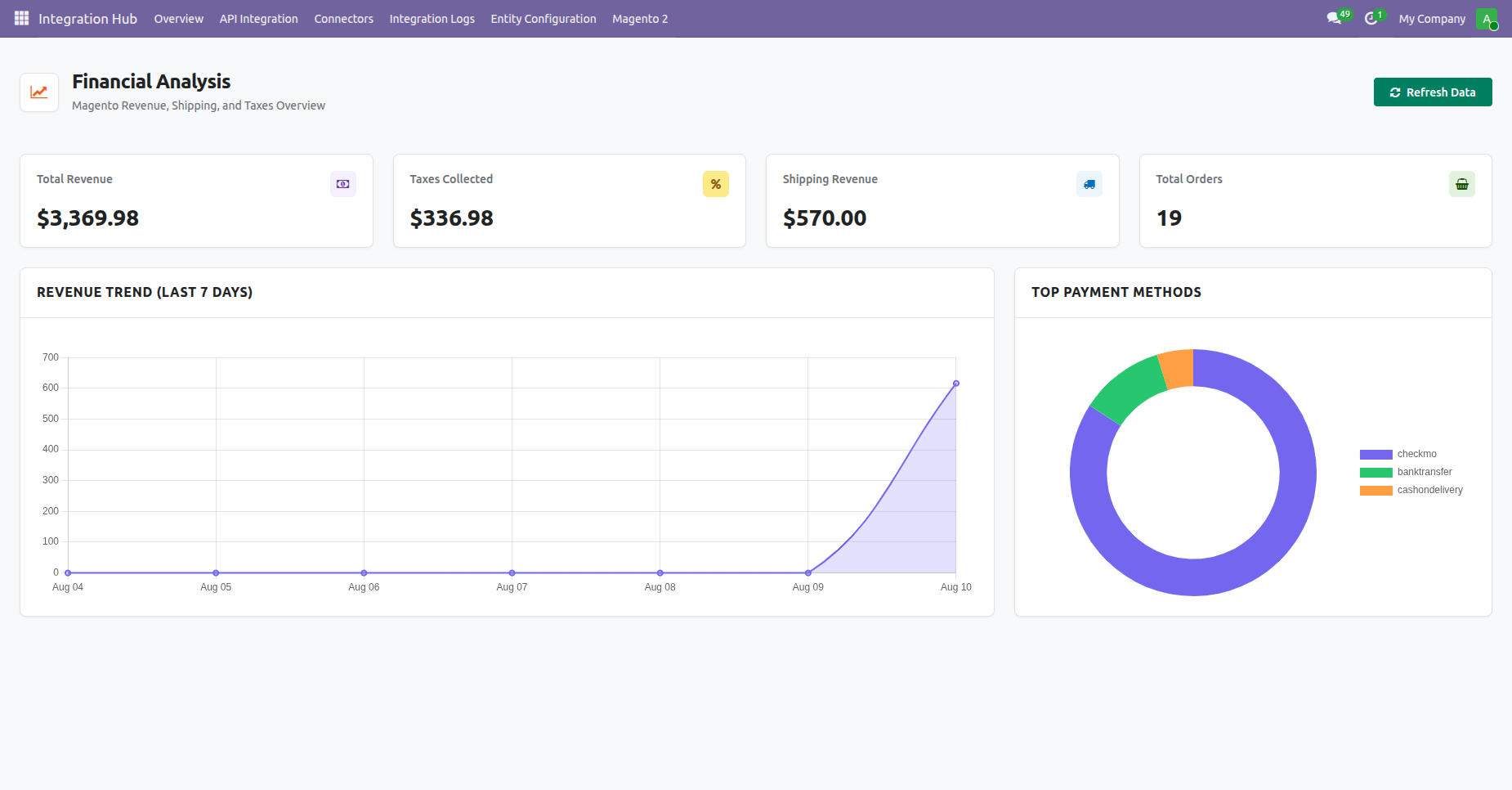
Financial Analysis Dashboard
-
Track
total sales revenue, tax amounts, shipping costs, top payment methods, and daily
sales charts for Magento orders.

Incoming Magento Webhooks
-
Receive
authenticated Magento order, product, customer, and category events and place
them in processing queues.

Queue-Based Processing
-
Track,
monitor, and manage asynchronous data synchronization and execution state
logs.

Synchronization Logs
-
Track
successful and failed synchronization activities with detailed log history for
easy monitoring and troubleshooting.
 Setup & Configuration
 Release Notes
 Support
 FAQ's
FAQ's
Frequently Asked Questions
Everything you need to know before getting started.
-
 Configuration
-
 Integration Hub Dashboard
-
Sync Overview Dashboard
-
 Financial Analysis Dashboard
-
 Product Synchronization
-
Category Synchronization
-
Customer Synchronization
-
Sale Orders Synchronization
-
Carrier Mappings
-
Payment Mappings
-
Tax Mappings
-
Odoo to Magento Sync
-
Log History
-
Product Webhooks
-
Category Webhooks
-
Customer Webhooks
-
Sale Order Webhooks
 How it works?
Watch Video
How it works?
Watch Video
Go to the Magento 2 config.
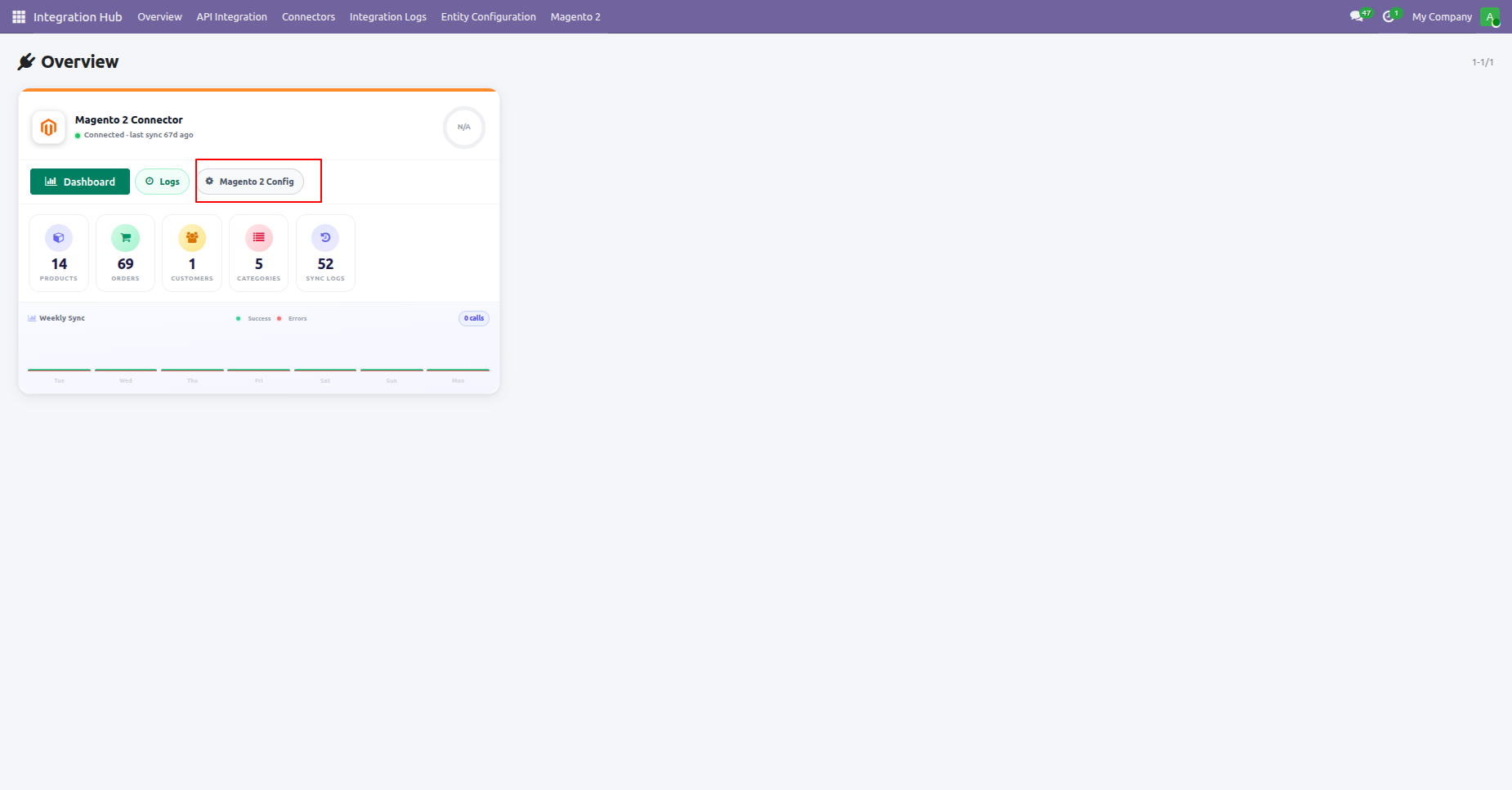
Click to open the configuration for Magento2.
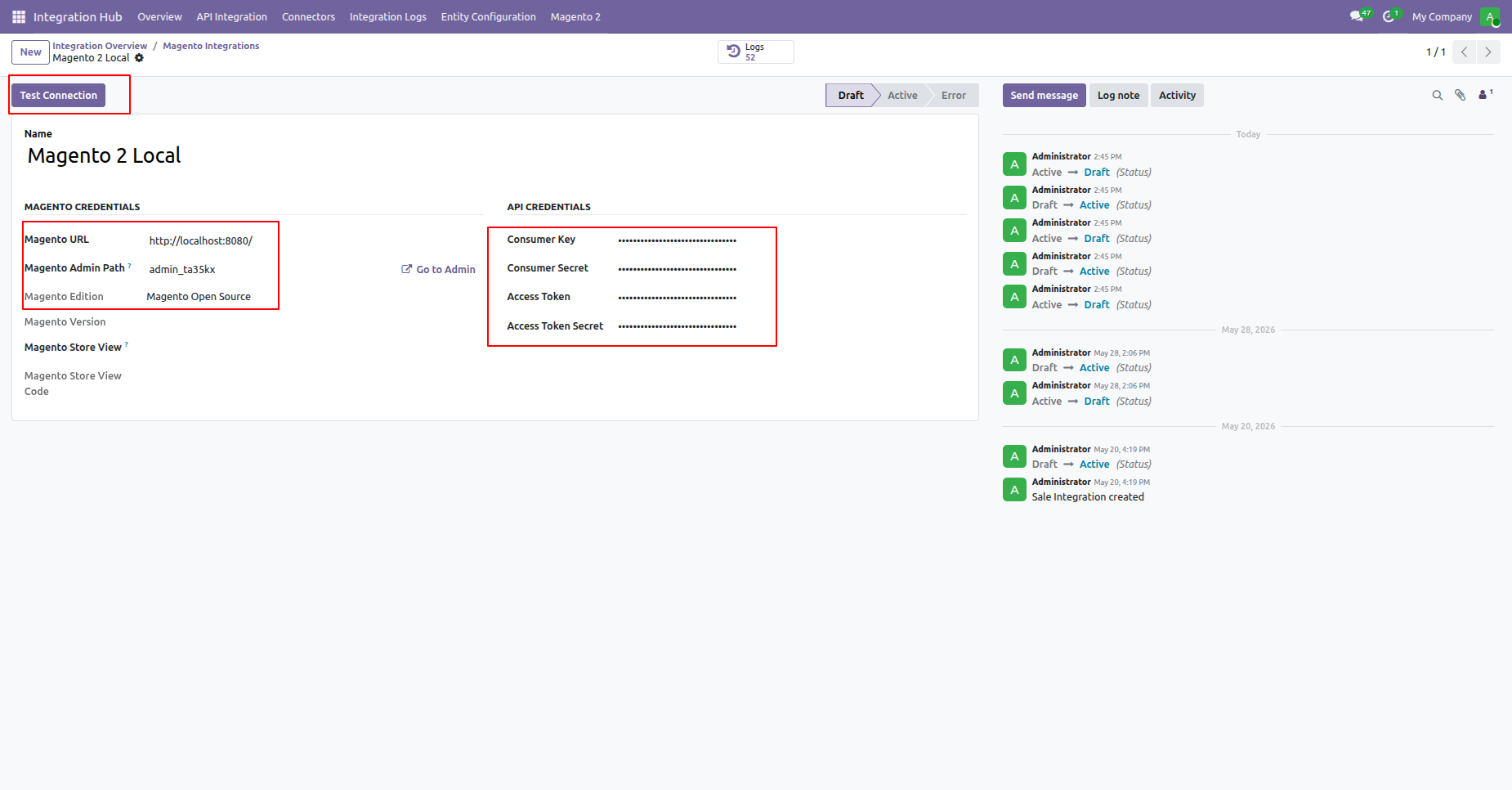
Enter credentials and click 'Test Connection'.
Import configuration and order defaults.
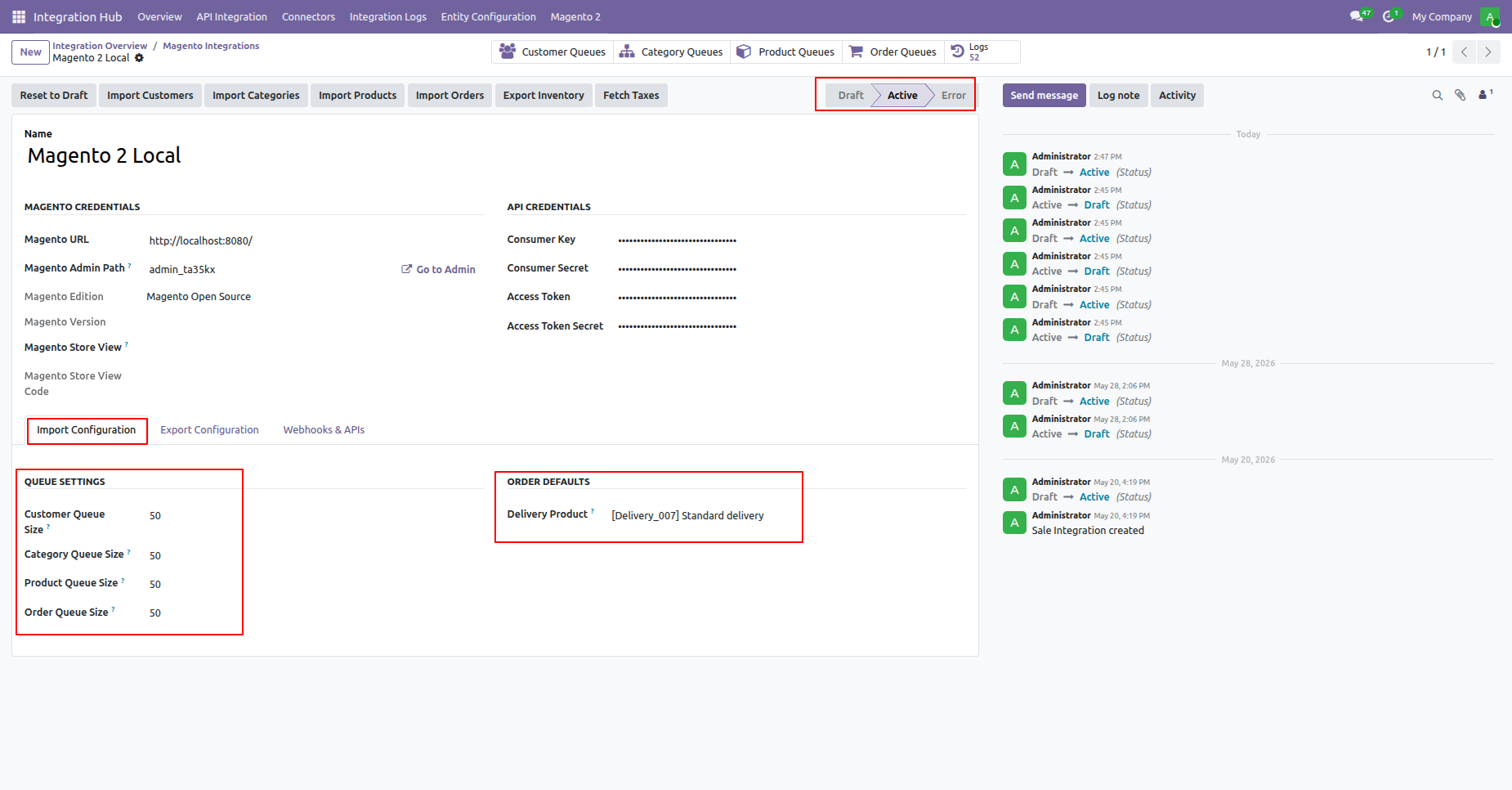
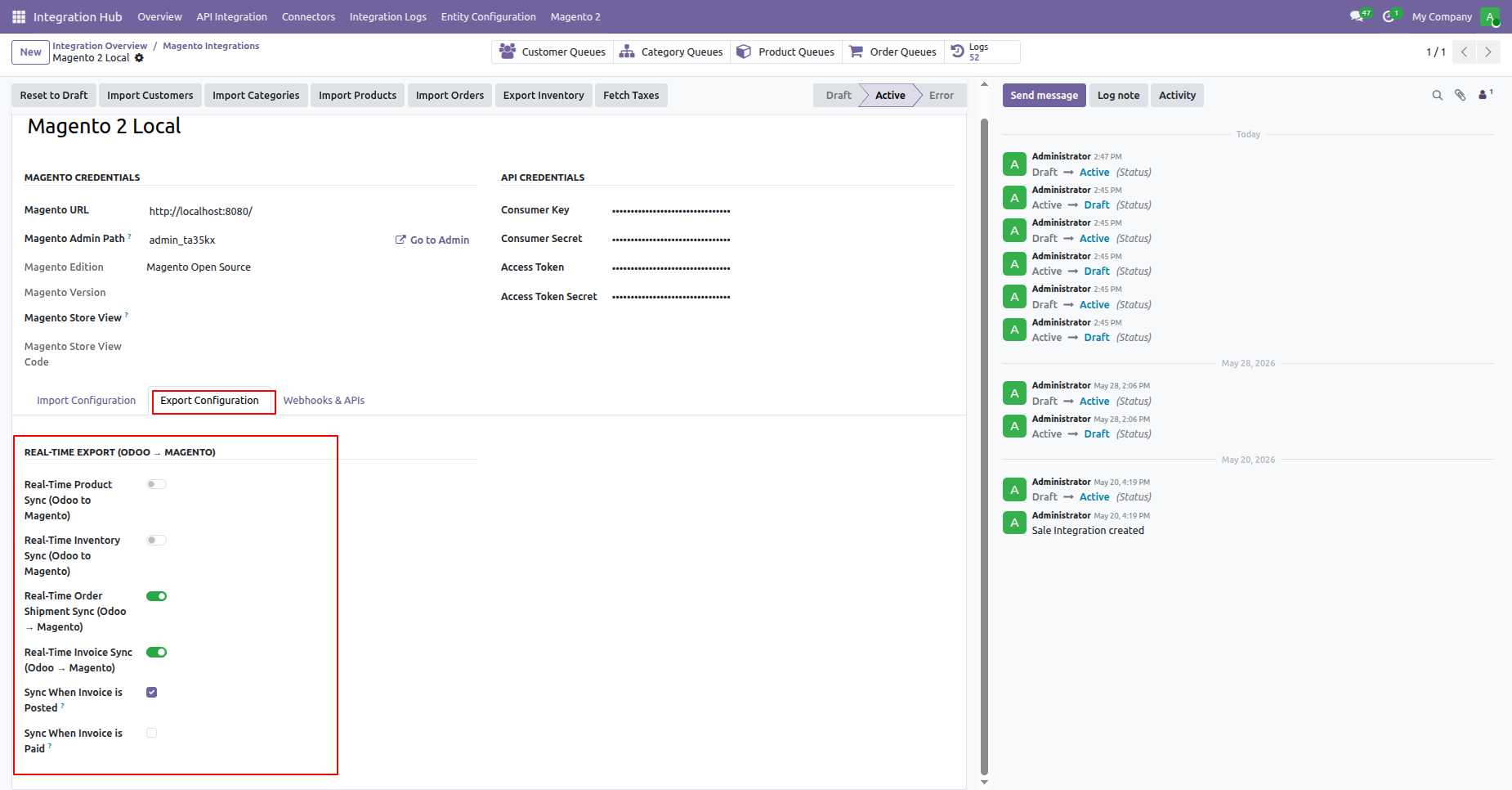
Export configurations.
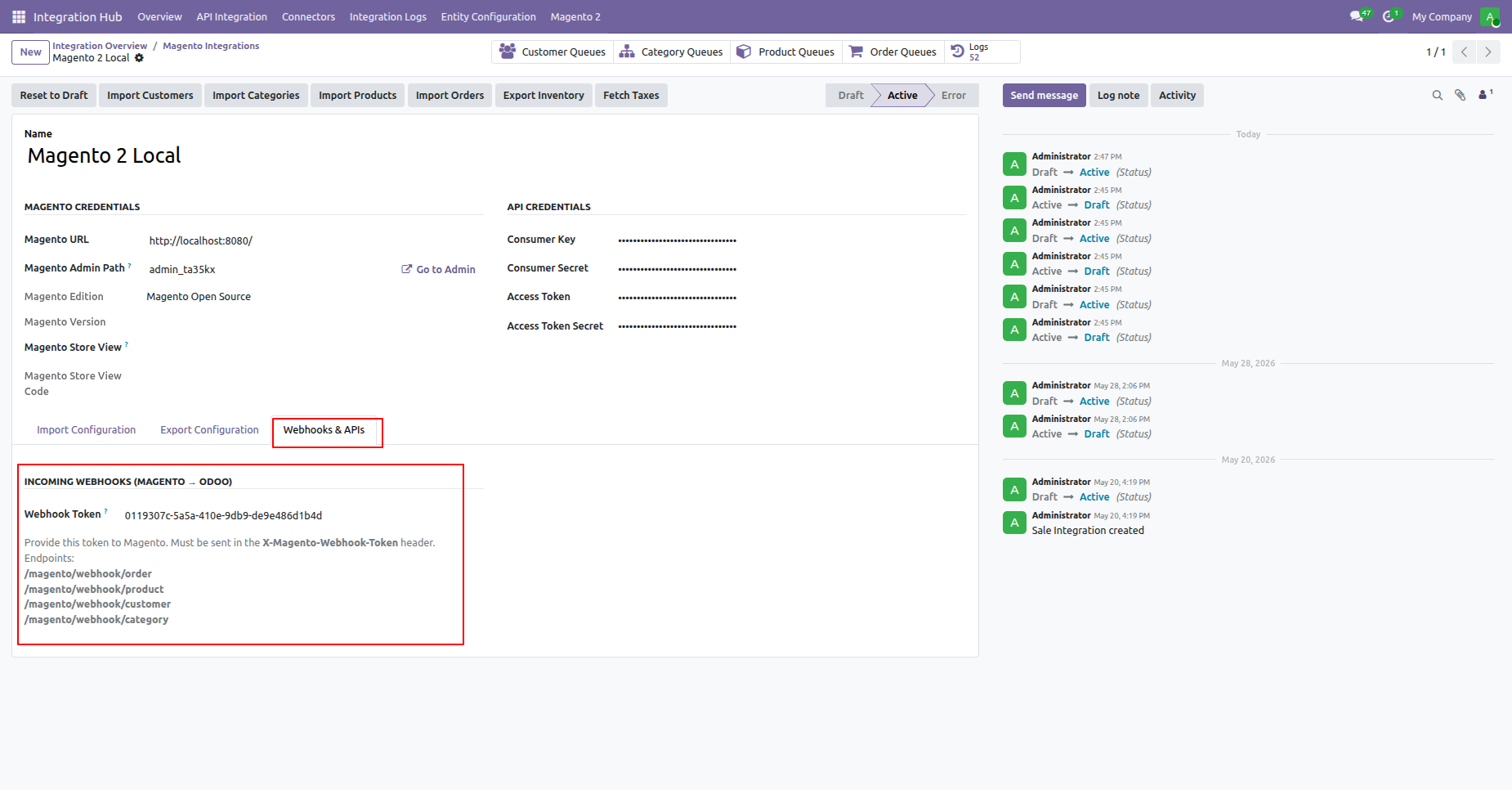
Webhook details.
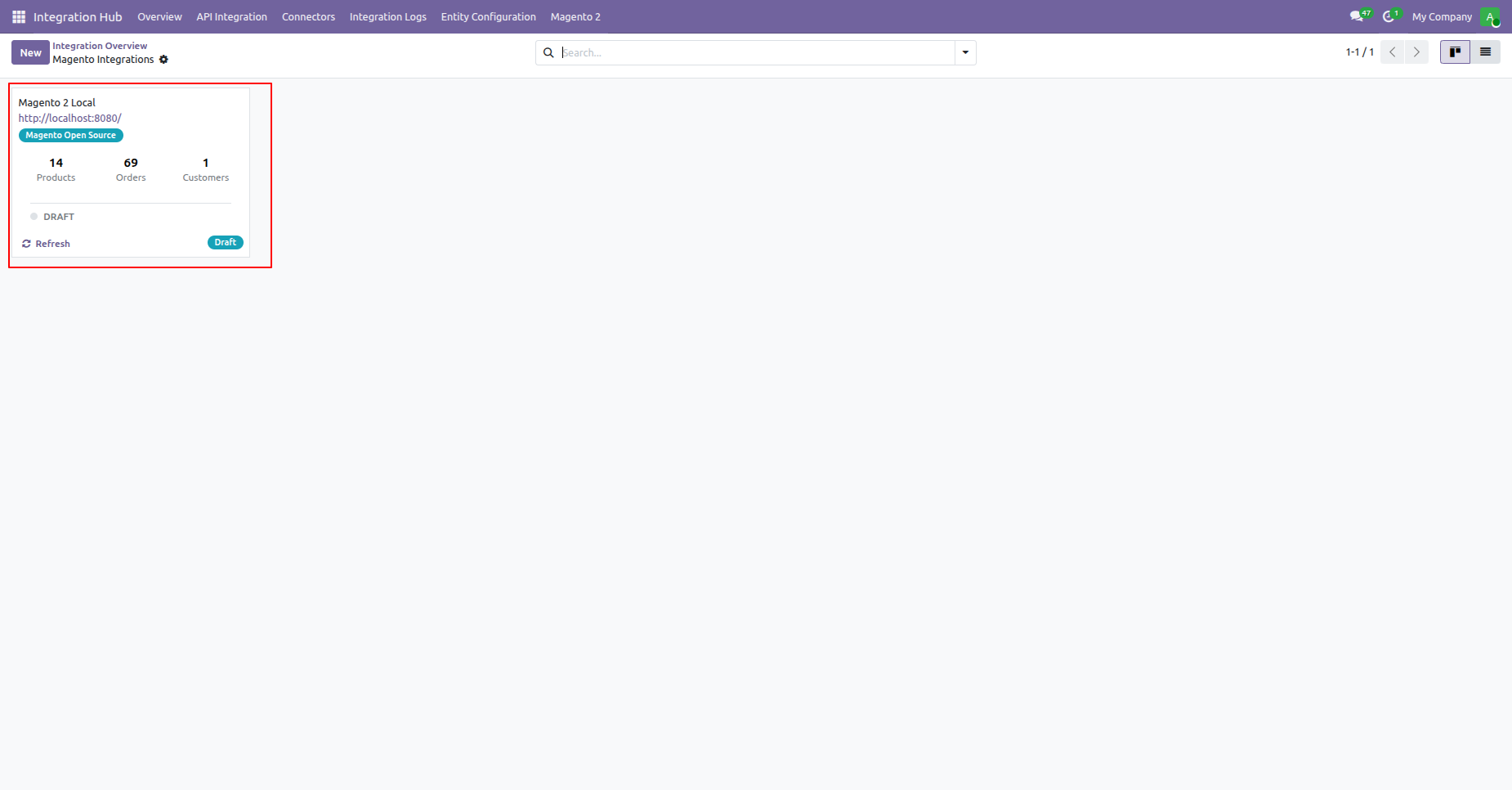
Open Magento2 settings.
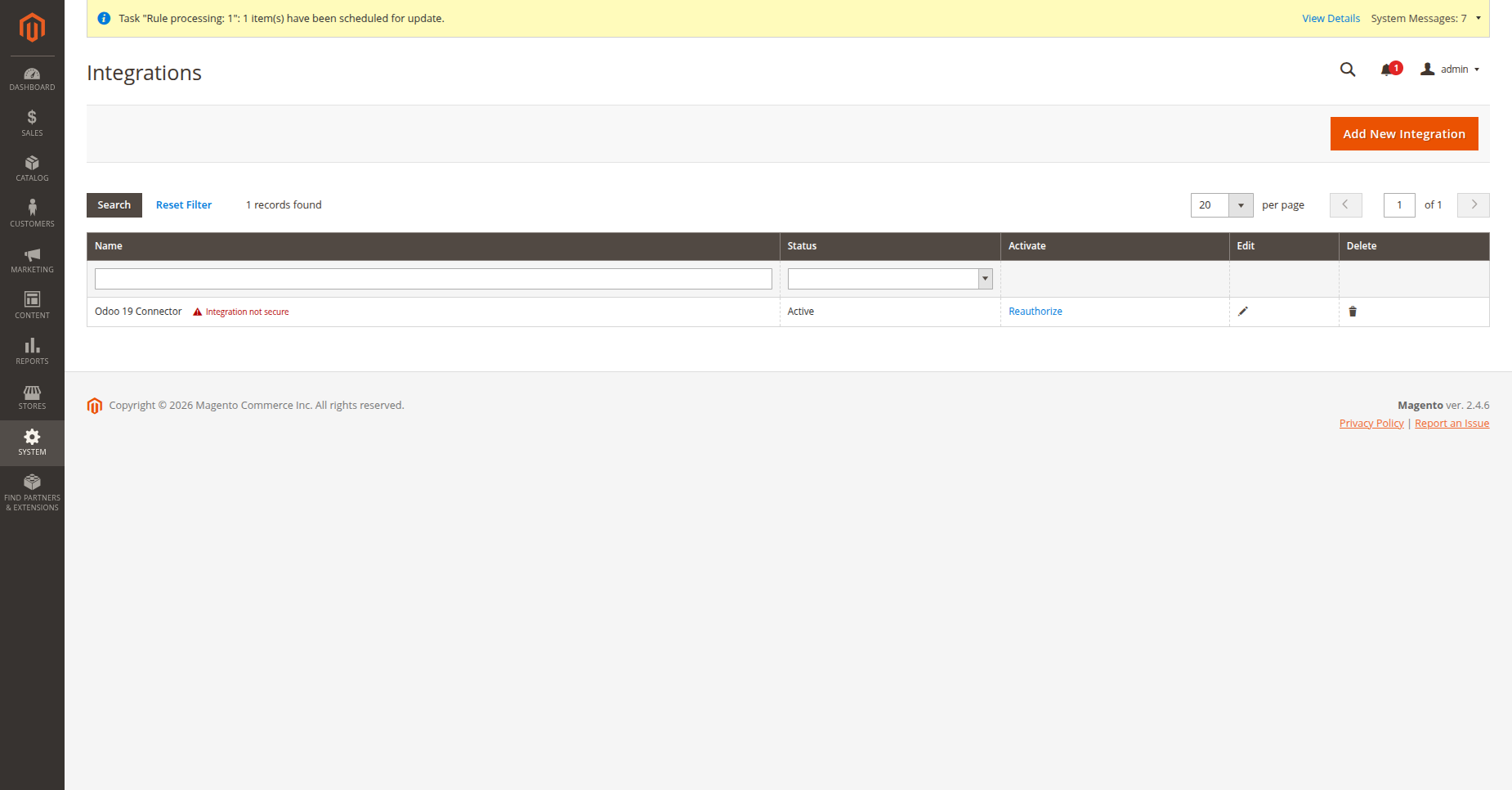
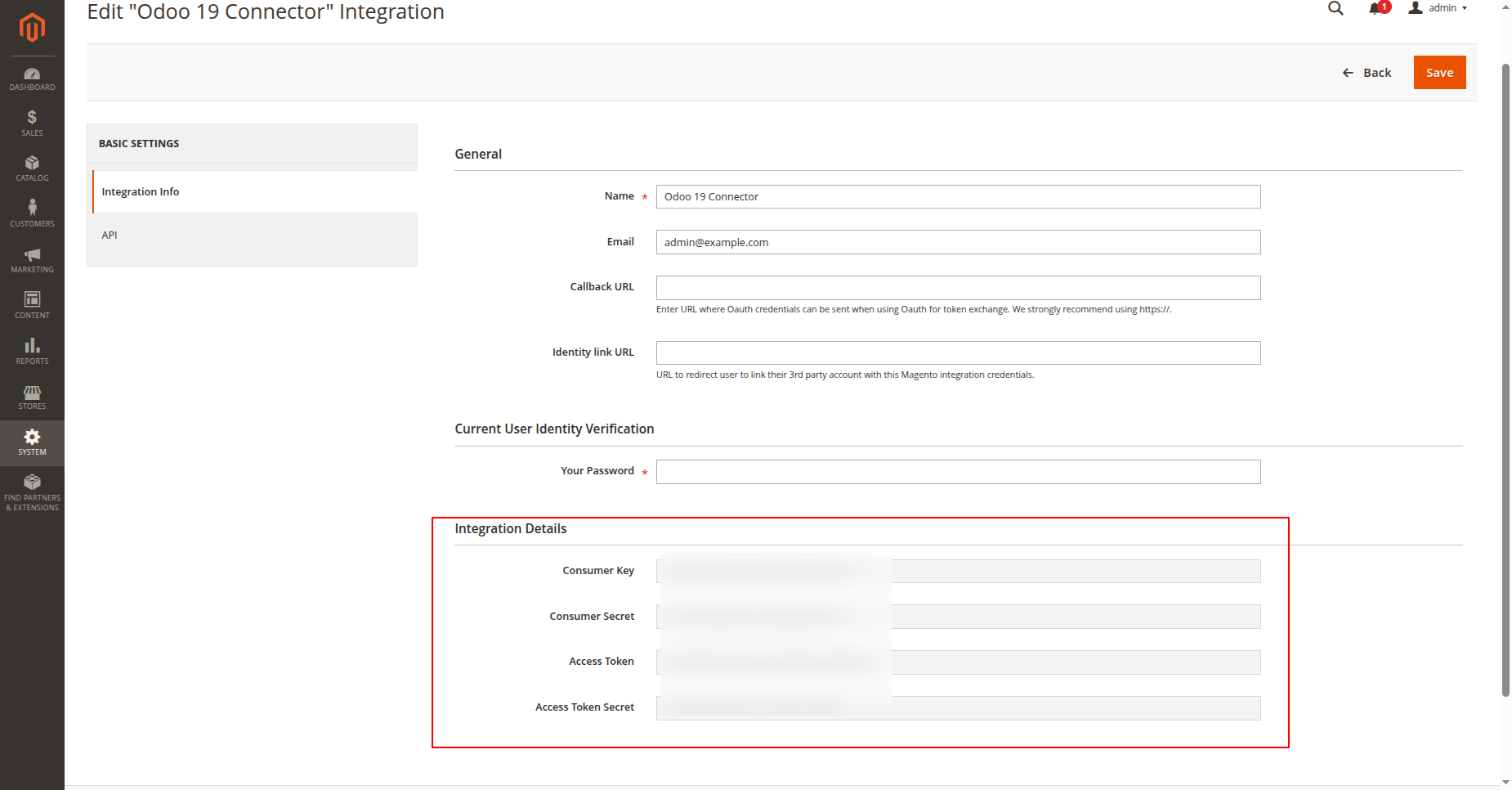
Integration info tab with integration details.
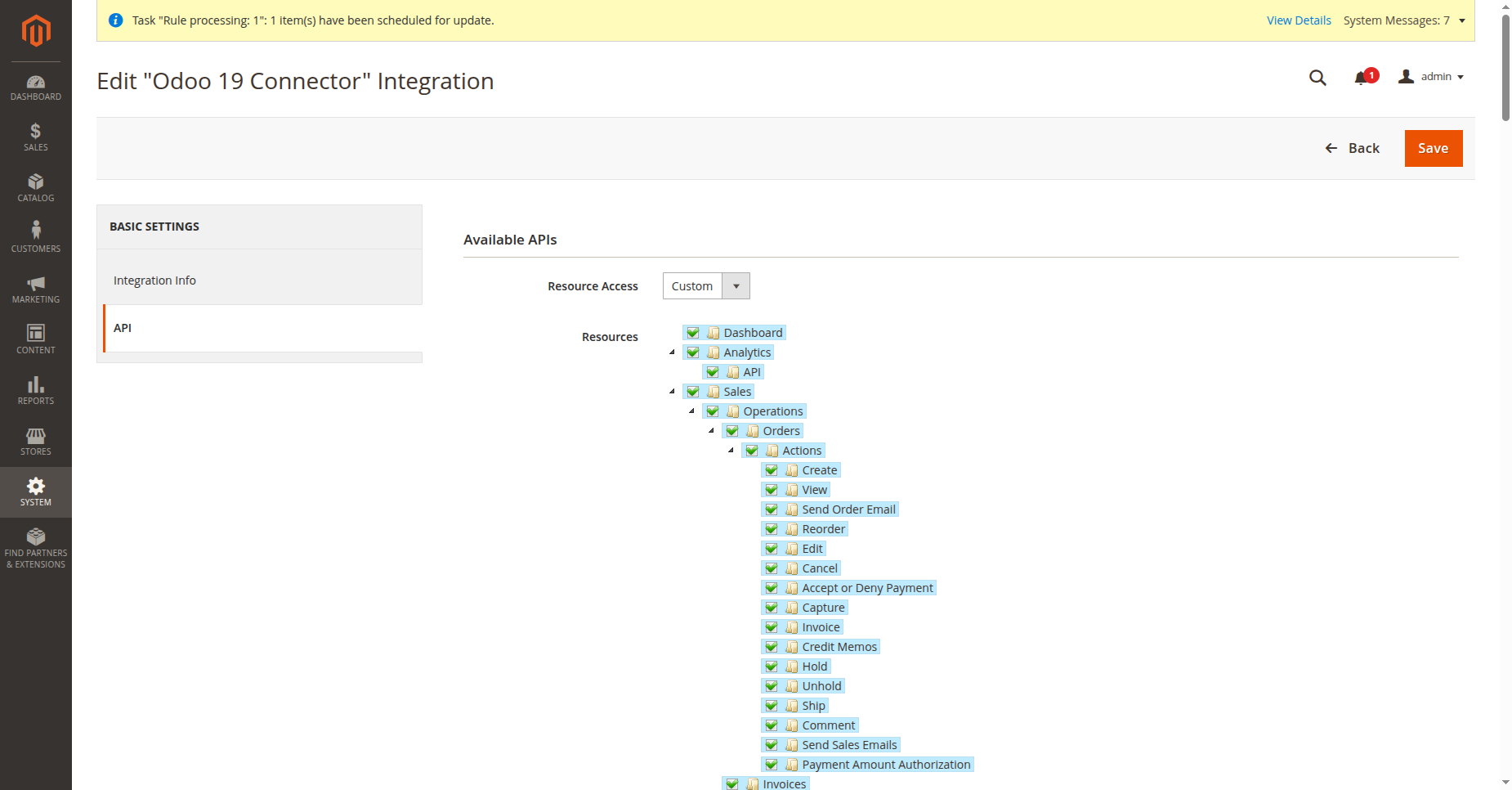
API tab with available APIs.
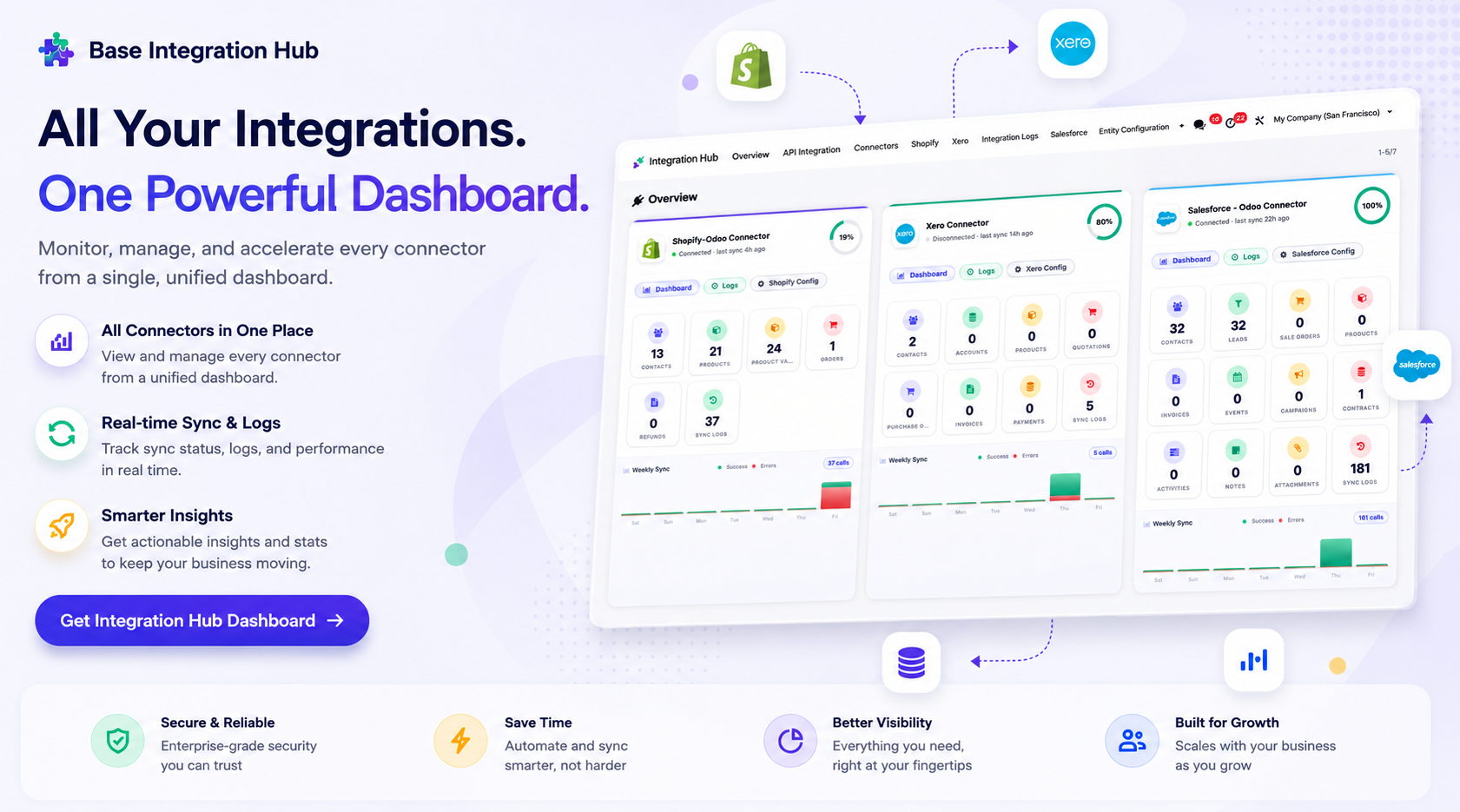
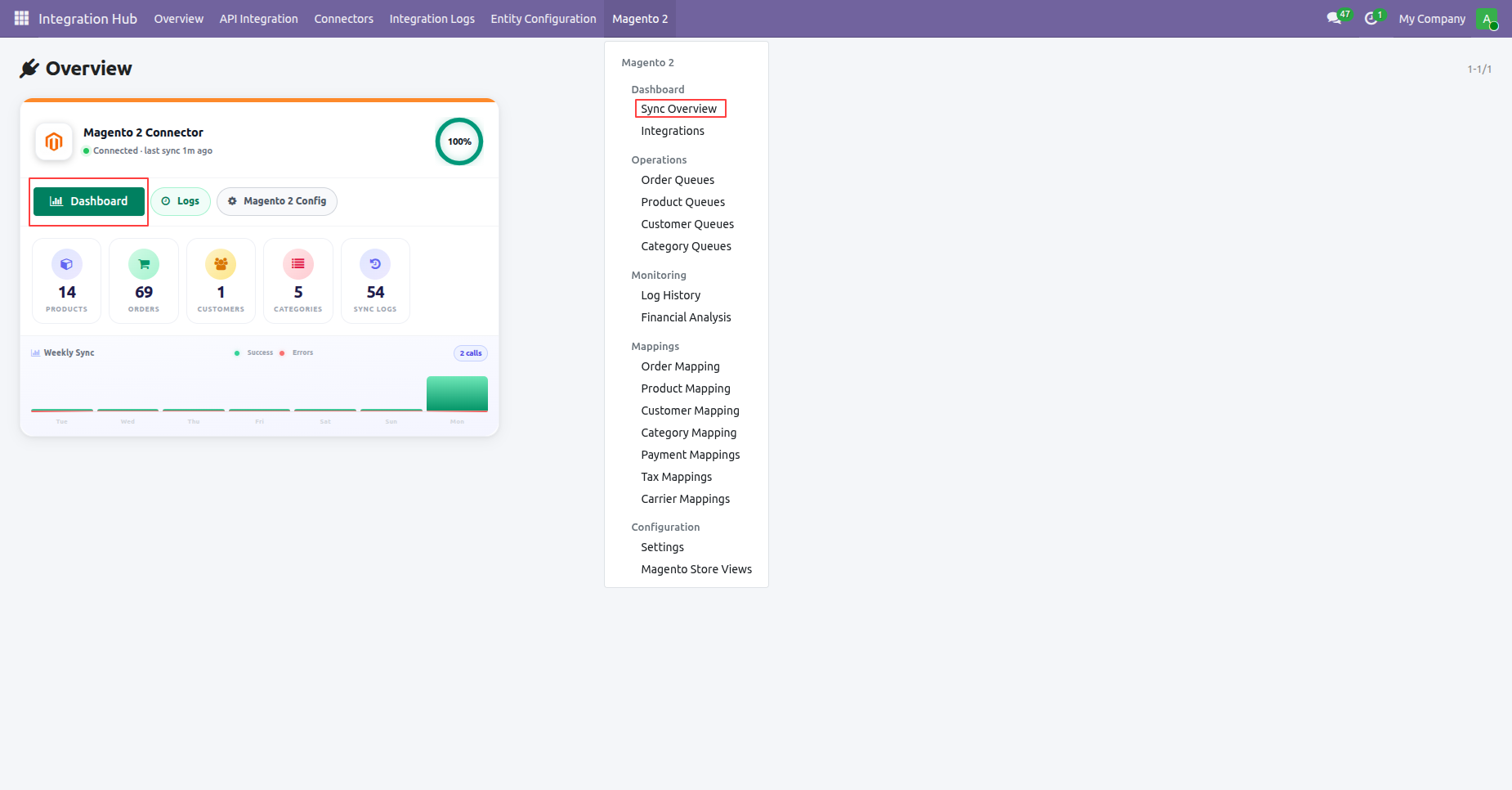
Centralized dashboard to manage and monitor all connectors from one place. Quickly access sync summary, activity logs, and configuration controls with improved visibility.
How it works?
Watch Video
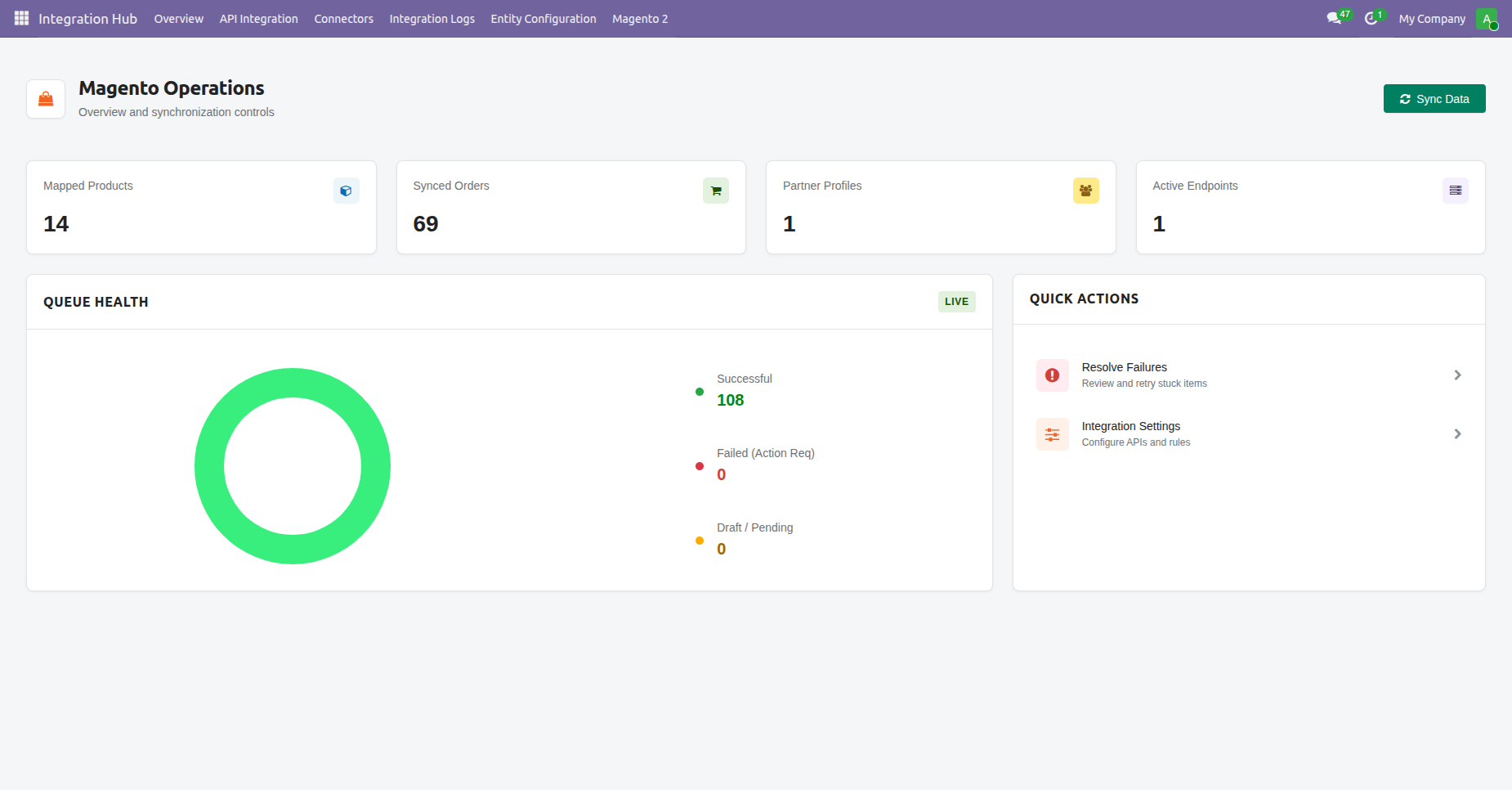
Monitor real-time synchronization metrics and status cards using the dashboard.
Track pending, completed, and failed synchronization queue records with interactive quick filter action cards.
Analyze historical sync trends using interactive graphical charts and detailed queue performance analytical widgets.
 How it works?
Watch Video
How it works?
Watch Video
View comprehensive financial analytics generated from Magento 2 sales.
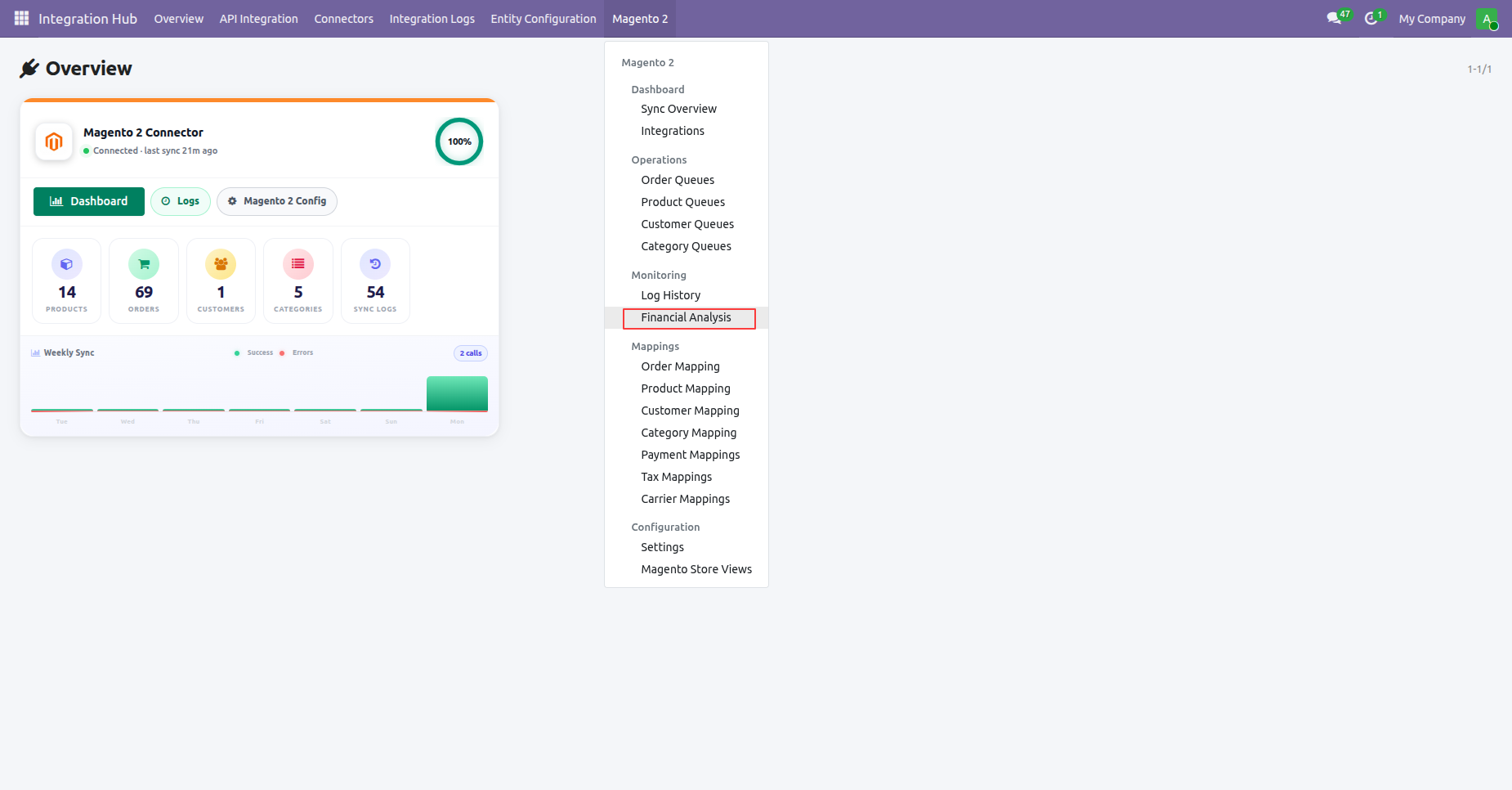
The financial analytics dashboard.
 How it works?
Watch Video
How it works?
Watch Video
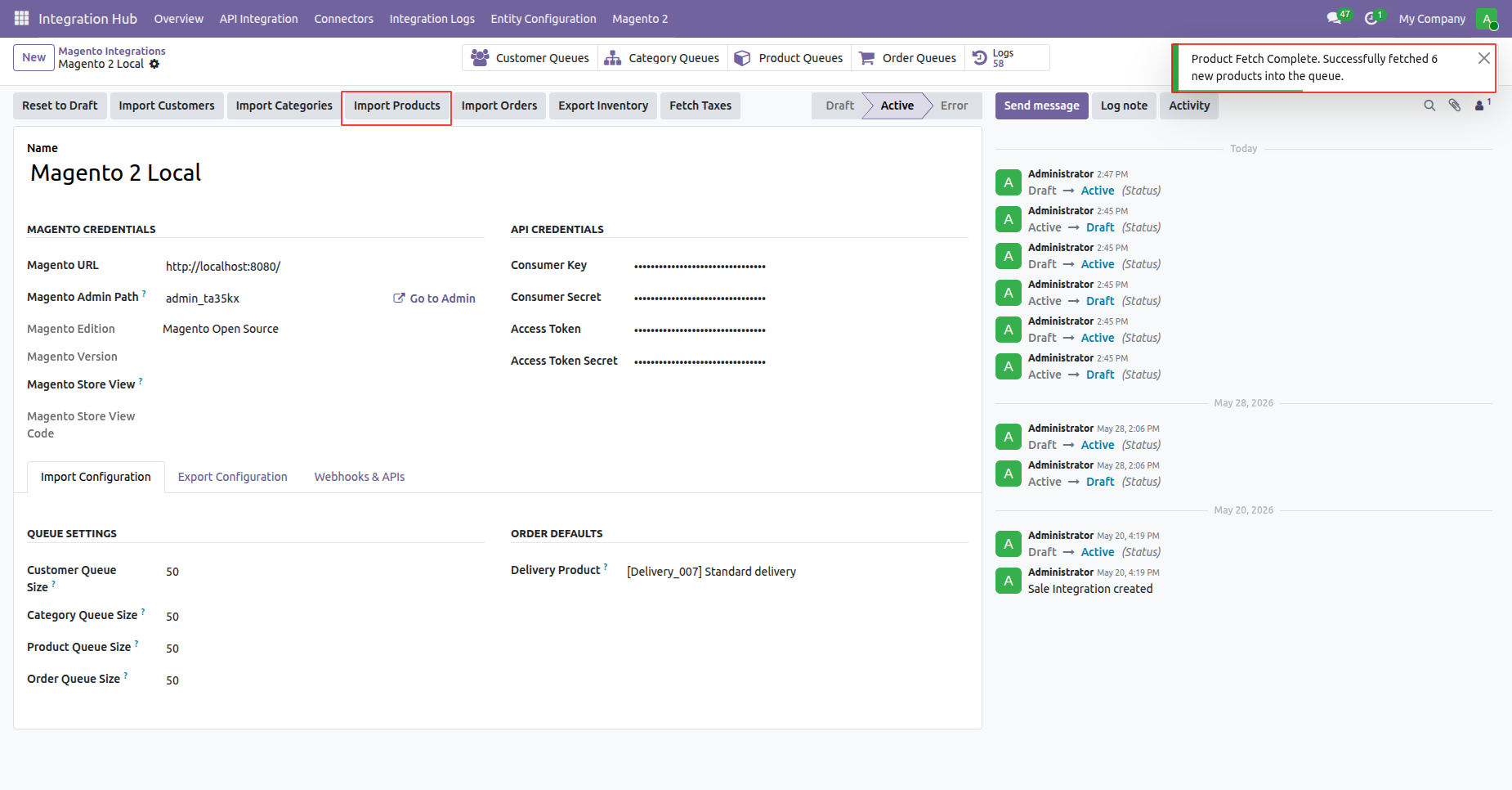
Click Import Products and review the confirmation that new products were added to the queue.
Open the Magento 2 menu and select Product Queues to view product synchronization jobs.
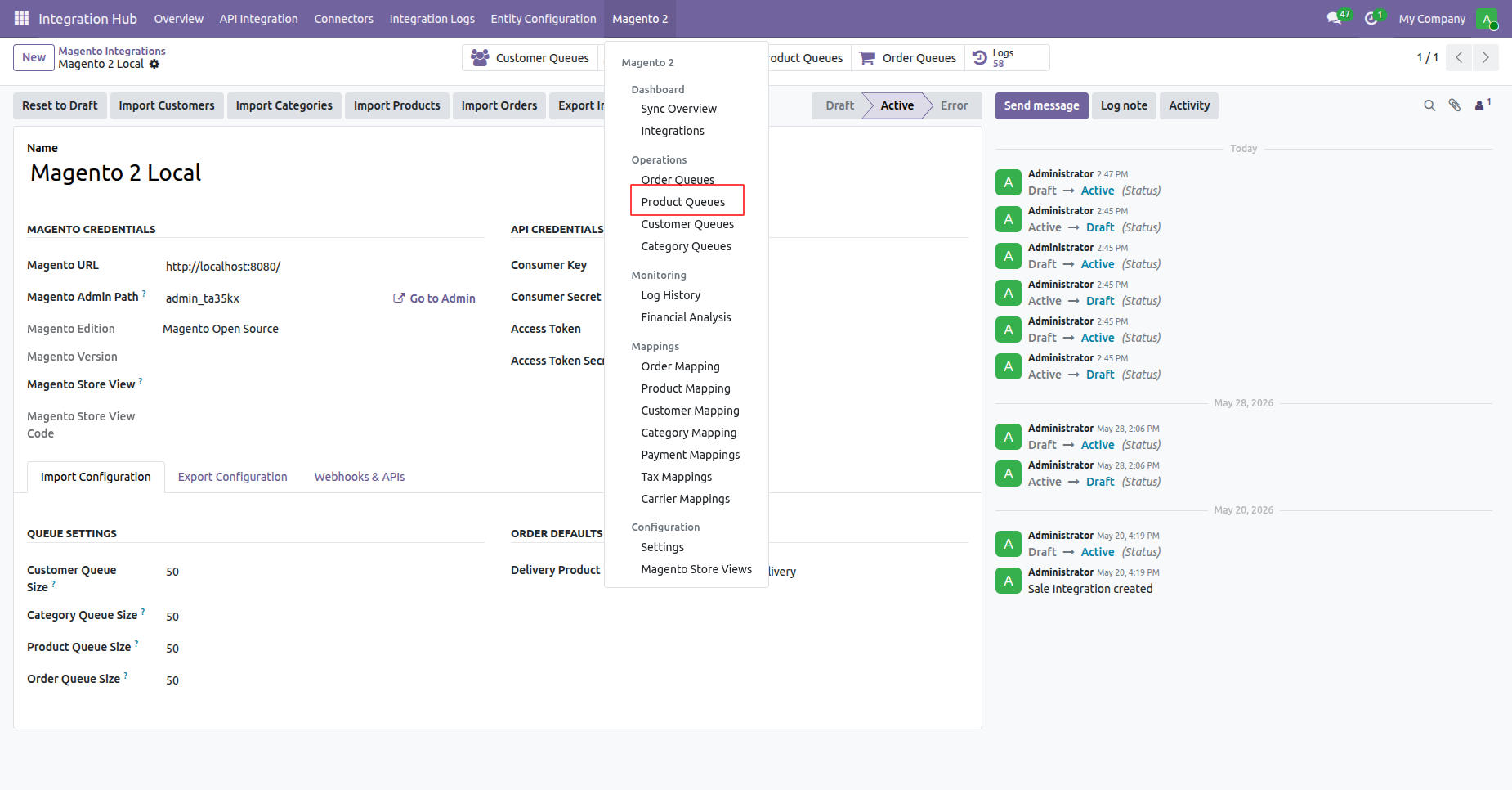
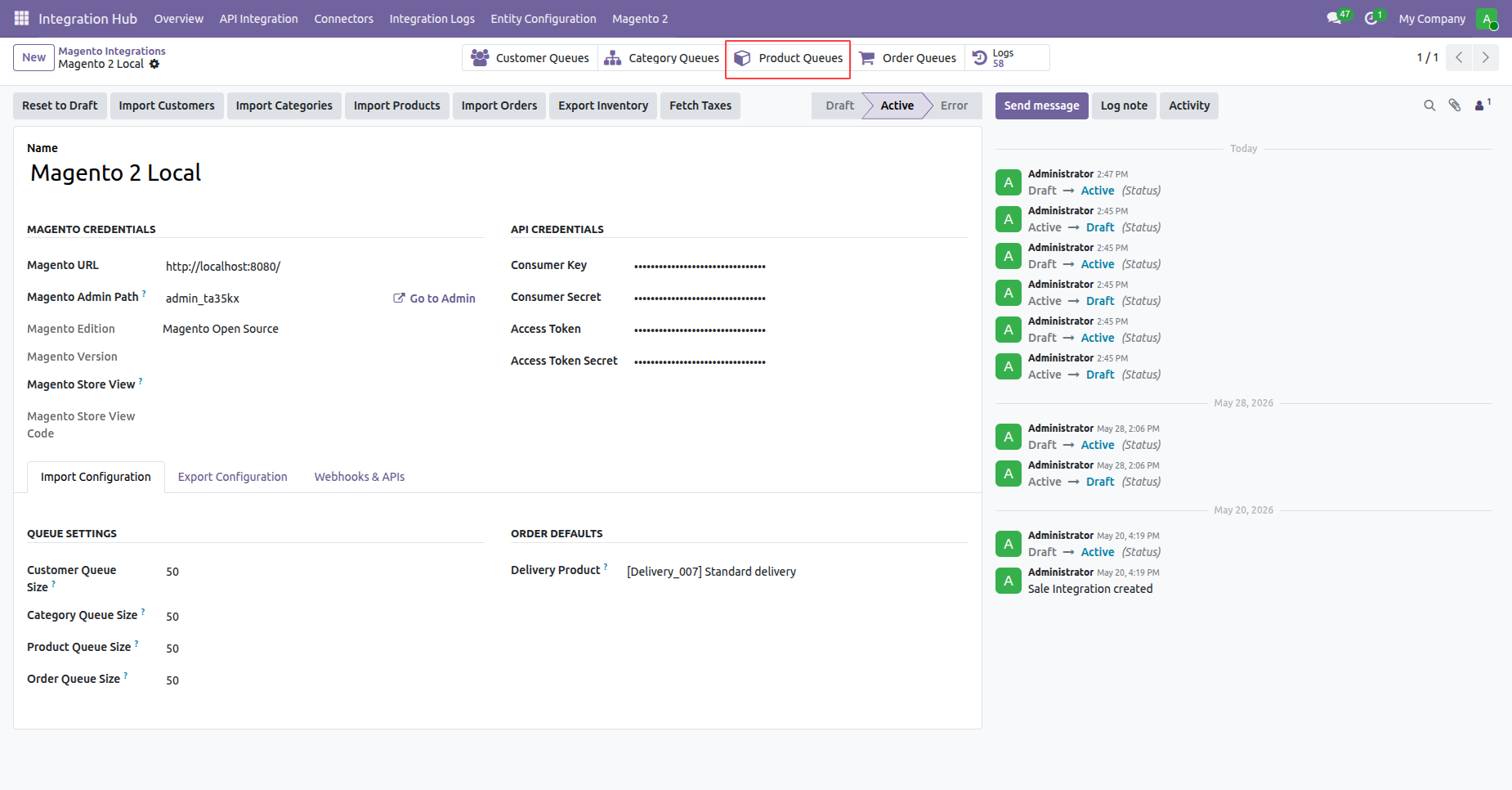
Use the Product Queues shortcut to open the queue list for this integration.
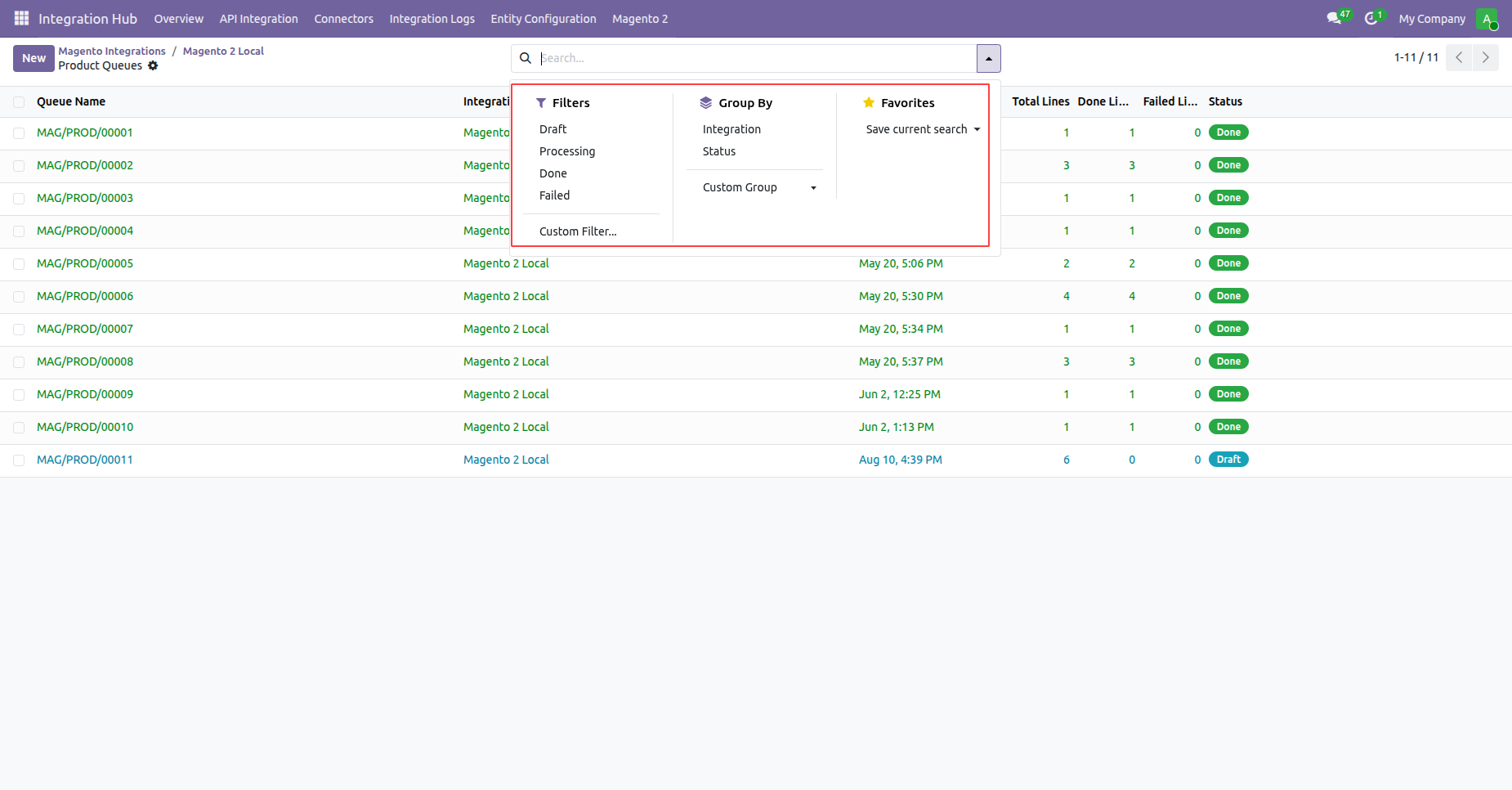
Use the filters panel to narrow product queues by status, integration, or custom criteria.
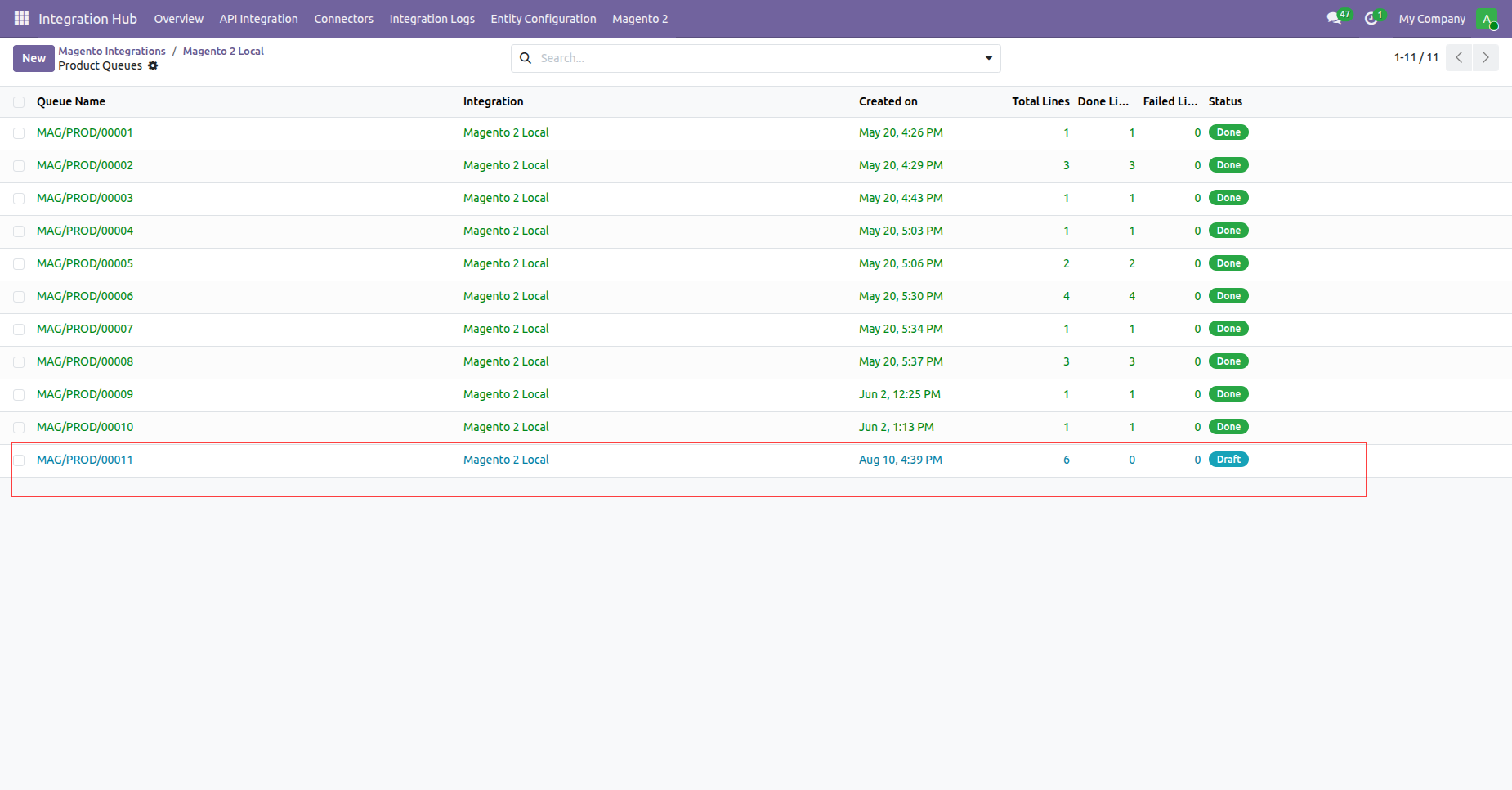
Select the draft product queue row to review its pending product lines.
Press Process Queue to process the highlighted draft product queue and its listed lines.
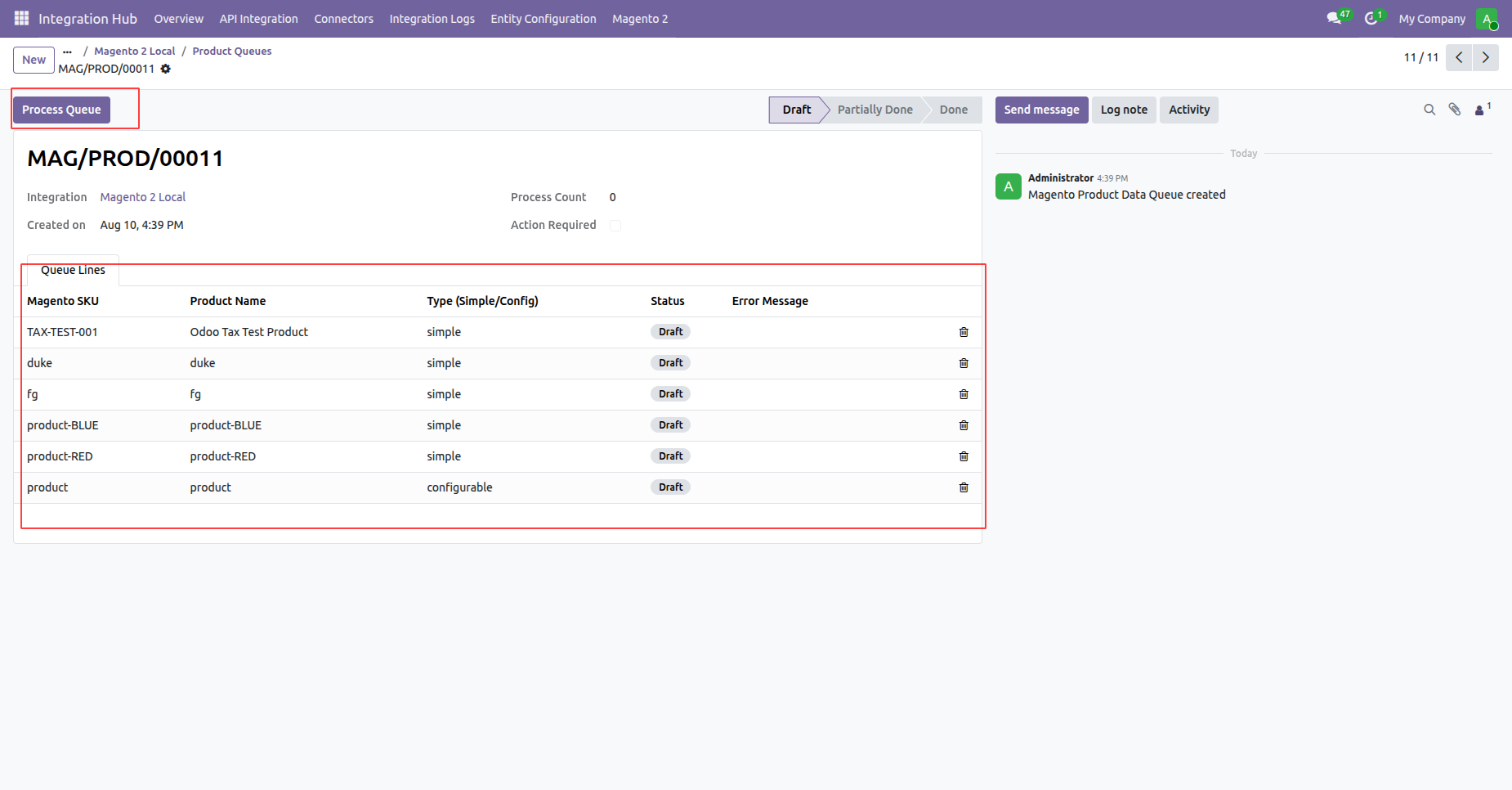
Review the queue after processing, with every product line marked Done.
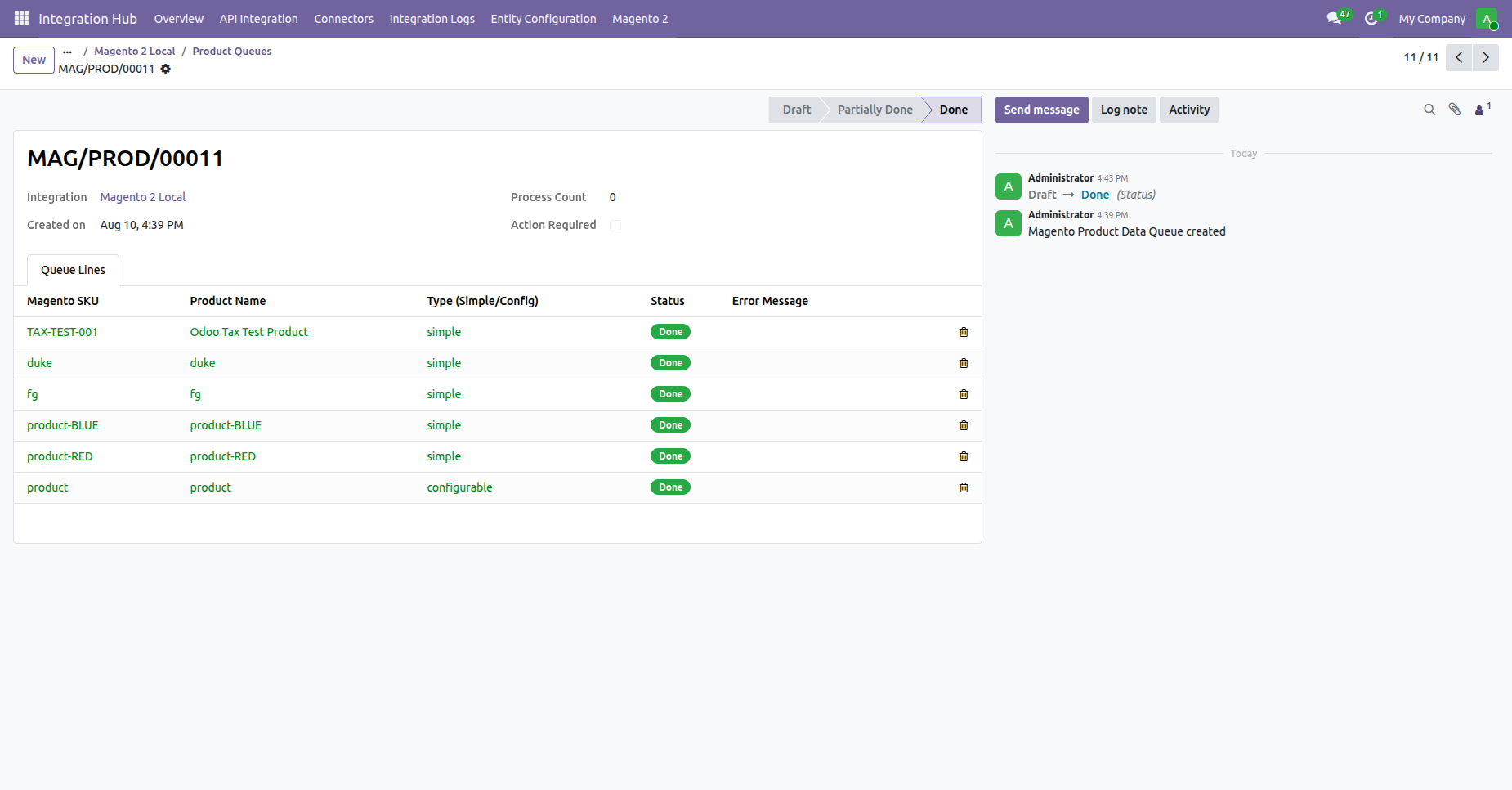
Open Product Mapping from the Magento 2 menu to review synchronized product links.
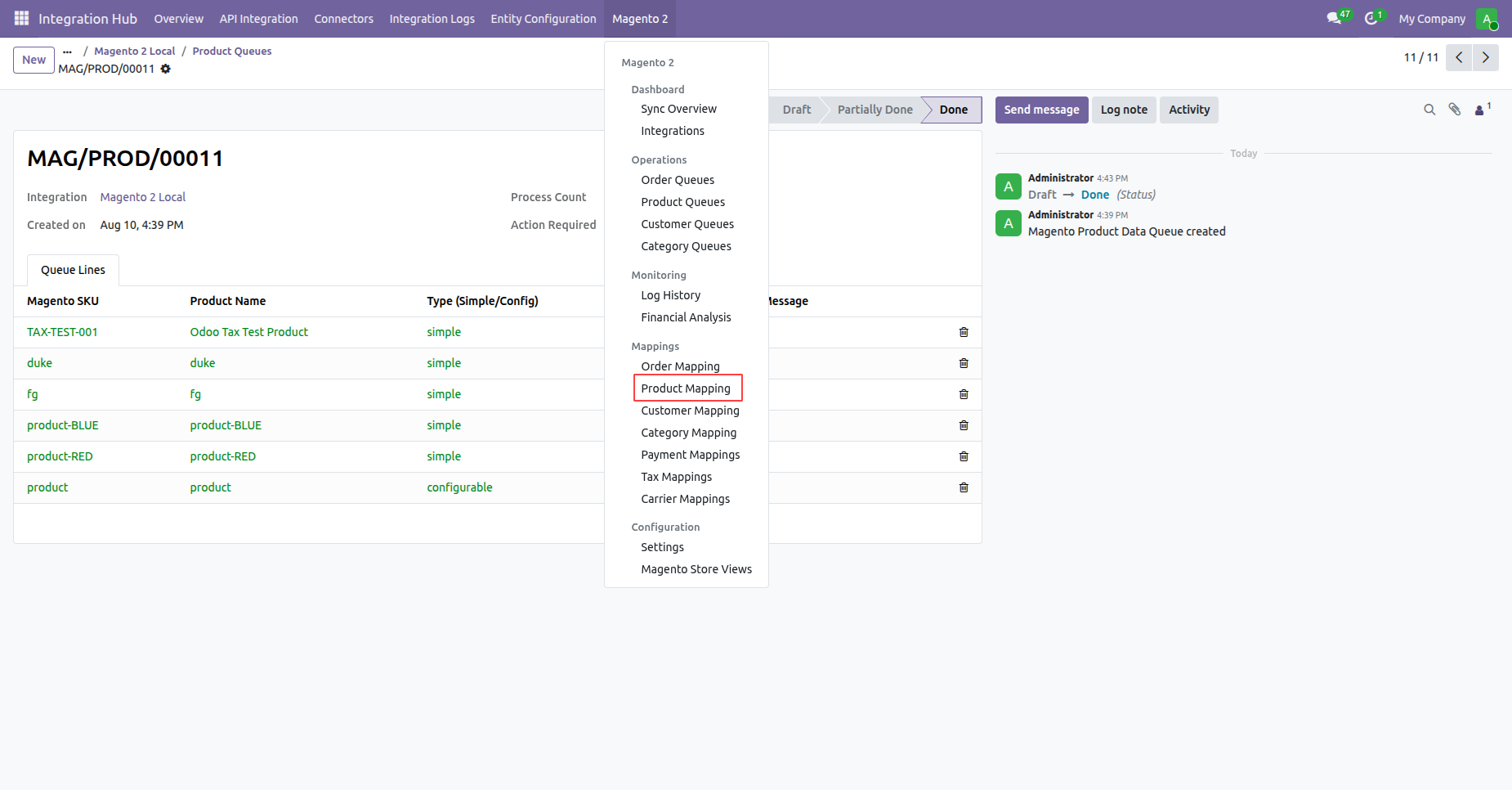
Review mapped product rows, including Magento SKU, Odoo product, template, and last sync date.
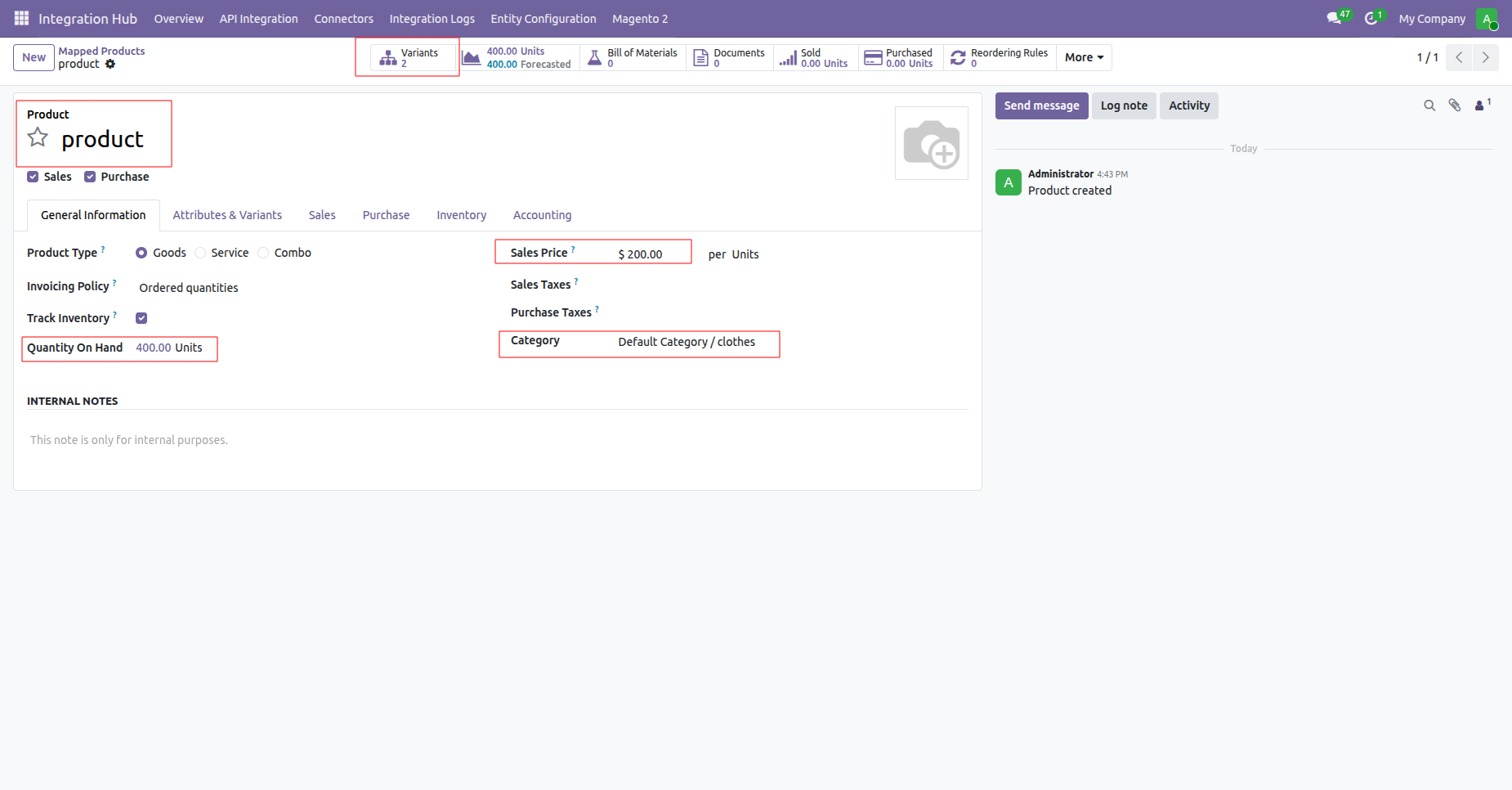
Open the product record to review its name, variants, sales price, quantity, and category.
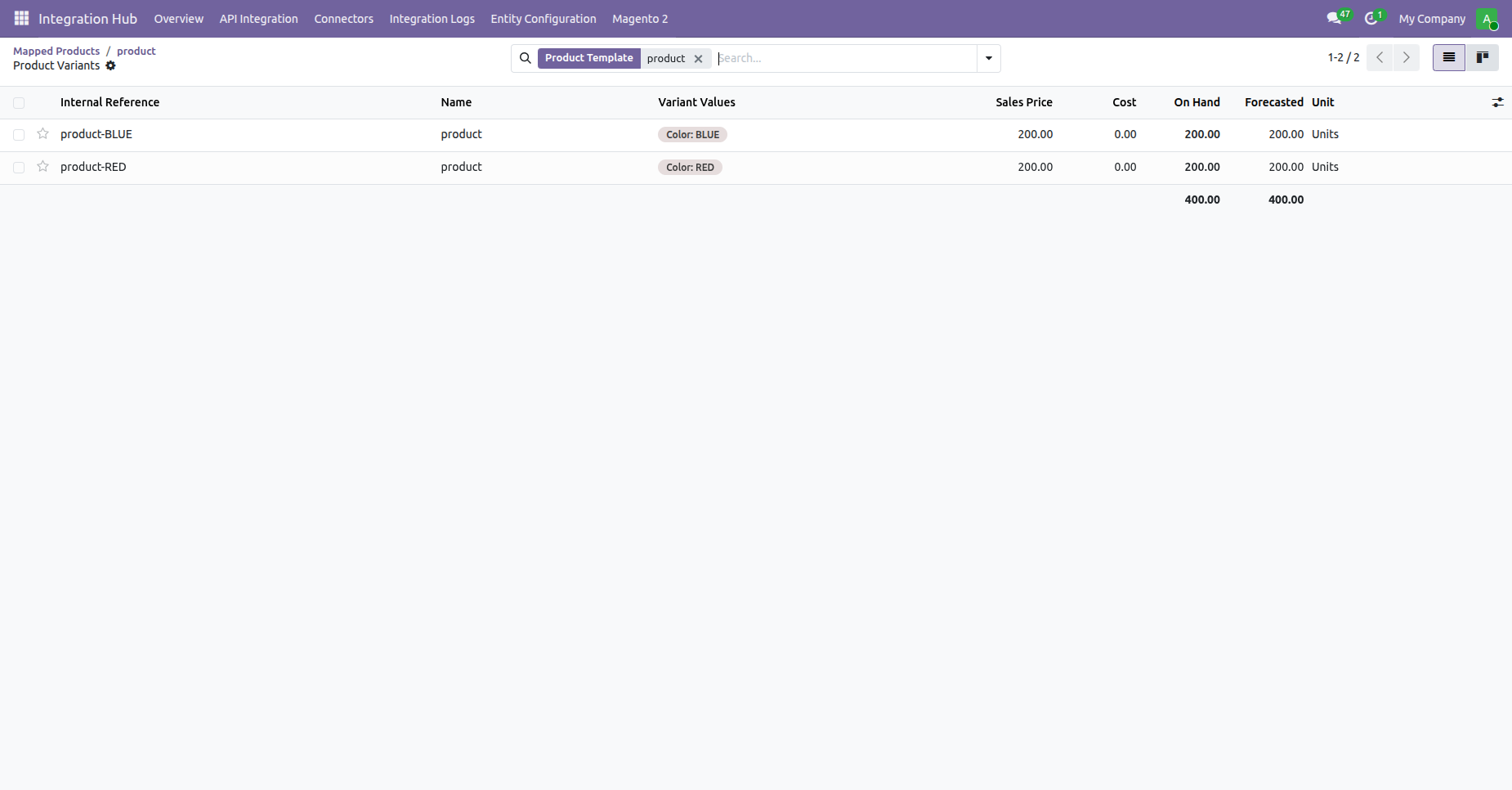
Review the filtered product variants list showing color values, prices, and available quantities.
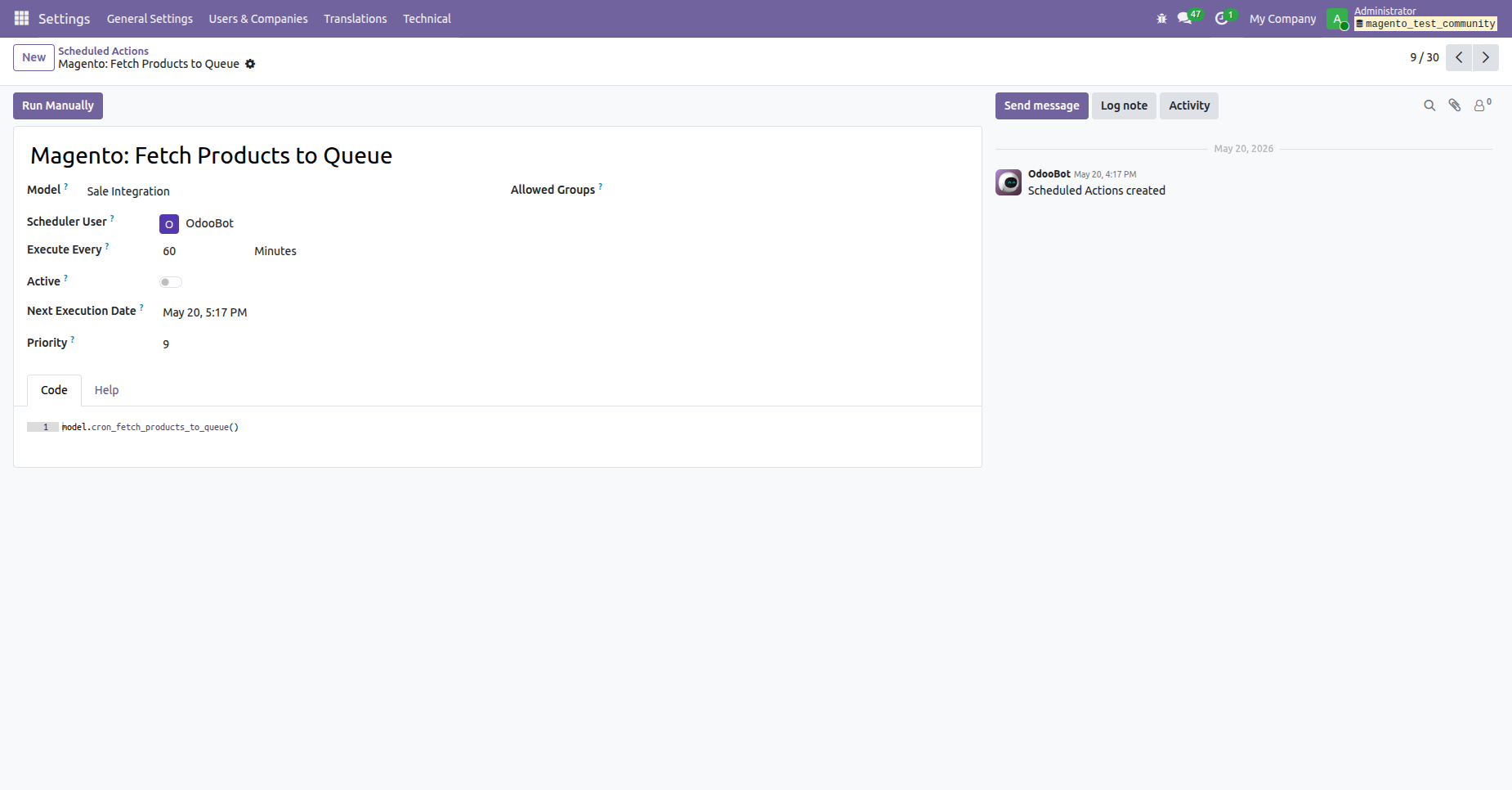
Open the scheduled action that fetches Magento products into the queue.
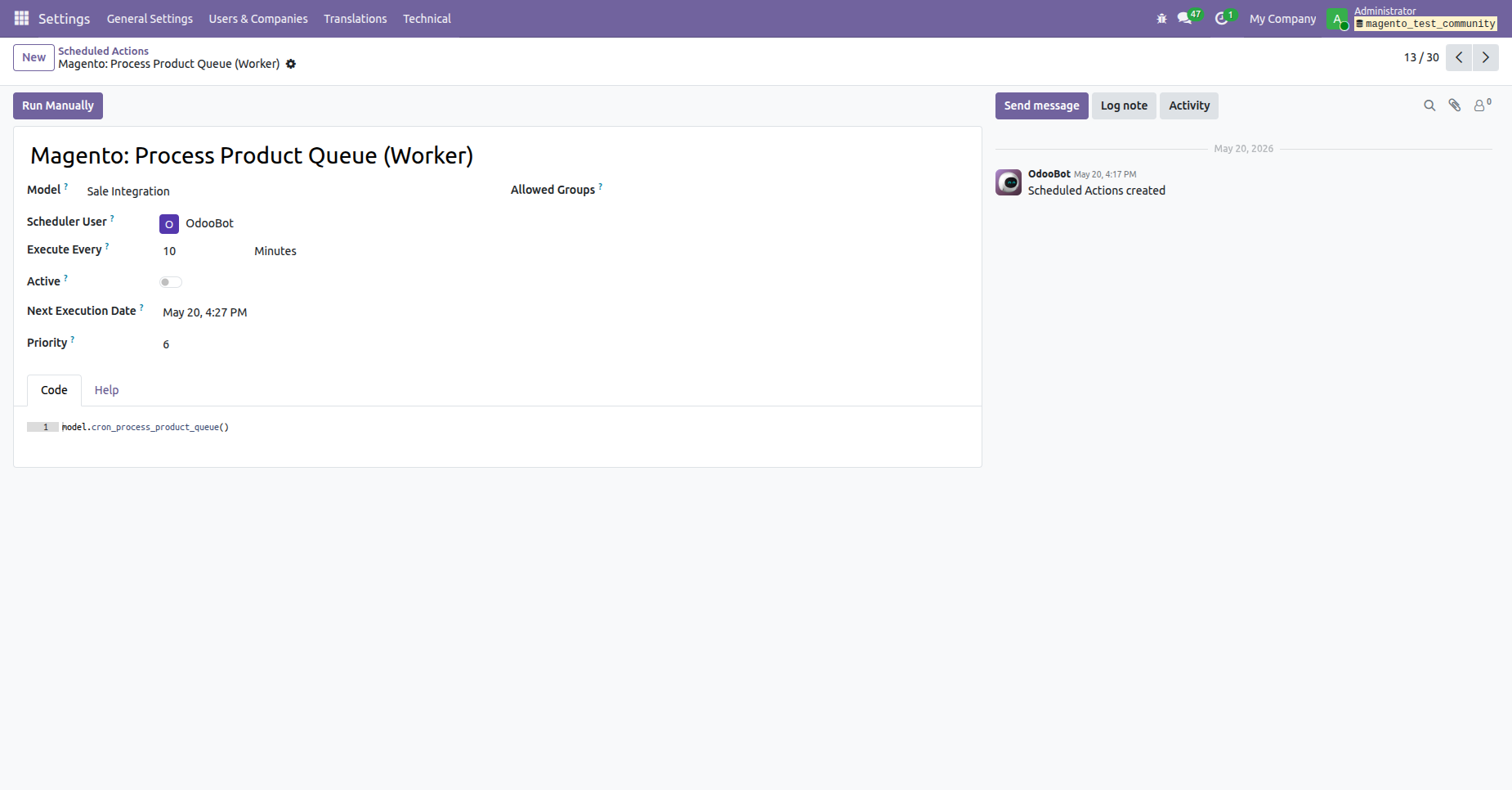
Open the scheduled worker that processes Magento product queues in the background.
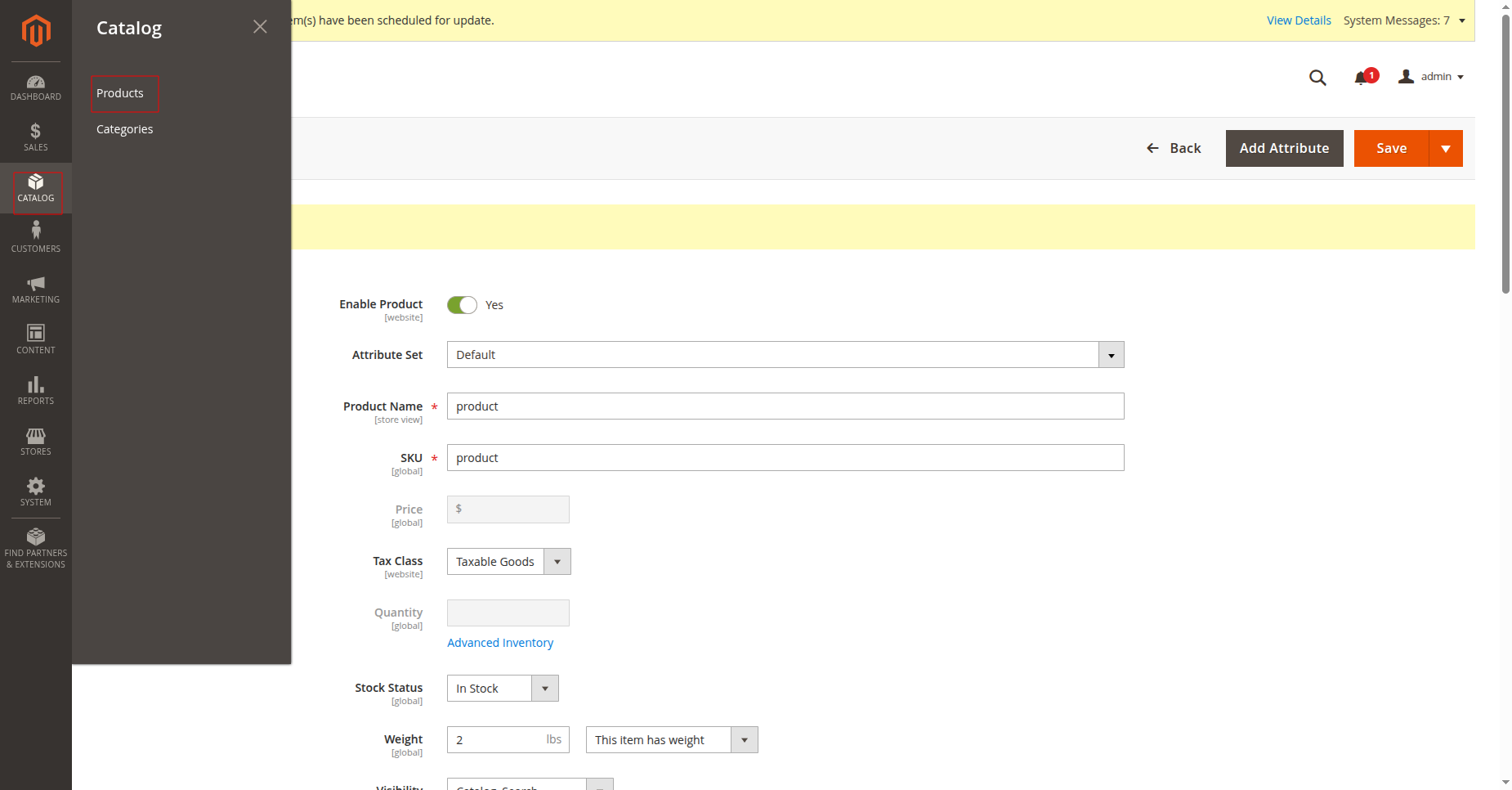
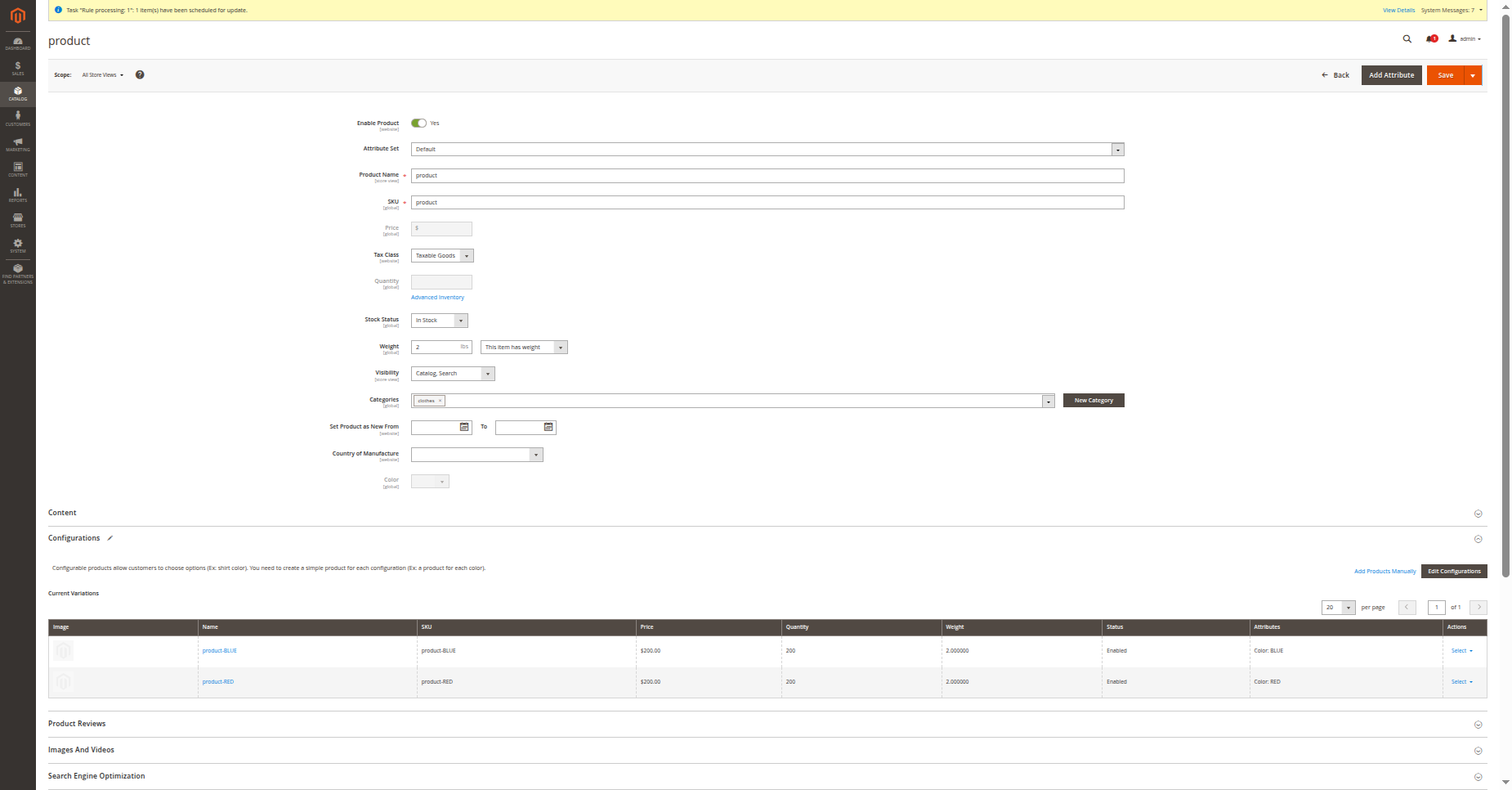
Open the Magento catalog product form to review the synchronized product fields.
 How it works?
Watch Video
How it works?
Watch Video
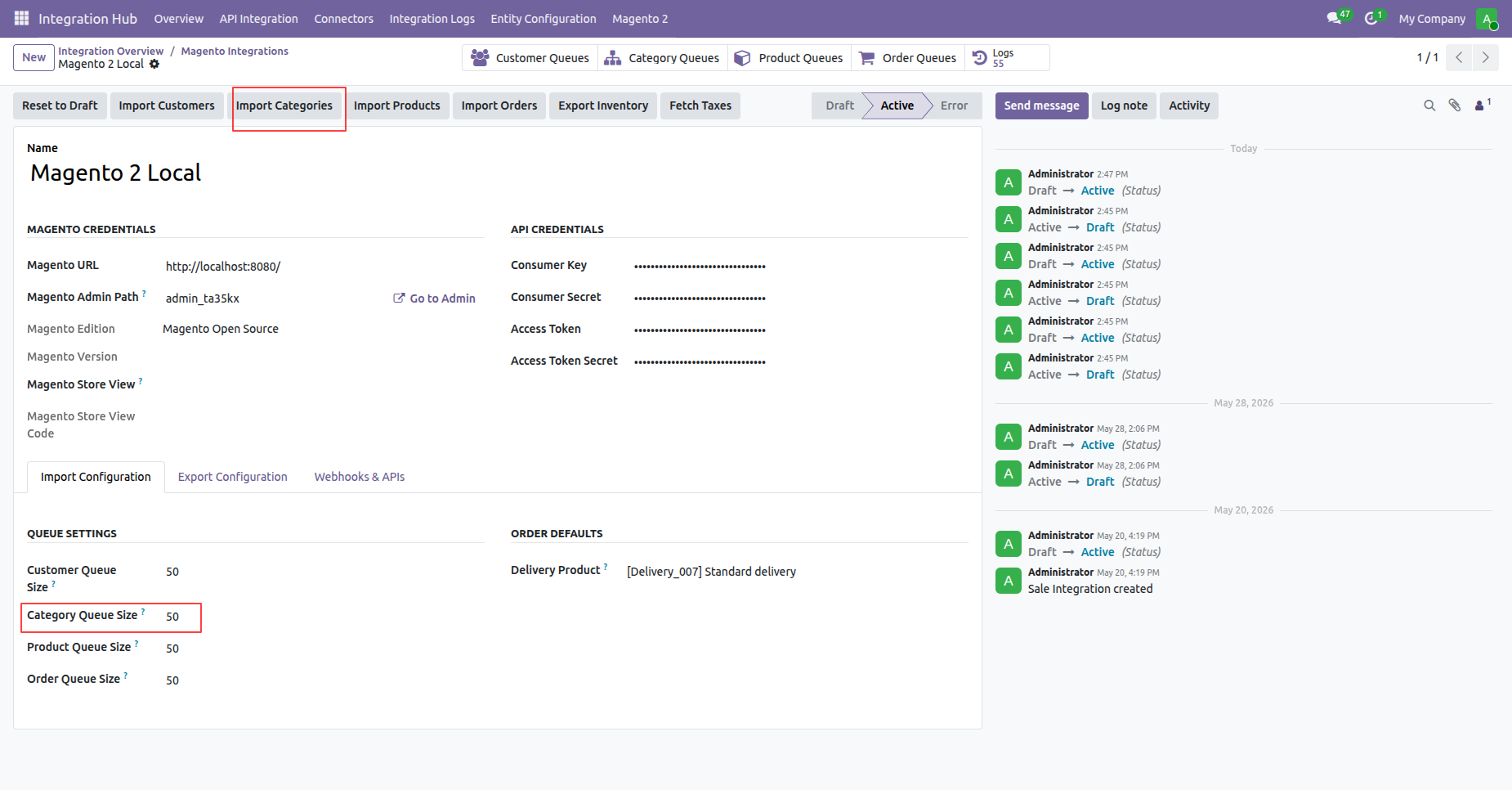
Click Import Categories and review the highlighted category queue size setting.
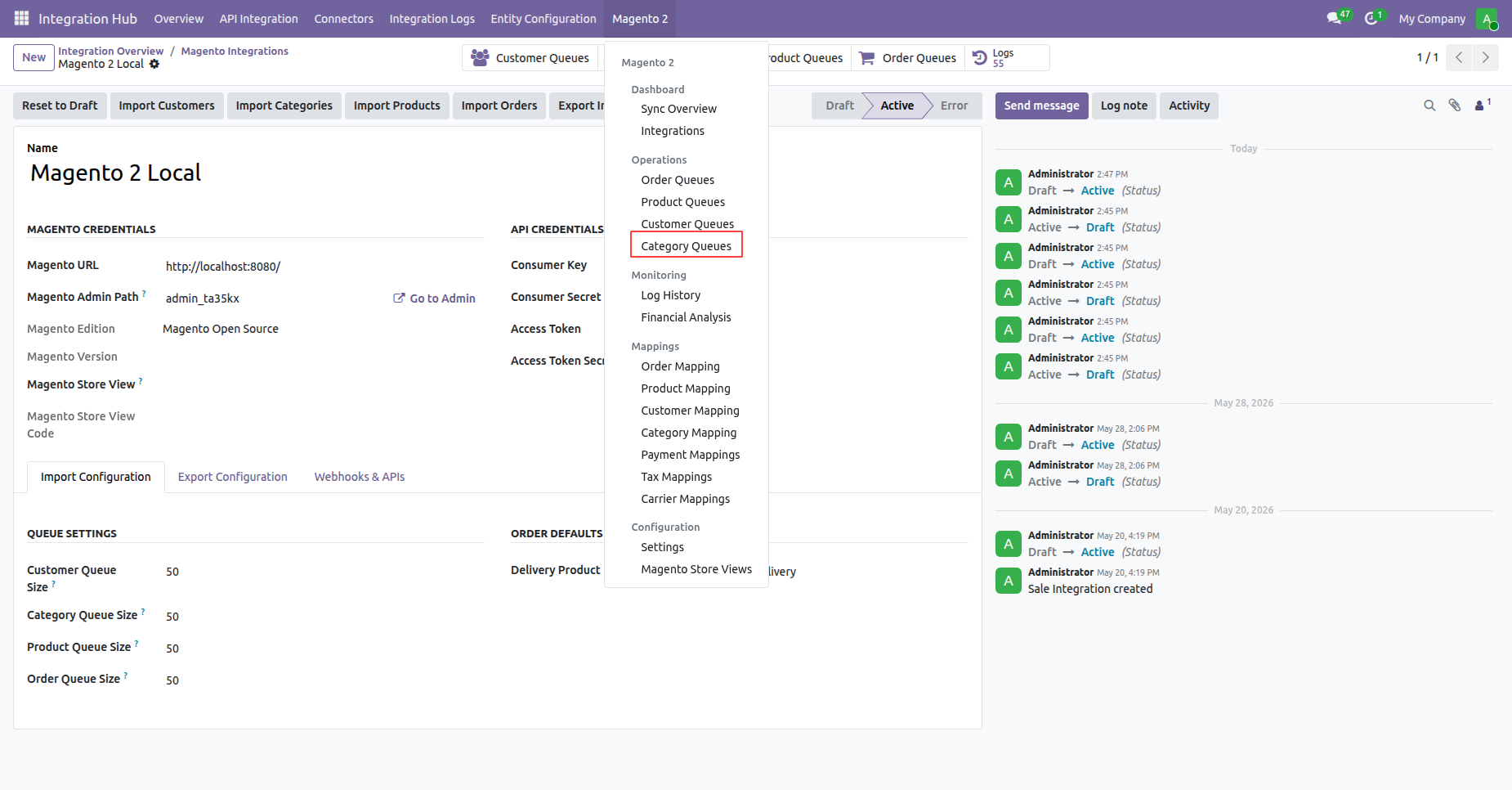
Use the Category Queues shortcut to open category synchronization jobs.
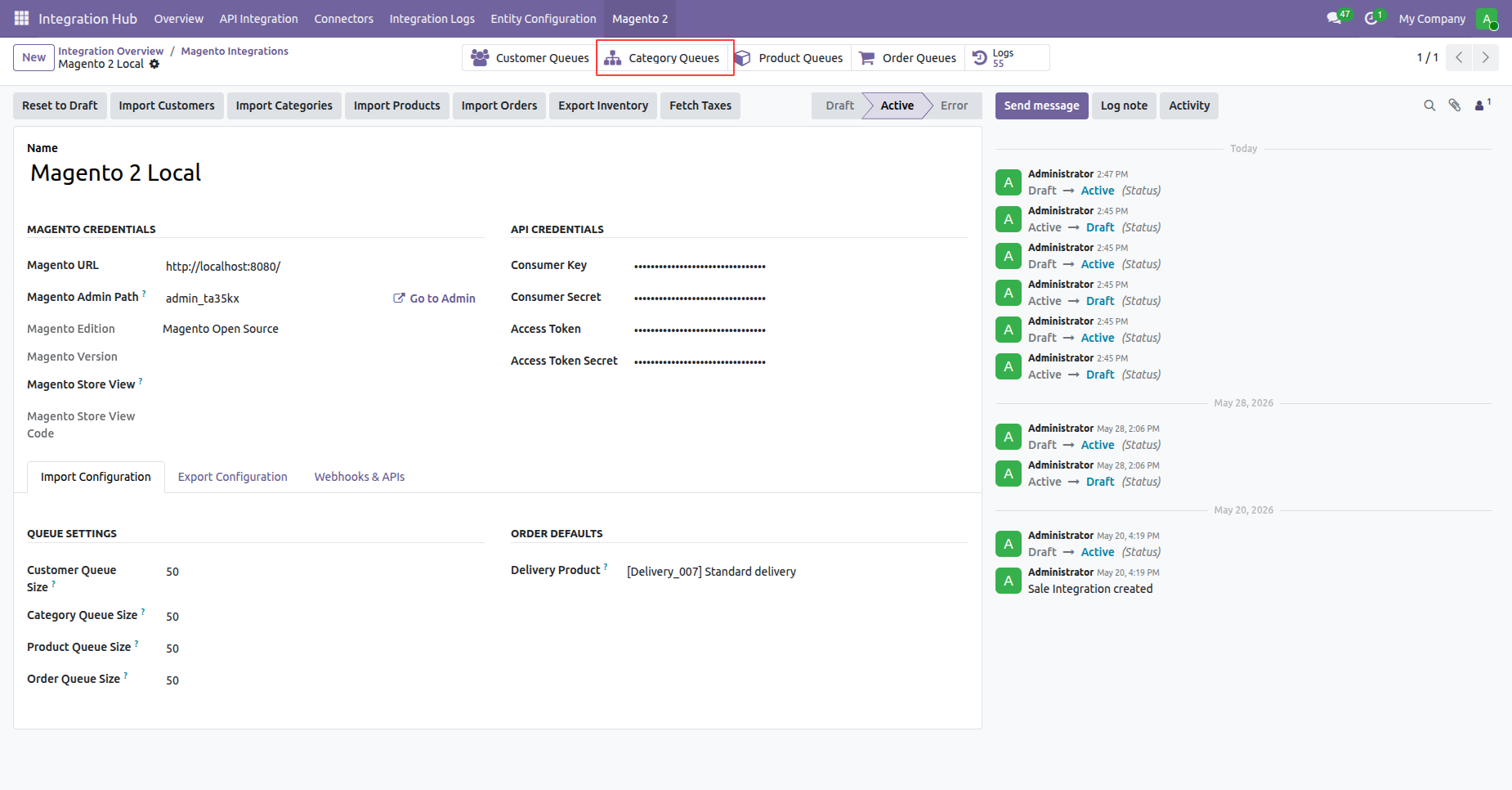
Select Category Queues from the Magento 2 menu to view category queue records.
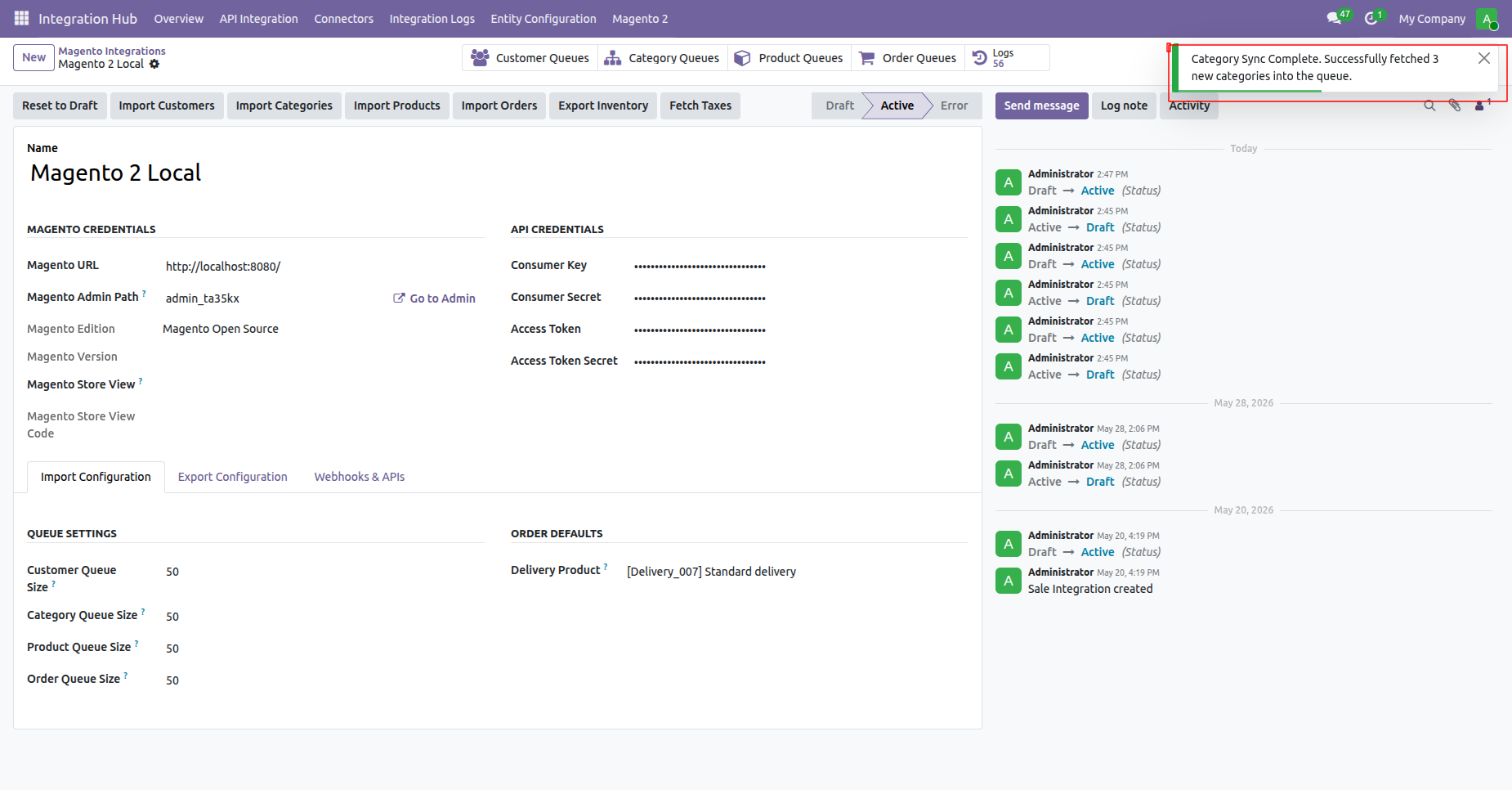
Review the confirmation that three categories were fetched into the queue.
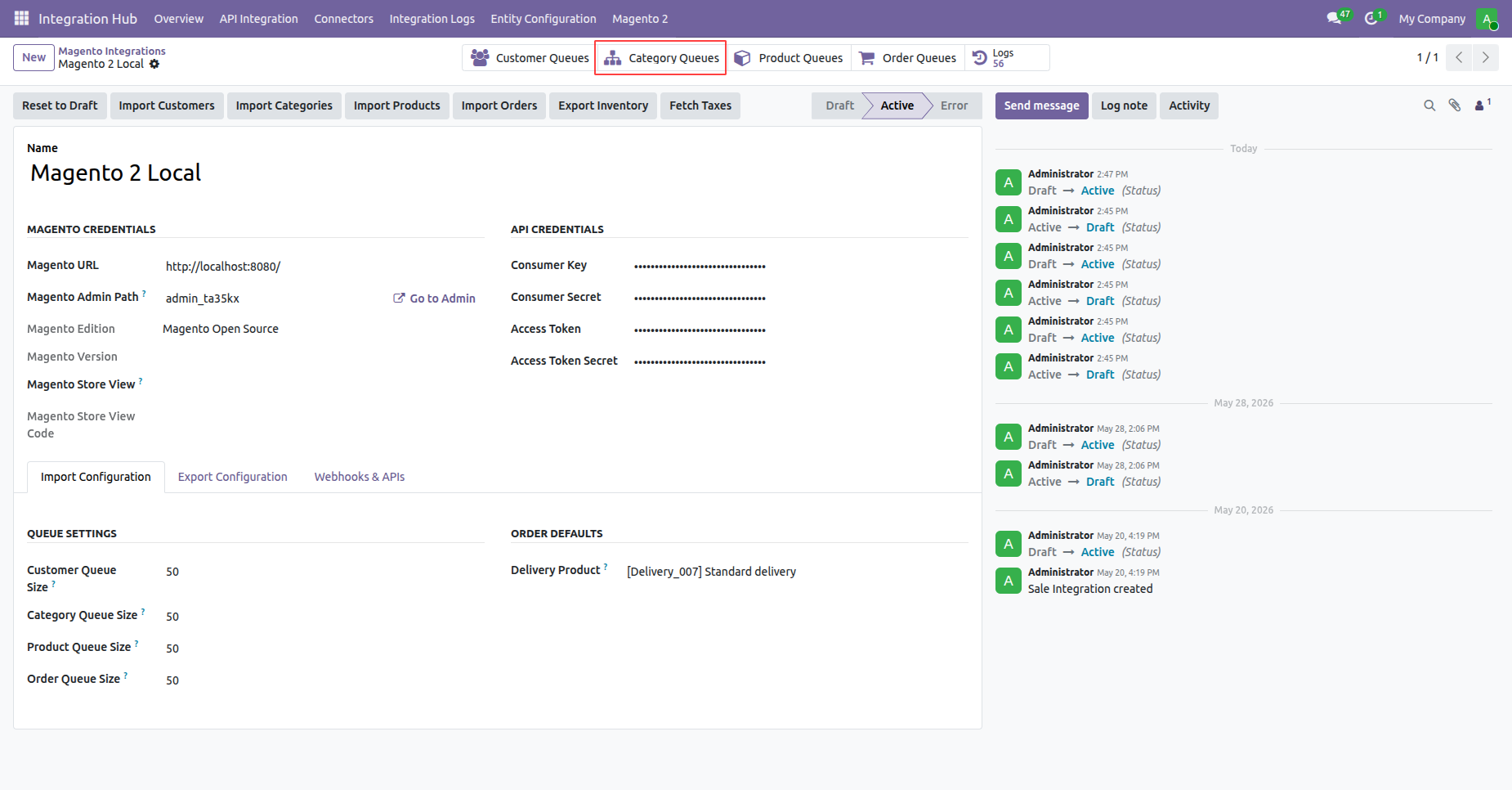
Open the Category Queues shortcut to continue reviewing category synchronization records.
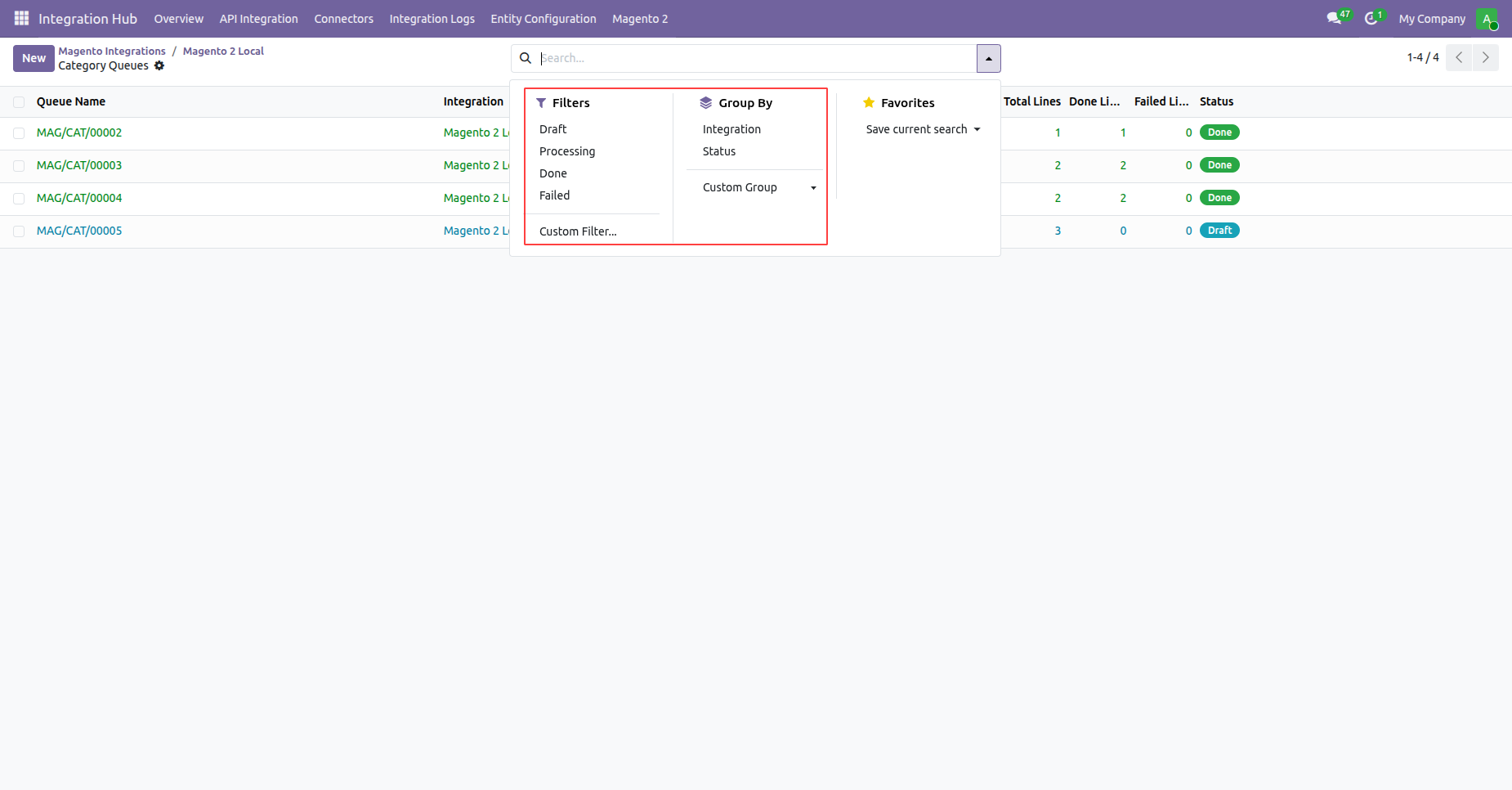
Use the filters panel to narrow category queues by status, integration, or custom criteria.
Select the draft category queue row to review its pending category lines.
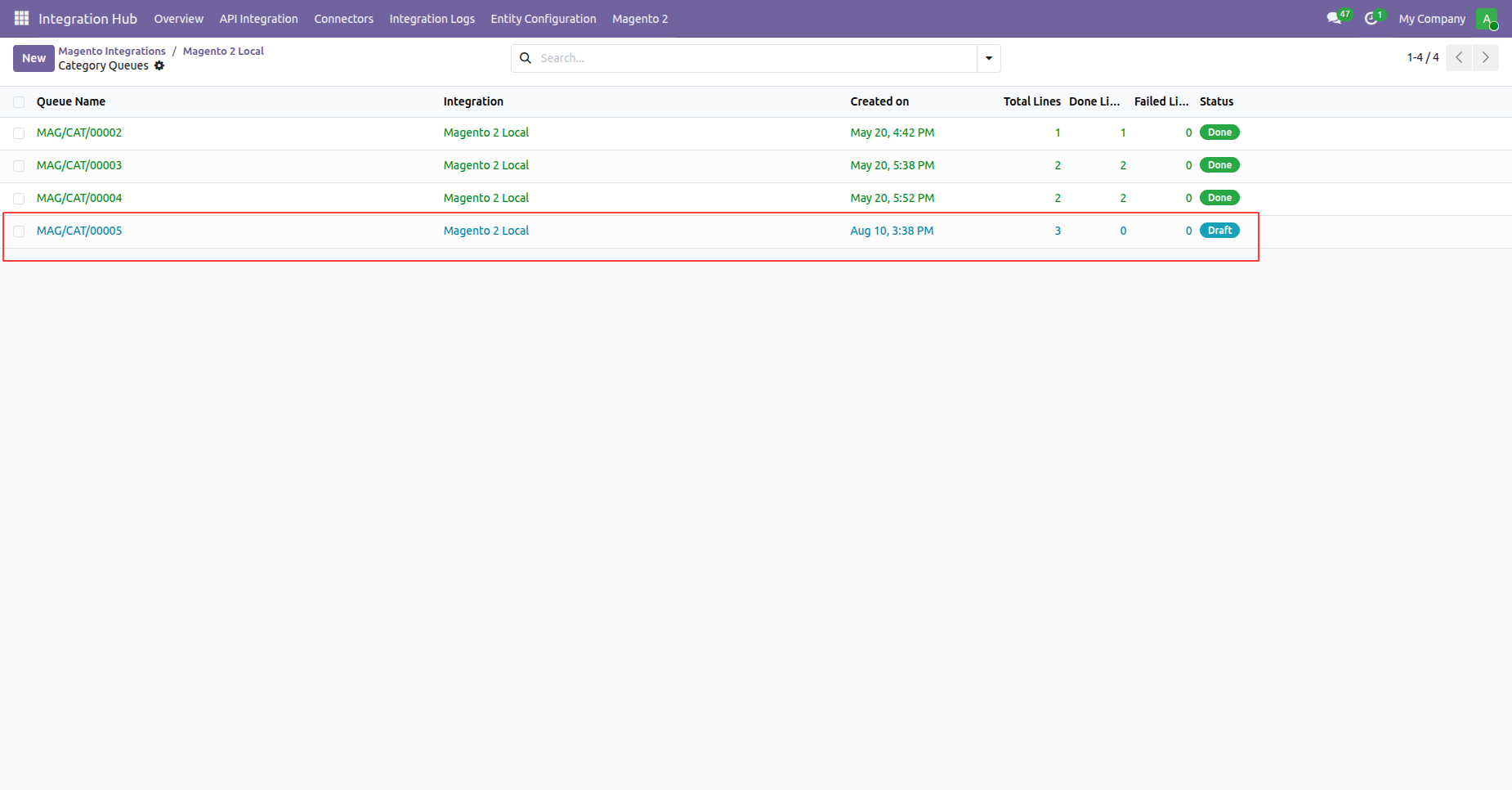
Press Process Queue to process the highlighted category records in the draft queue.
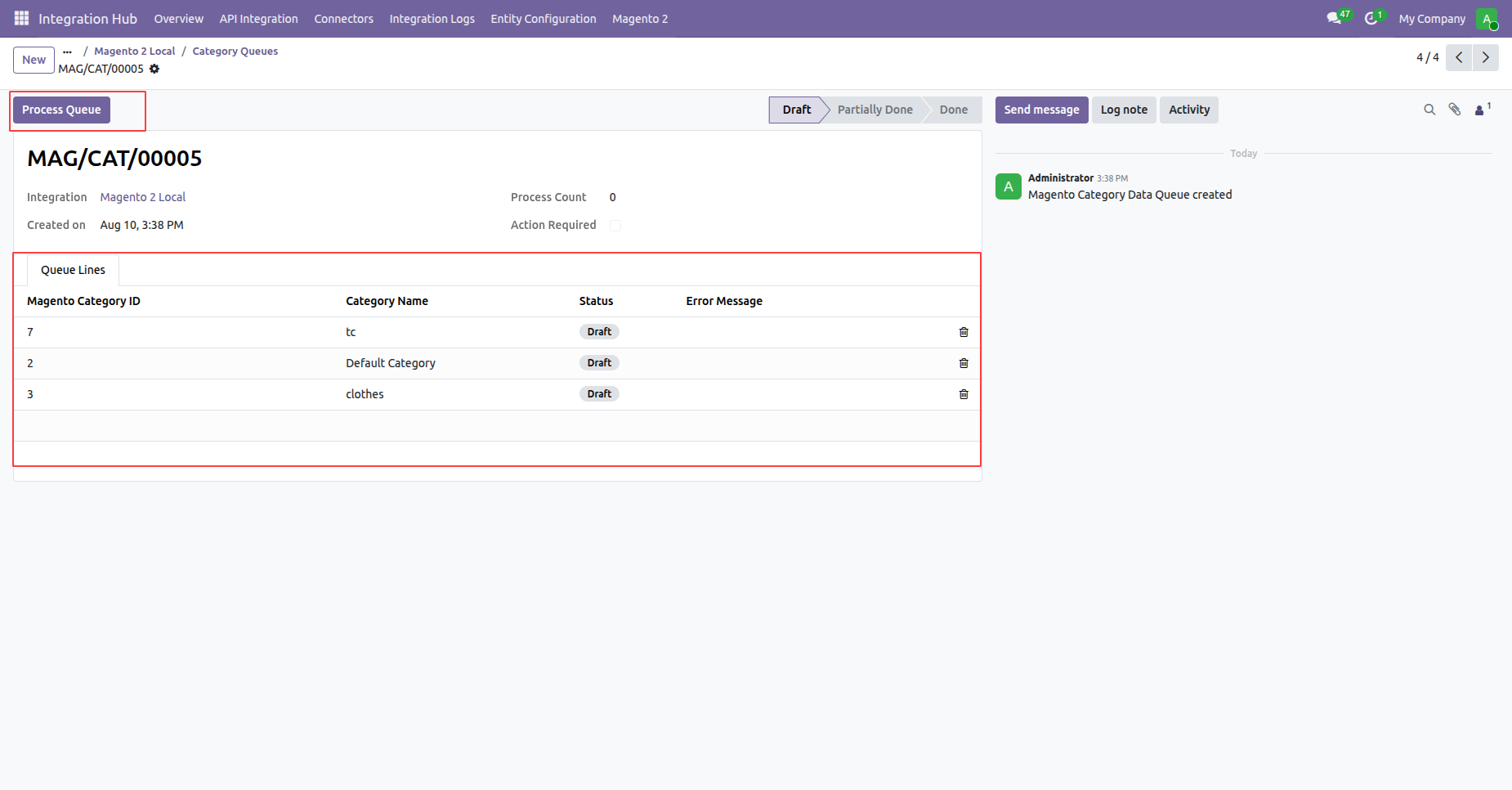
Review the completed queue and confirmation message after all category lines are processed.
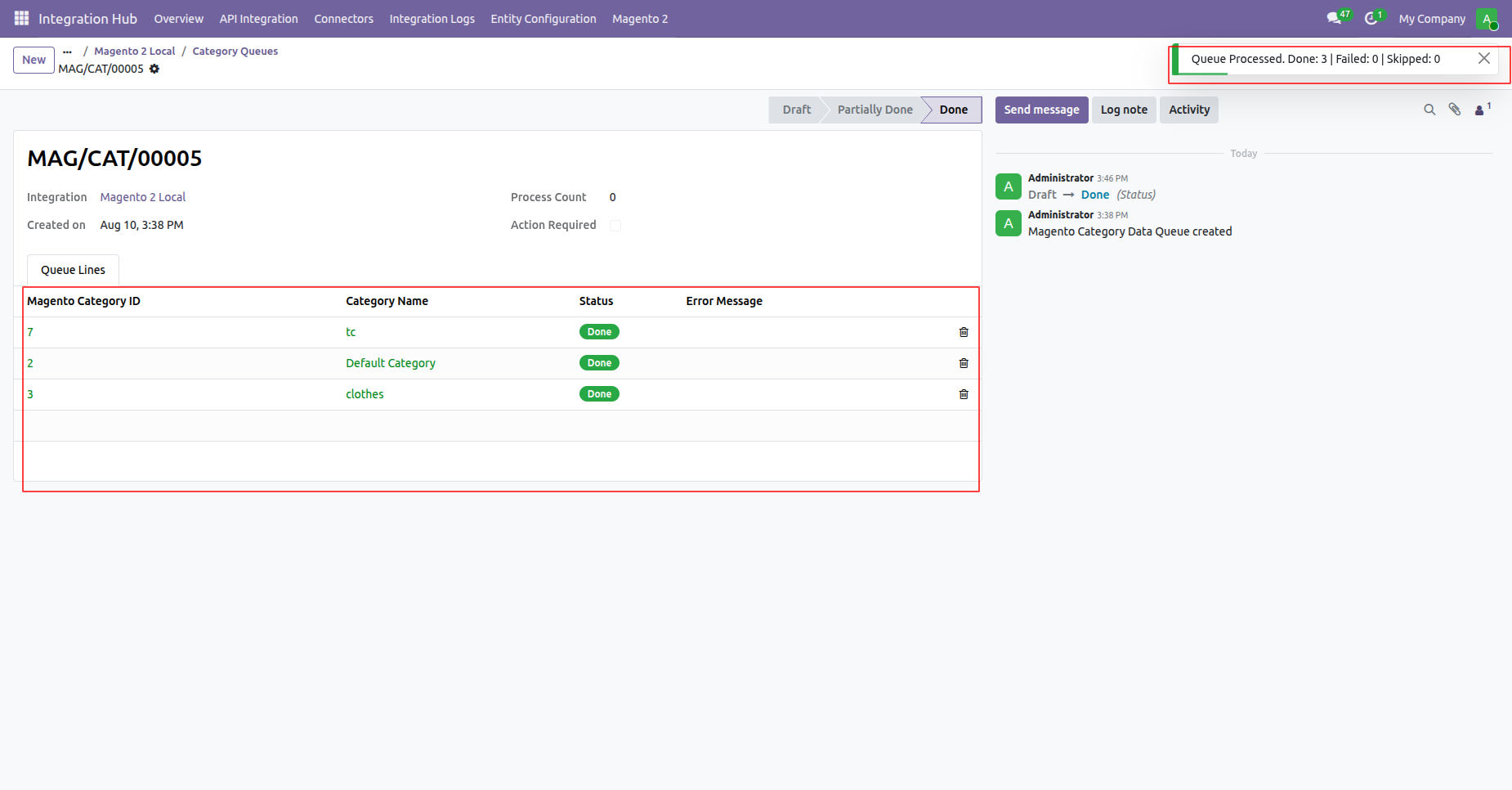
Select Category Mapping from the Magento 2 menu to review category links.
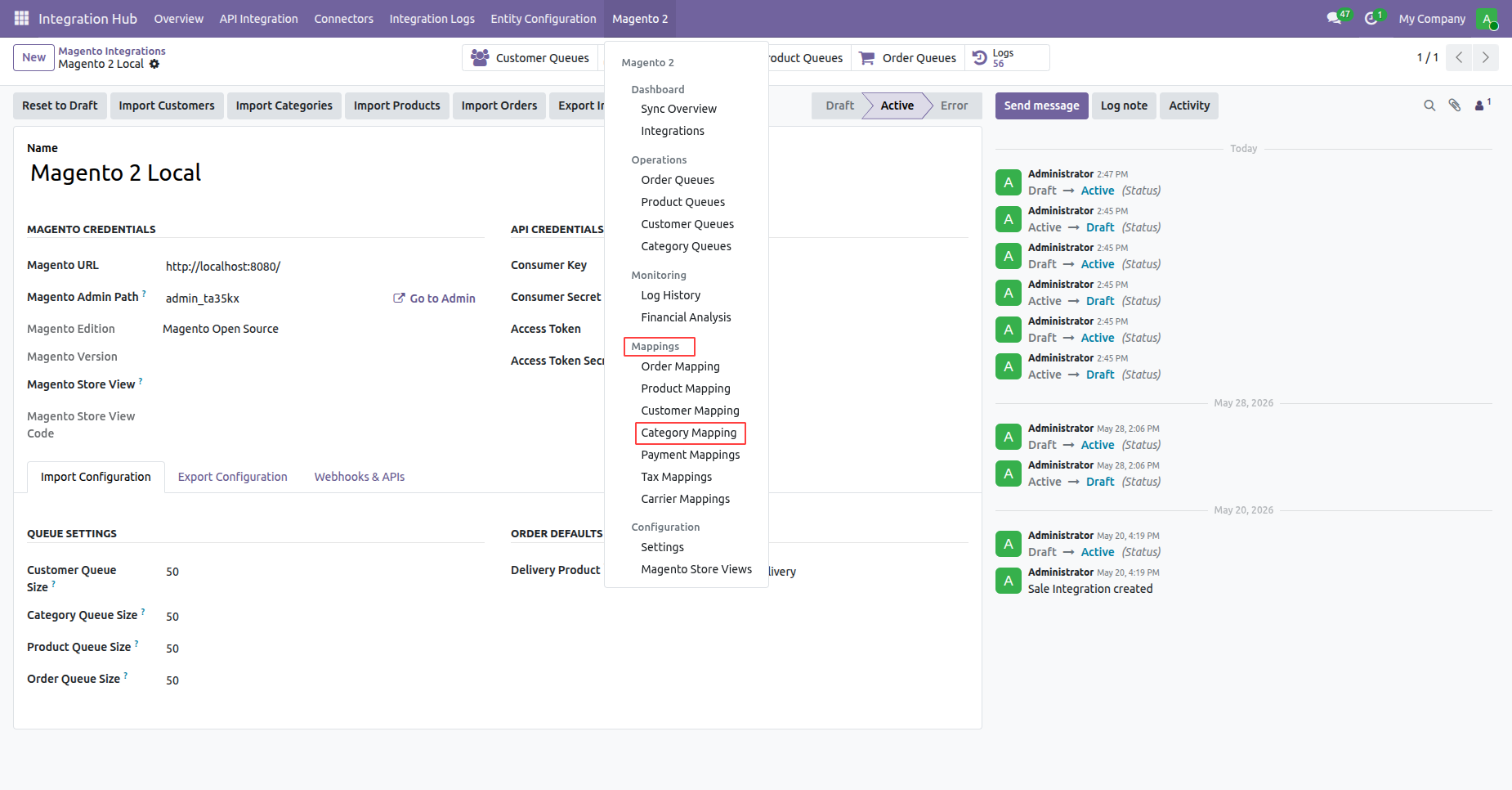
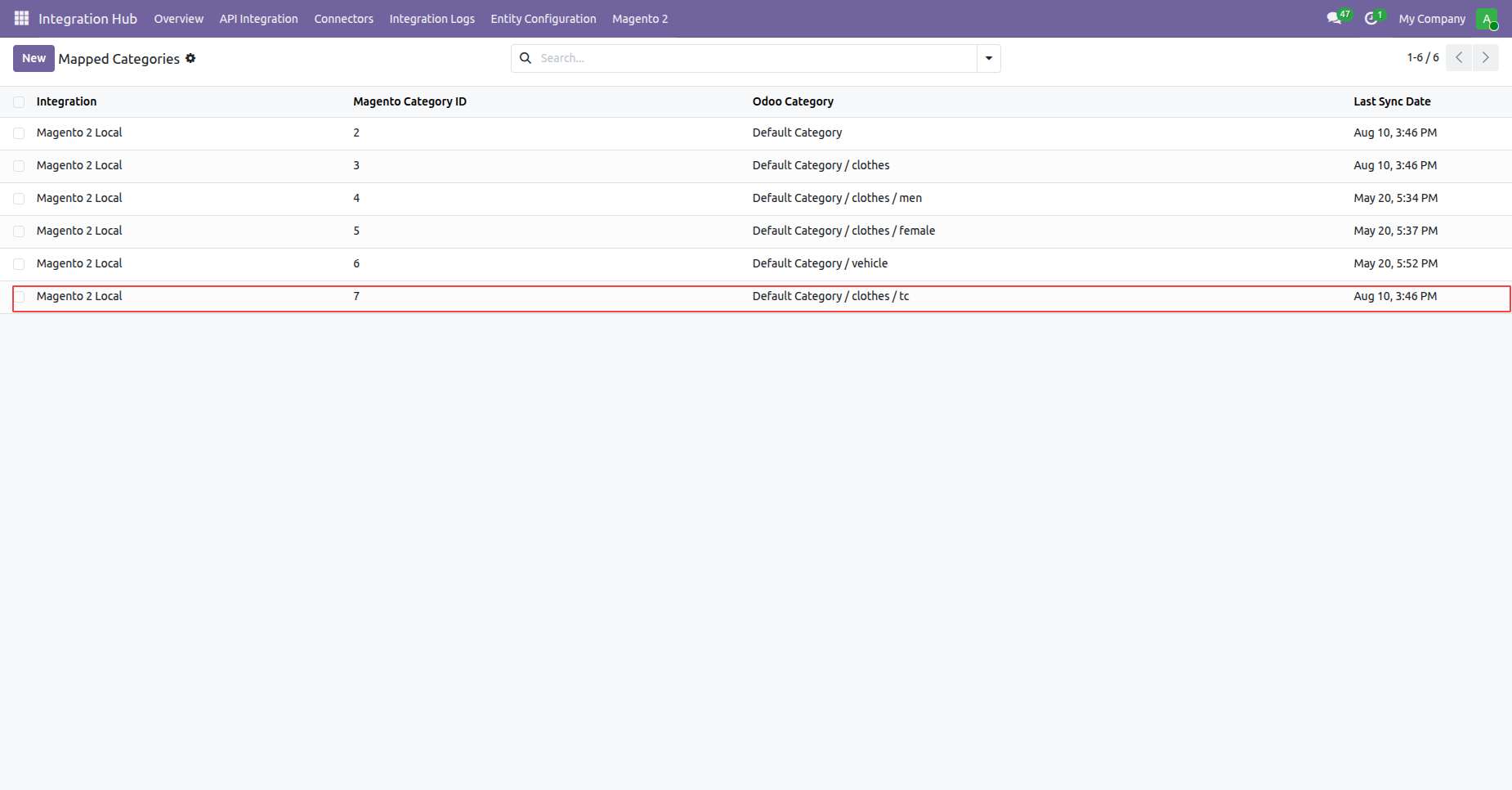
Review category mappings showing Magento category IDs, Odoo categories, and last synchronization dates.
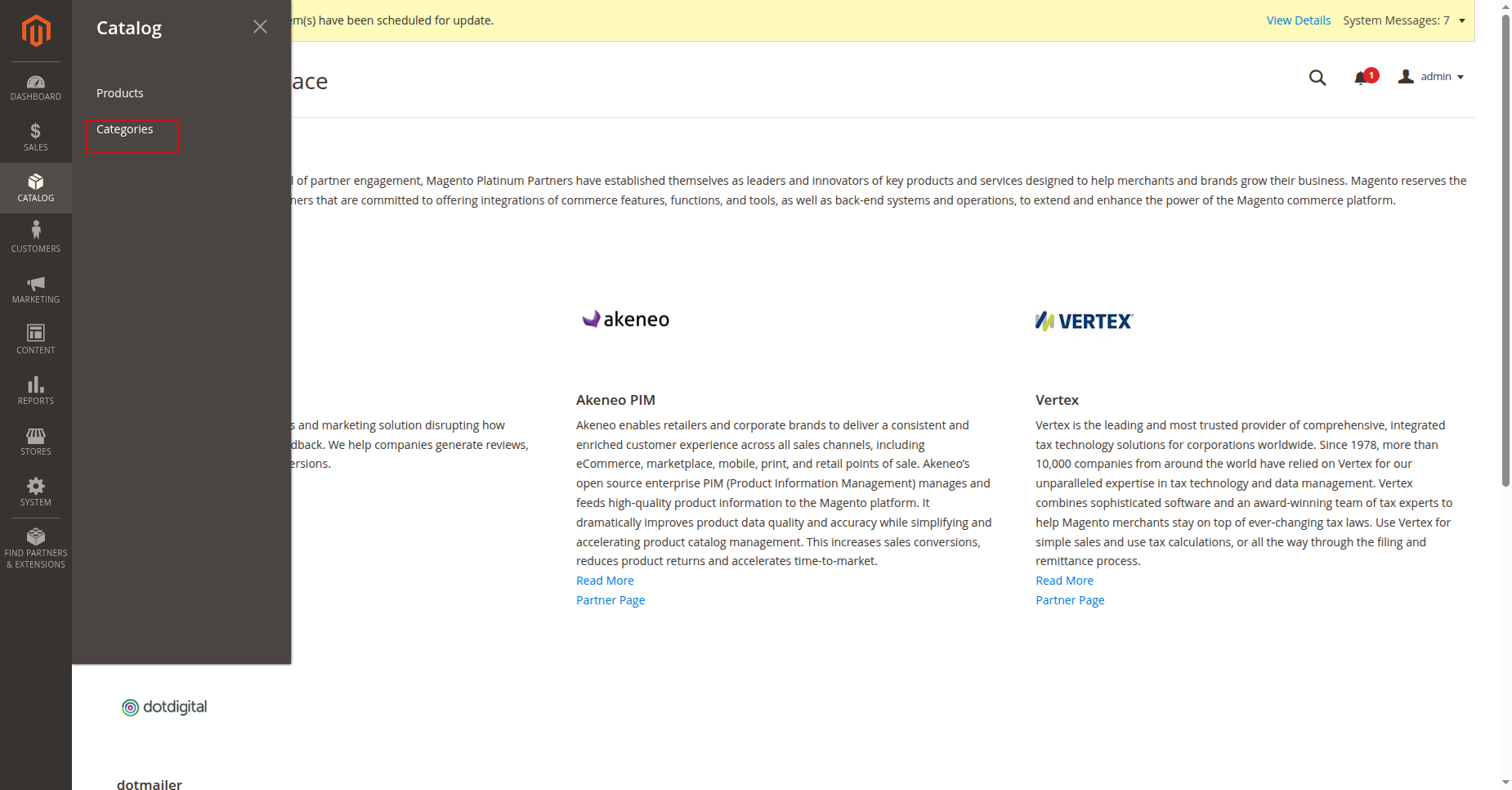
Open Catalog and choose Categories to view category records in Magento administration.
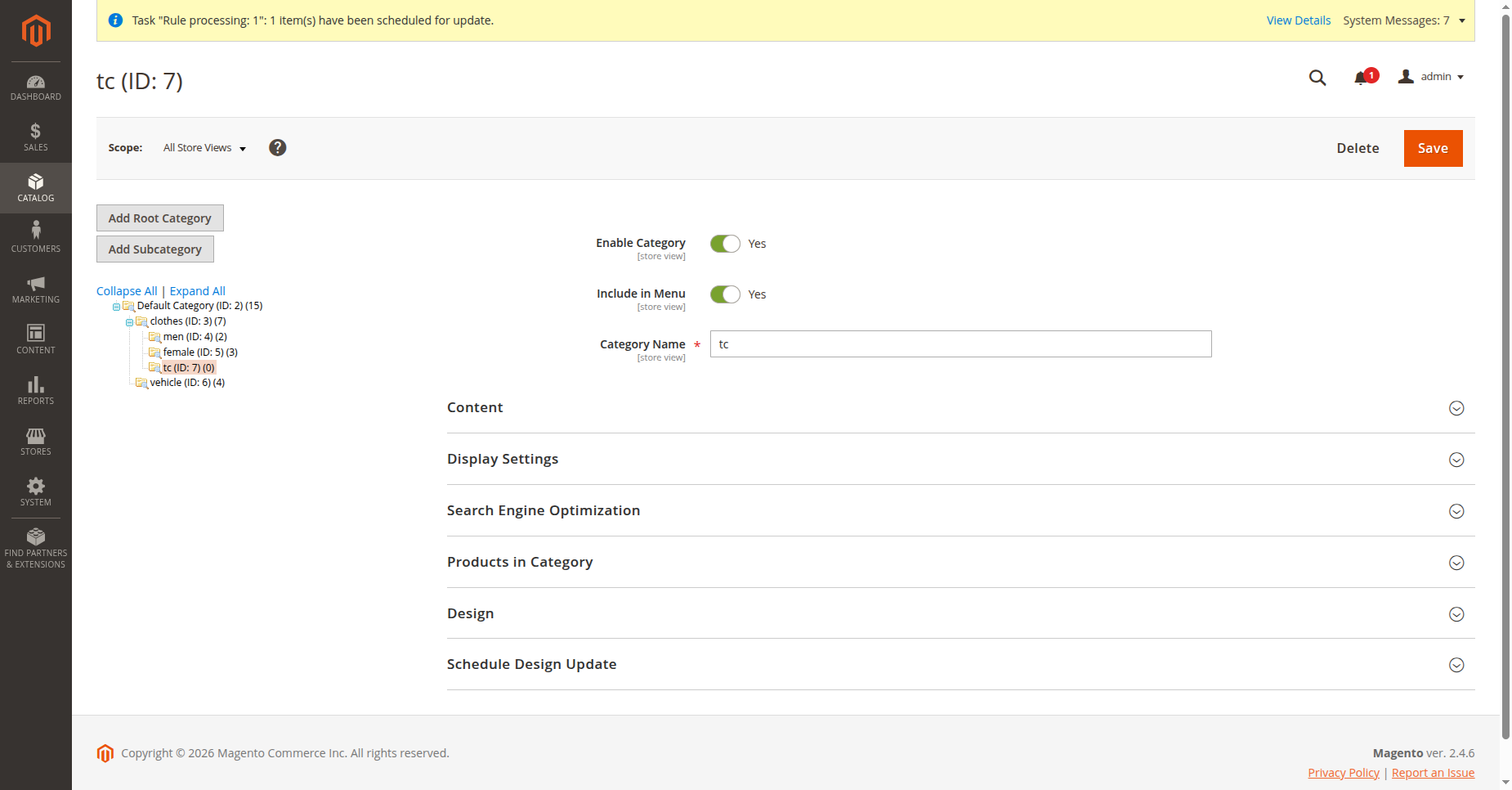
Review the selected Magento category, its hierarchy, enabled status, and editable name.
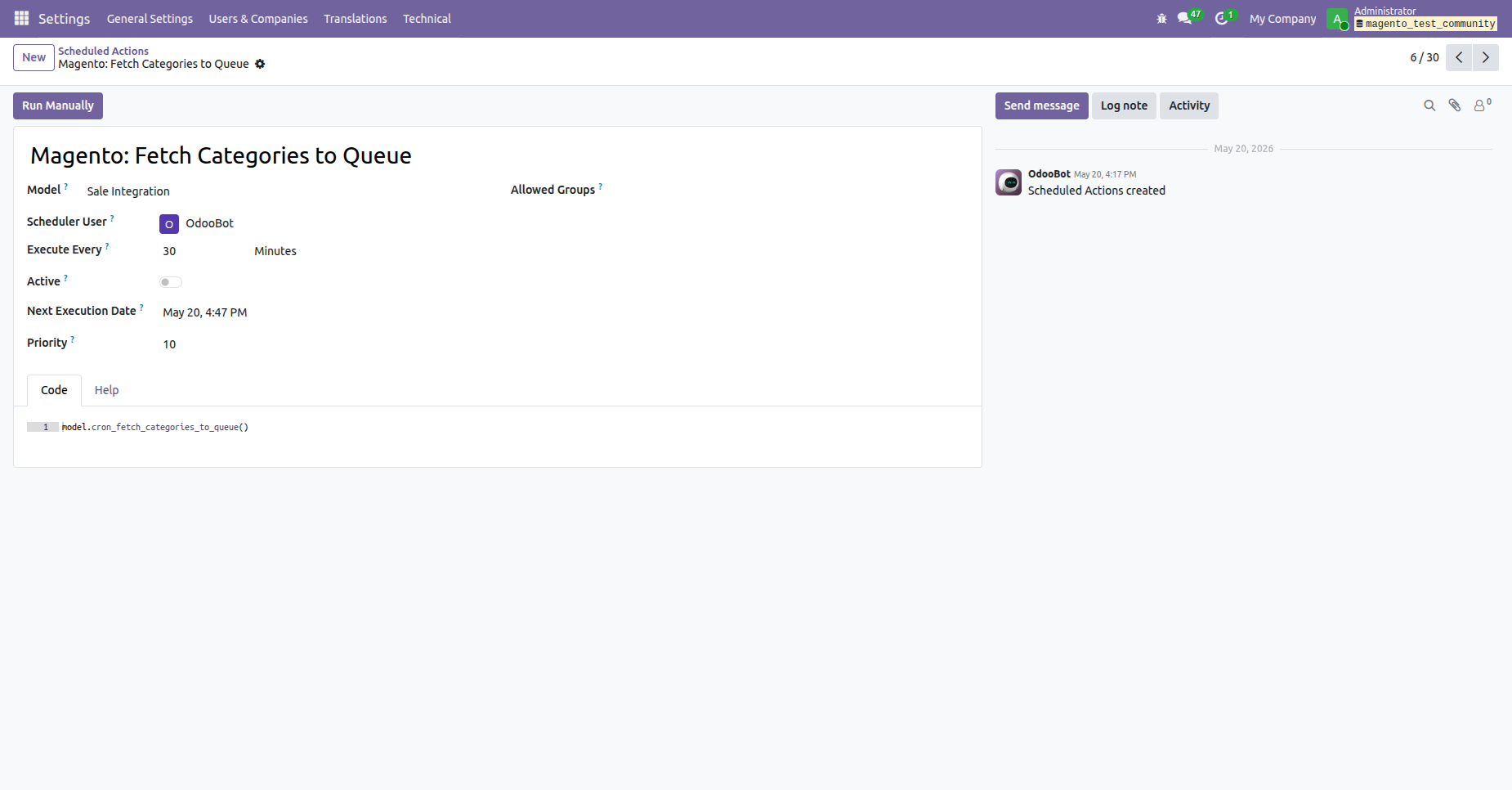
Open the scheduled action that fetches Magento categories into the queue.
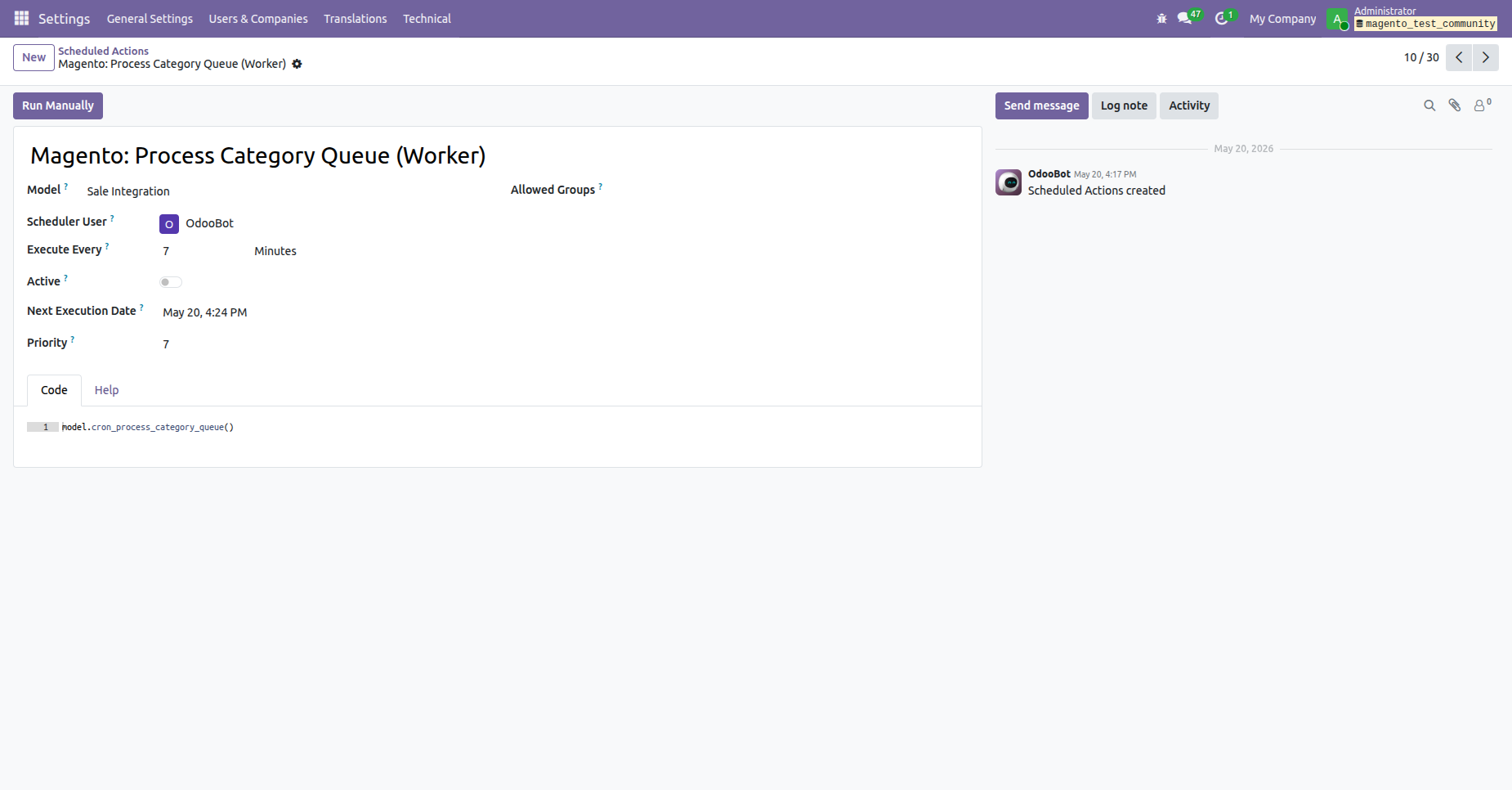
Open the scheduled worker that processes Magento category queues in the background.
 How it works?
Watch Video
How it works?
Watch Video
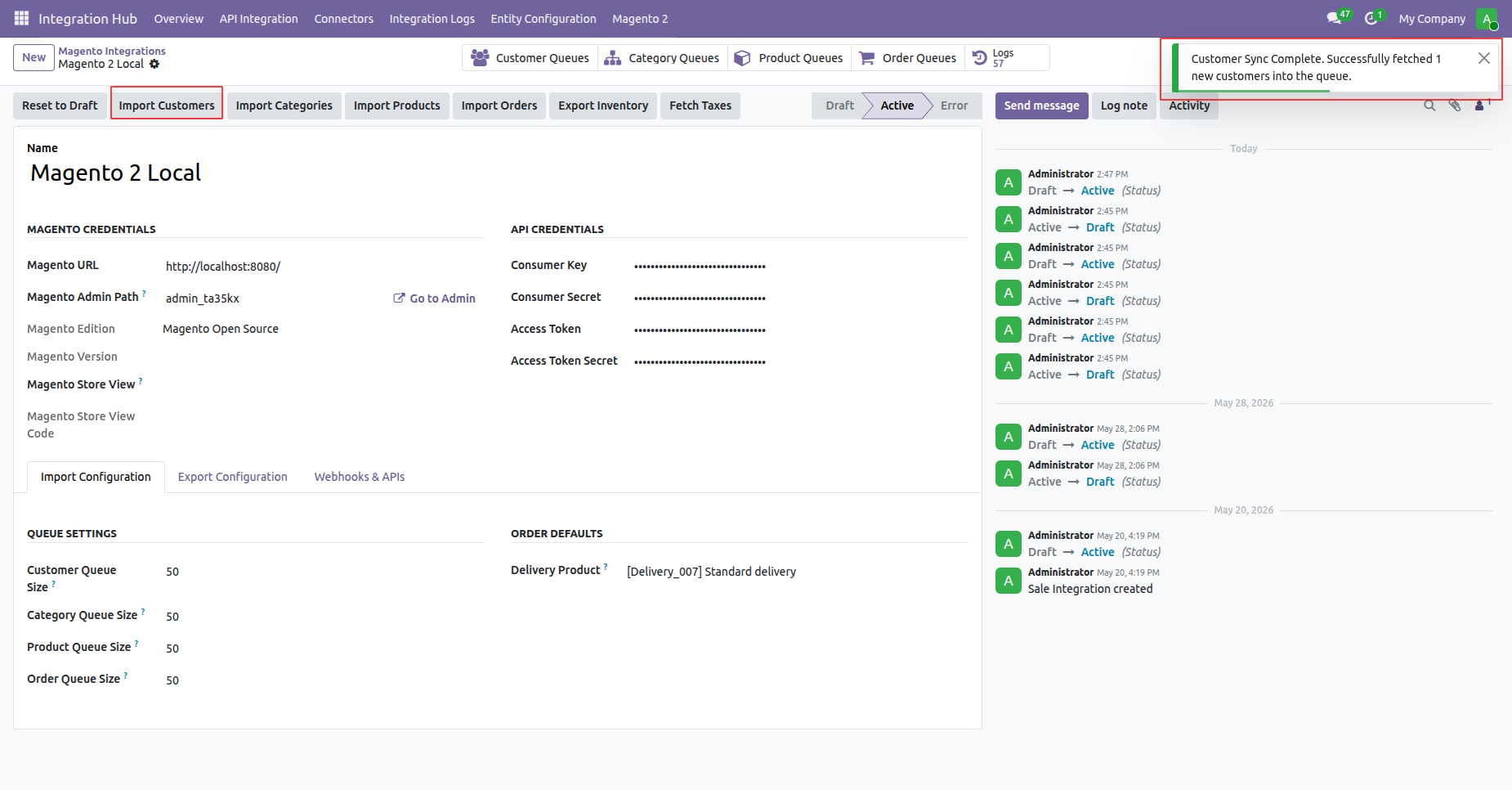
Click Import Customers and review the confirmation that a customer was added to the queue.
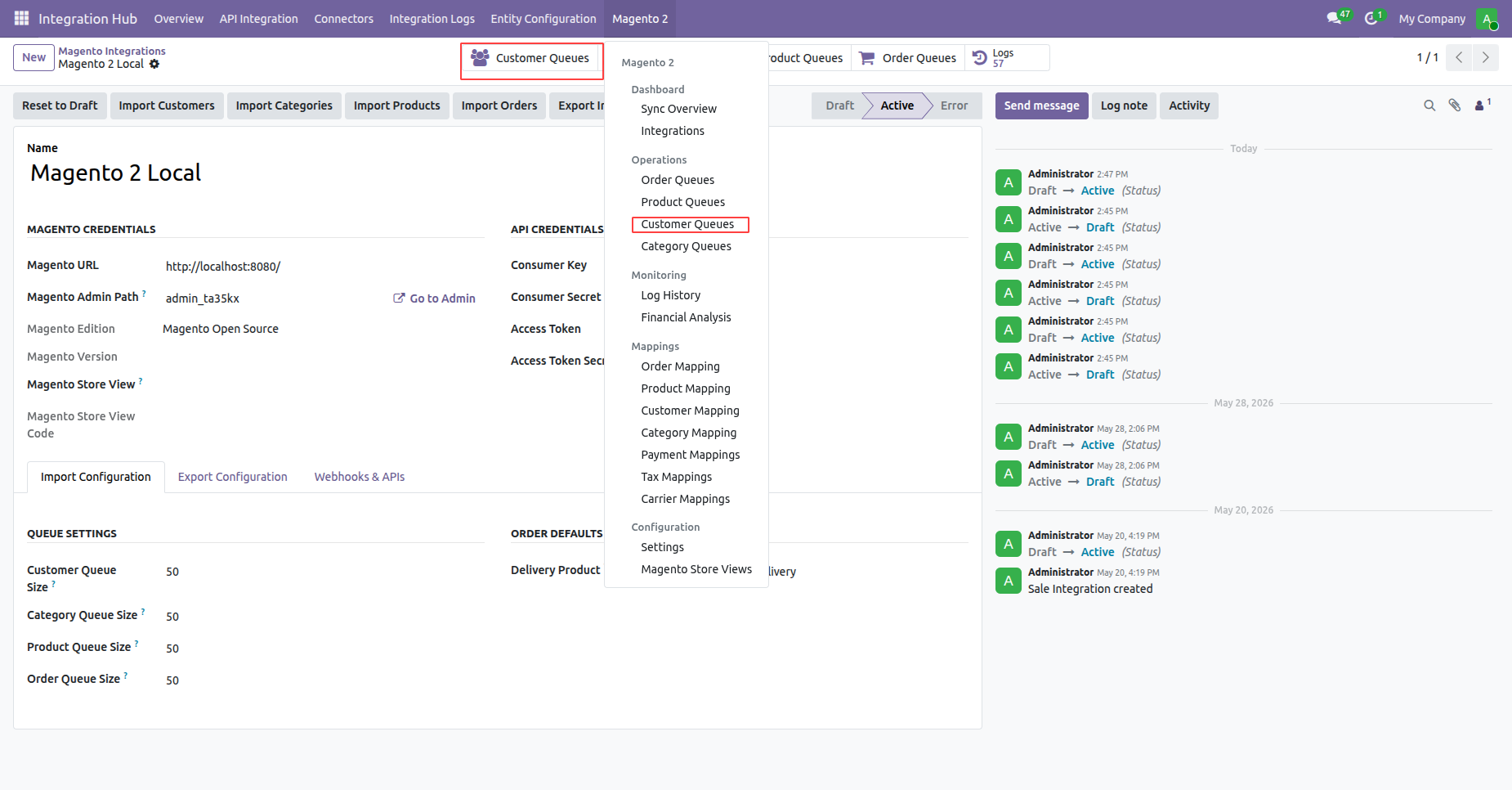
Select Customer Queues from the Magento 2 menu to view customer synchronization jobs.
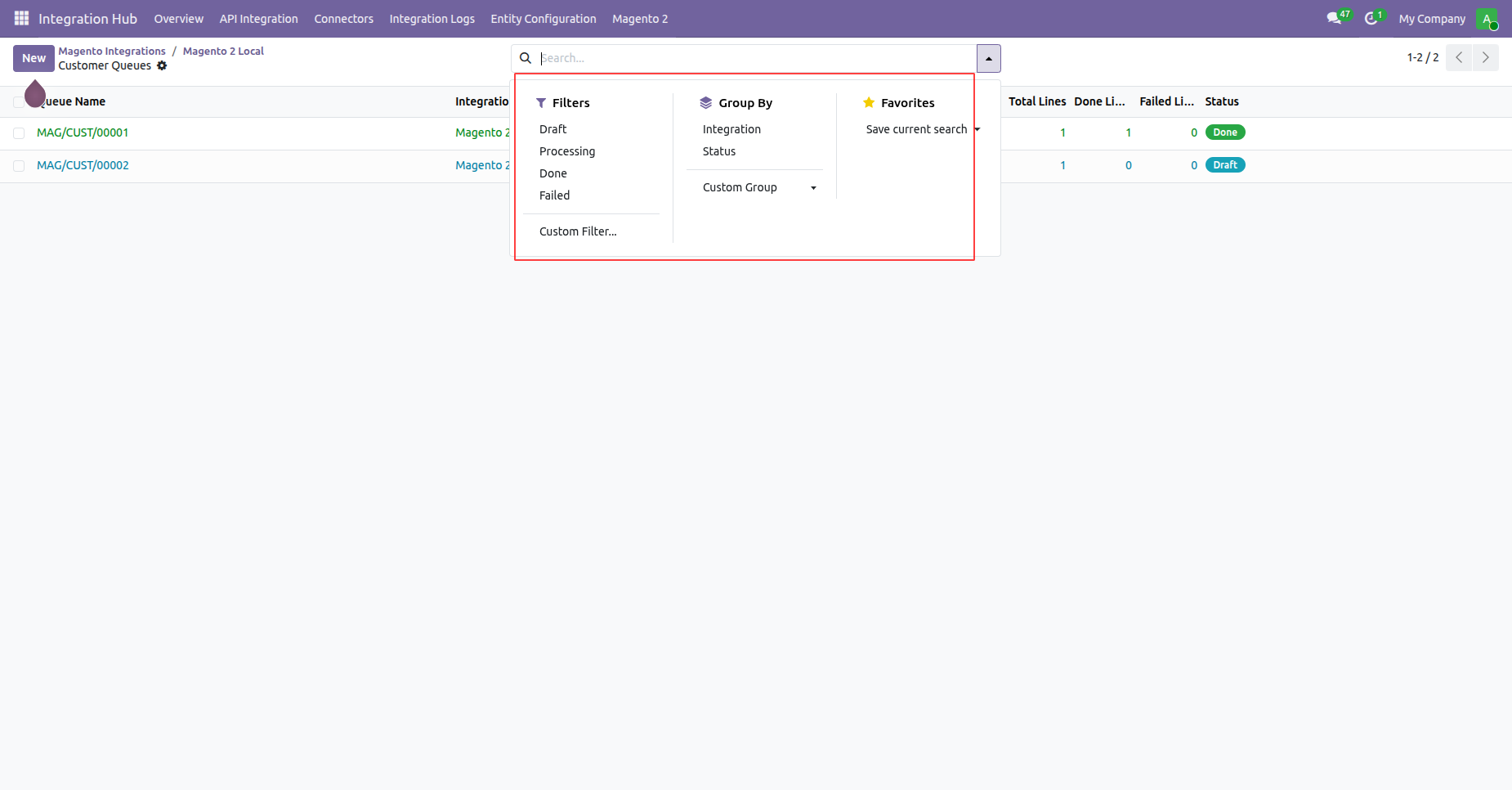
Use the filters panel to narrow customer queues by status, integration, or custom criteria.
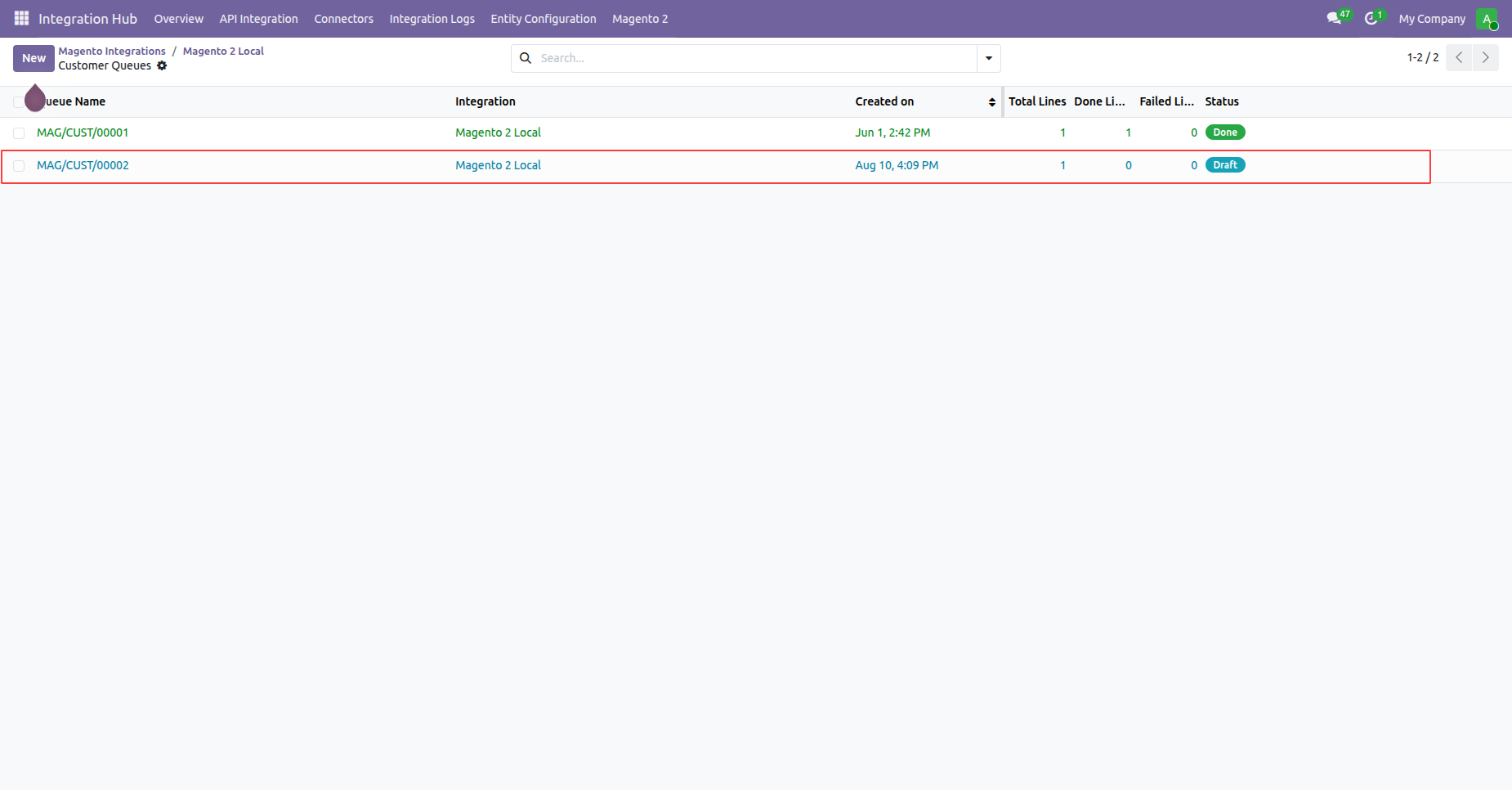
Select the draft customer queue row to review the pending customer record.
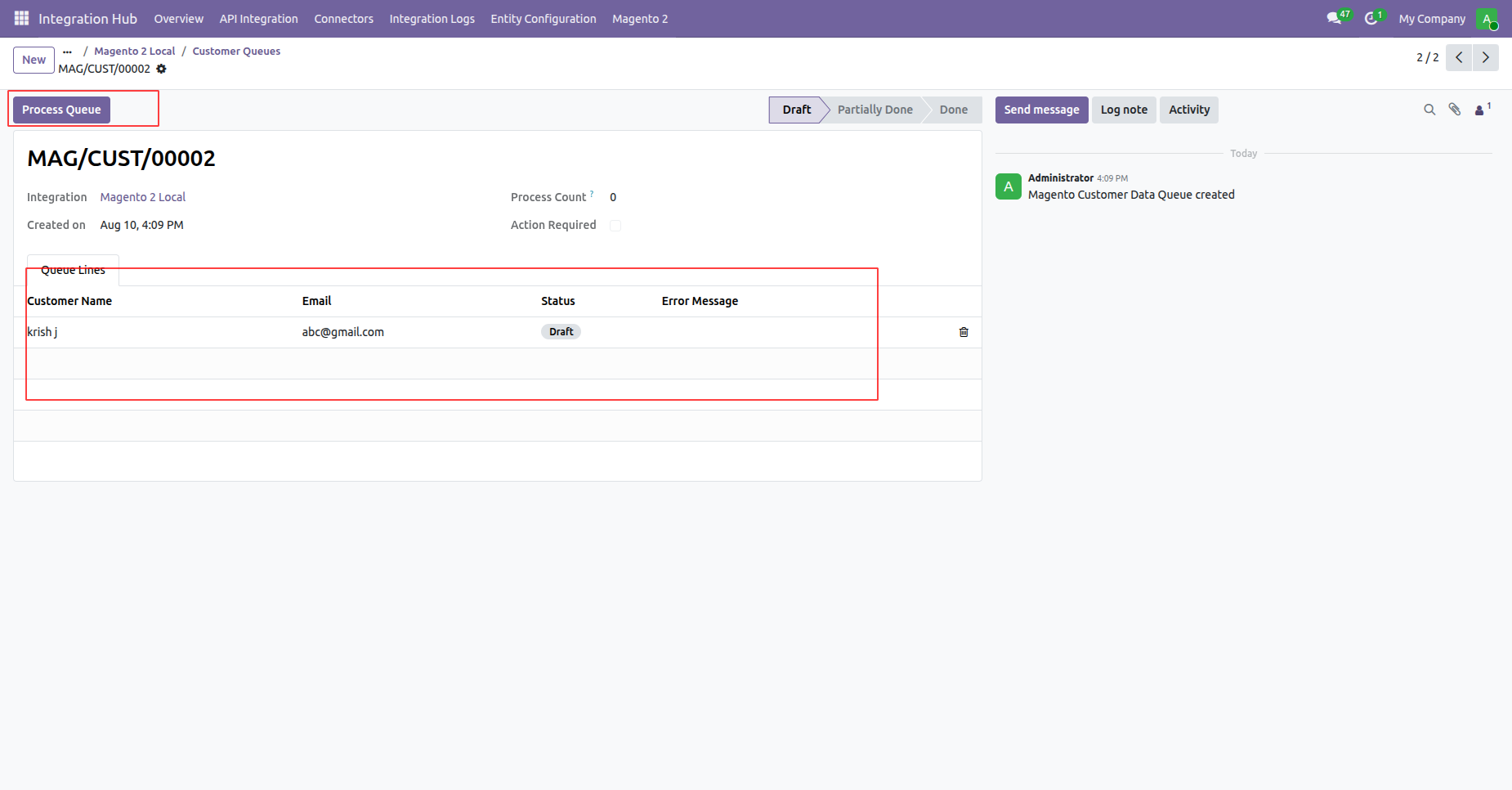
Press Process Queue to process the highlighted customer queue and its customer line.
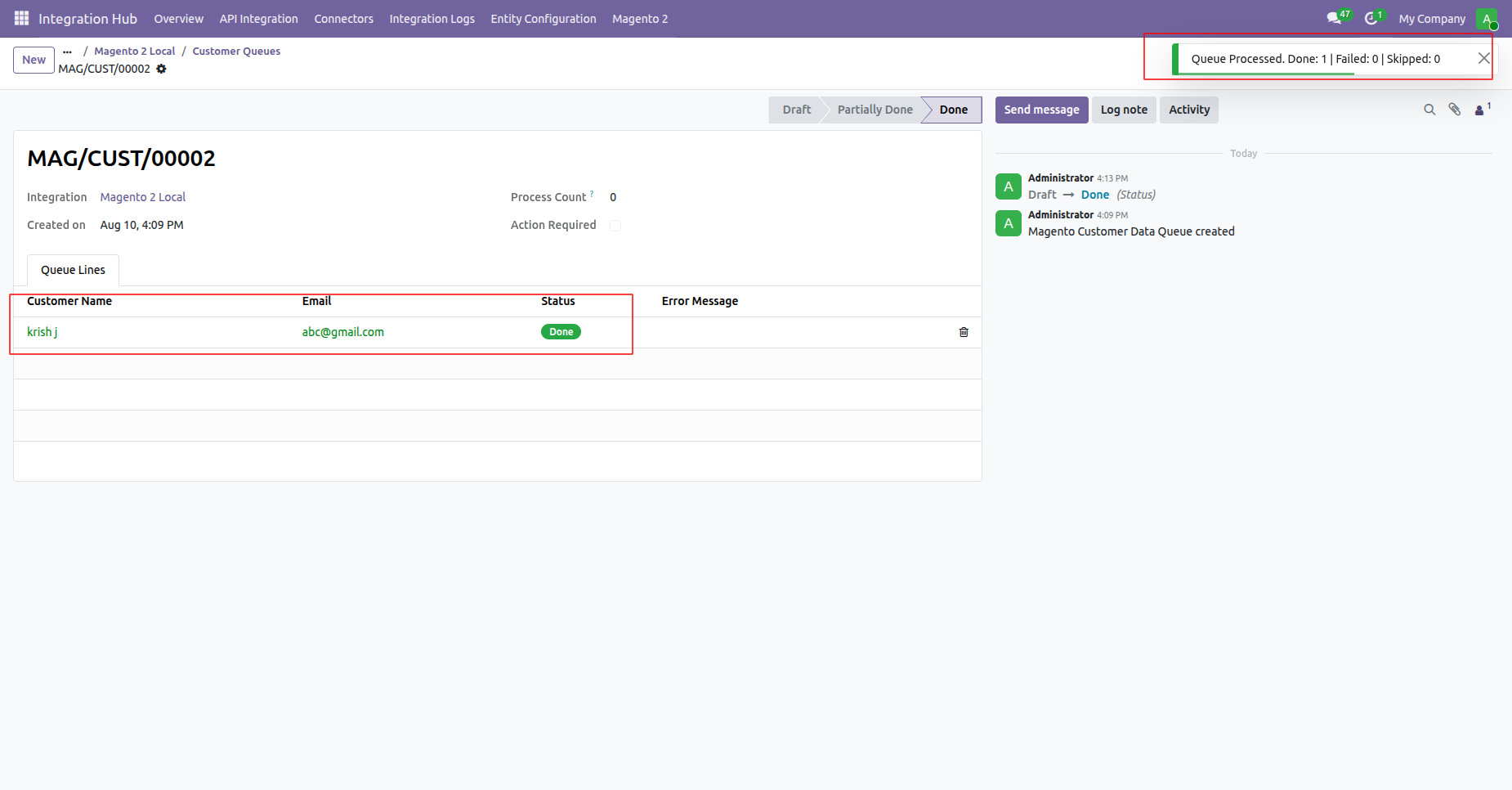
Review the completed customer queue and confirmation message after processing finishes.
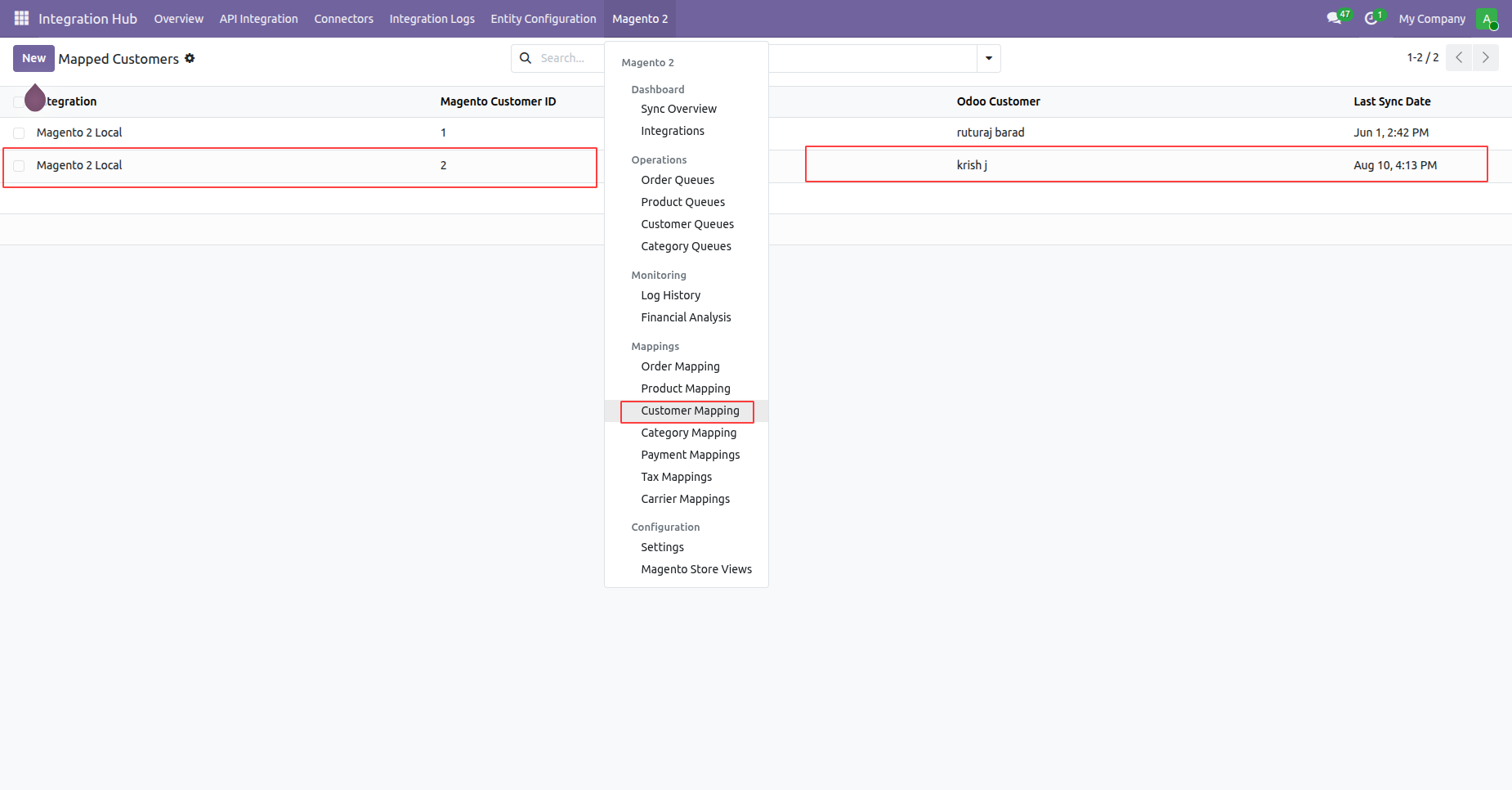
Open Customer Mapping from the Magento 2 menu to review synchronized customer links.
Open the mapped customer record to review the highlighted person name and email address.
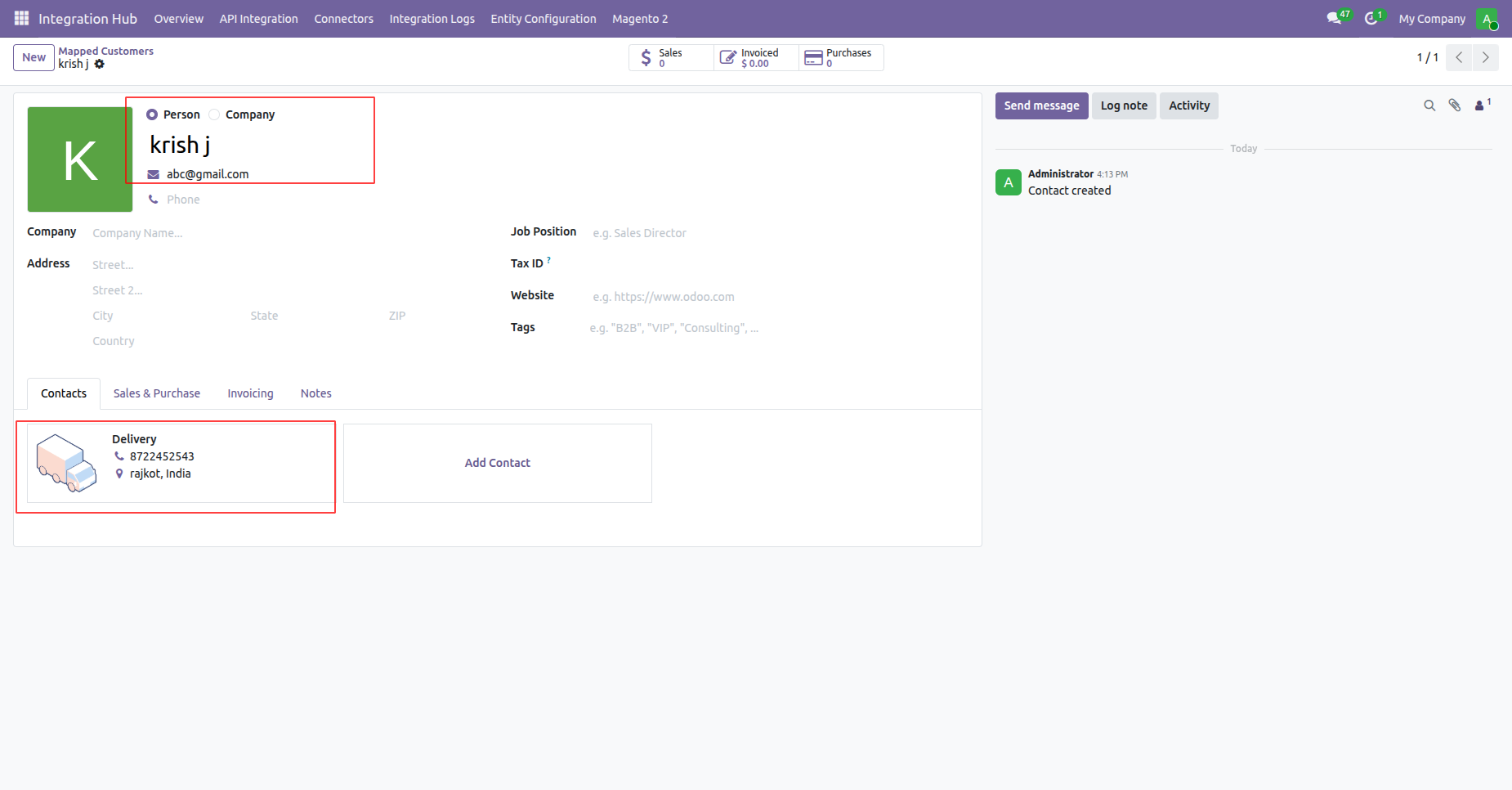
Review the linked delivery contact card, including its phone number and location.
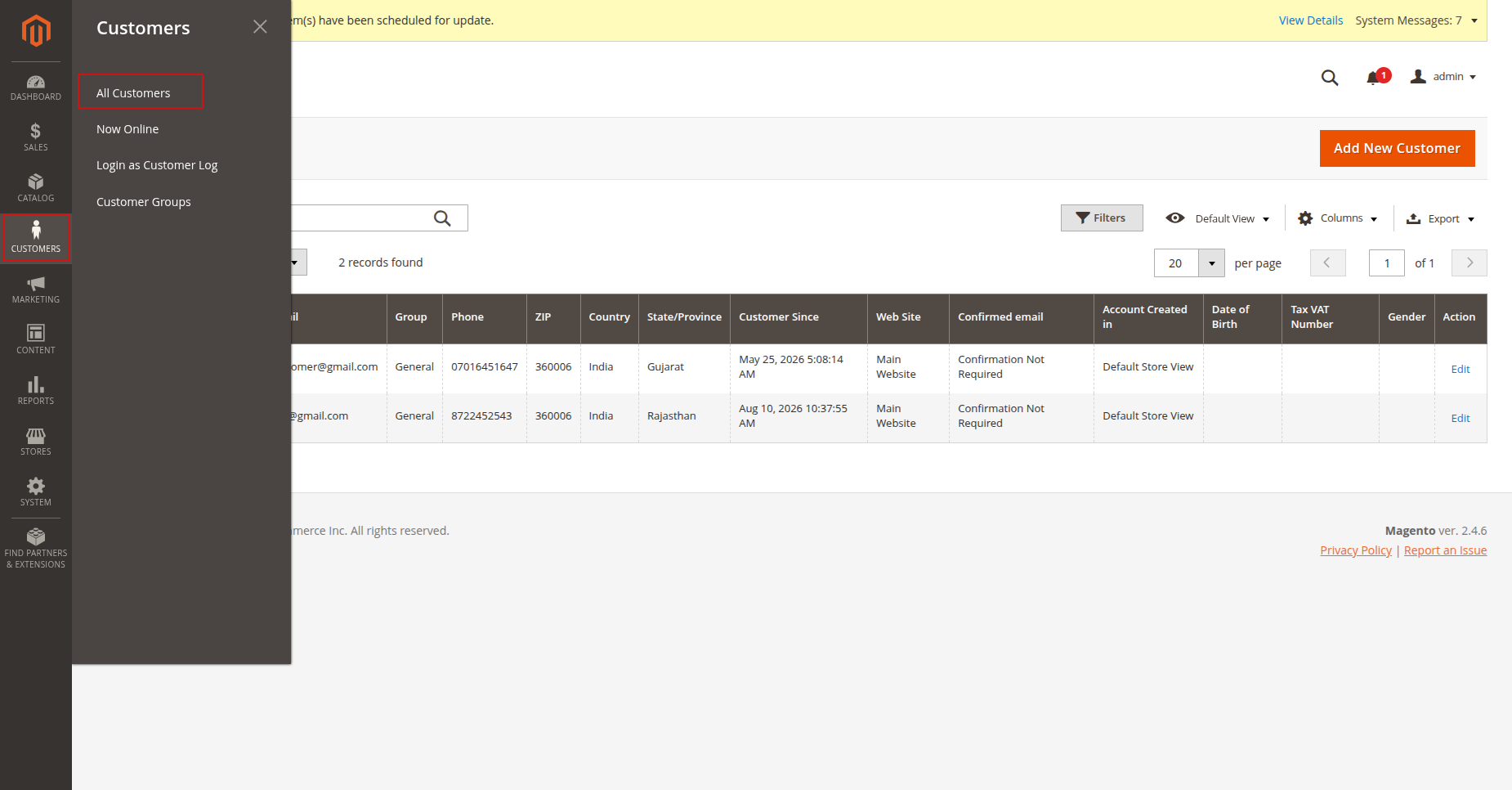
Review the Magento customer account information.
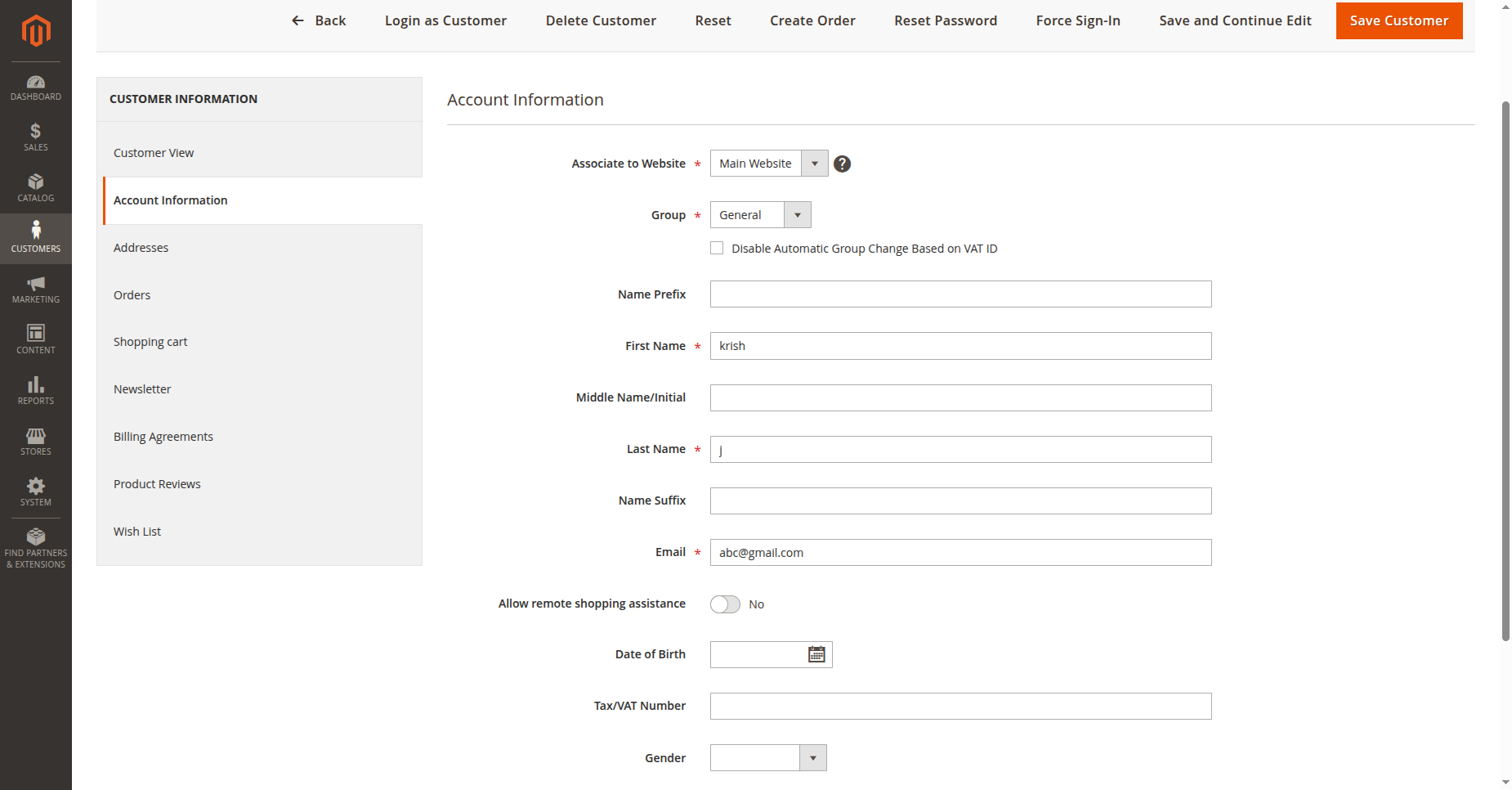
Review the Magento customer address information.
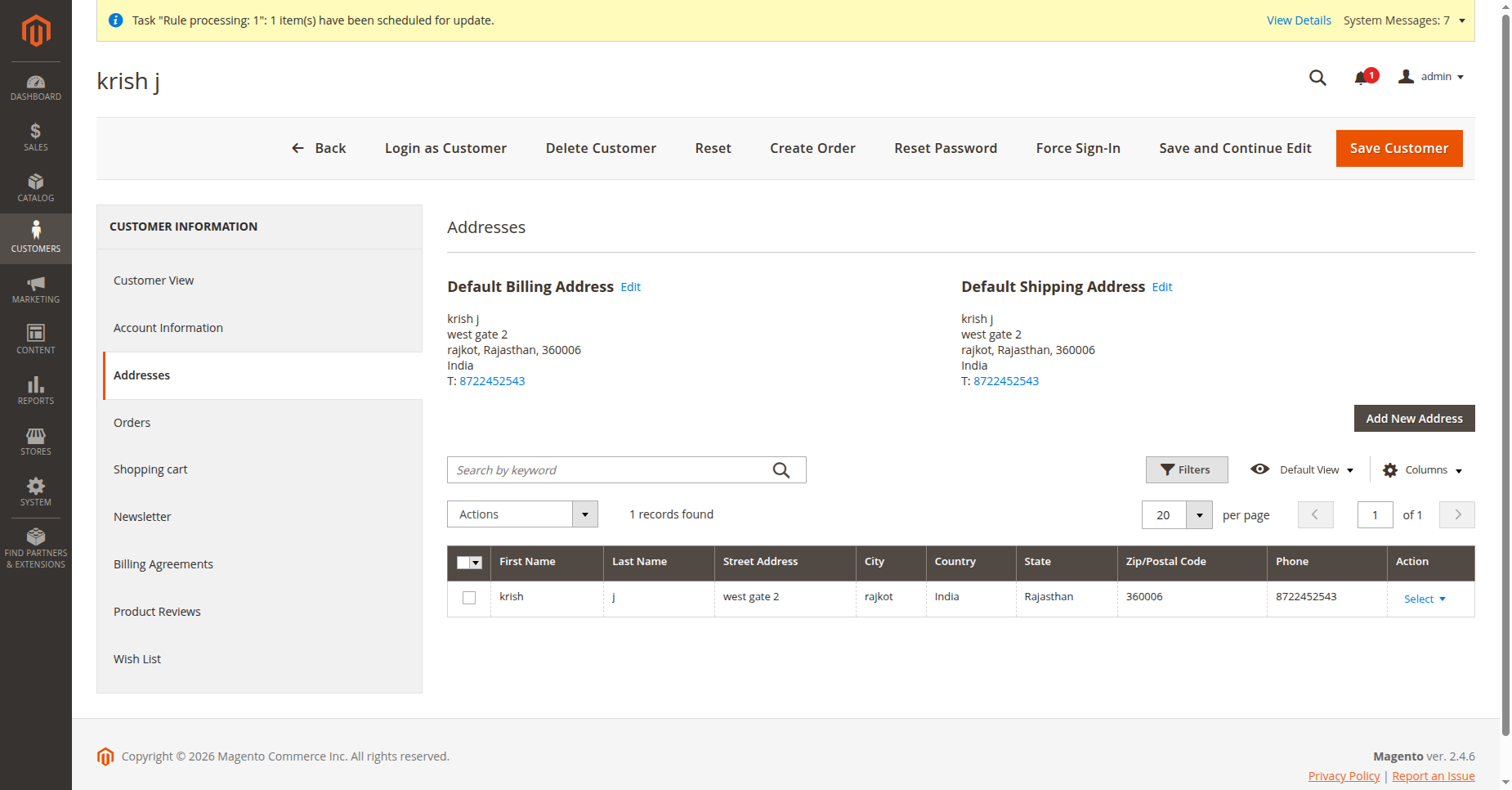
Open the scheduled action that fetches Magento customers into the queue.
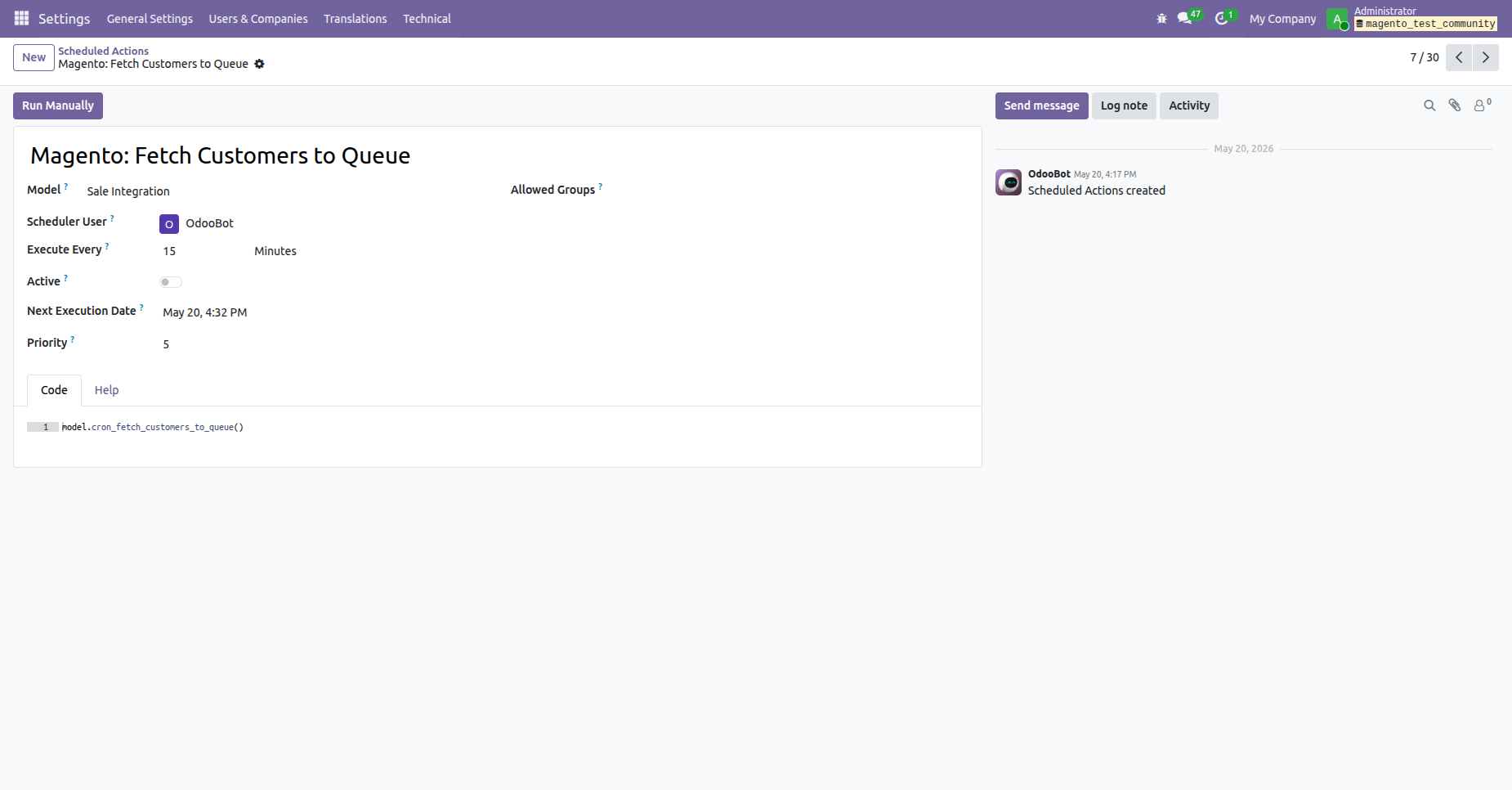
Open the scheduled worker that processes Magento customers queues in the background.
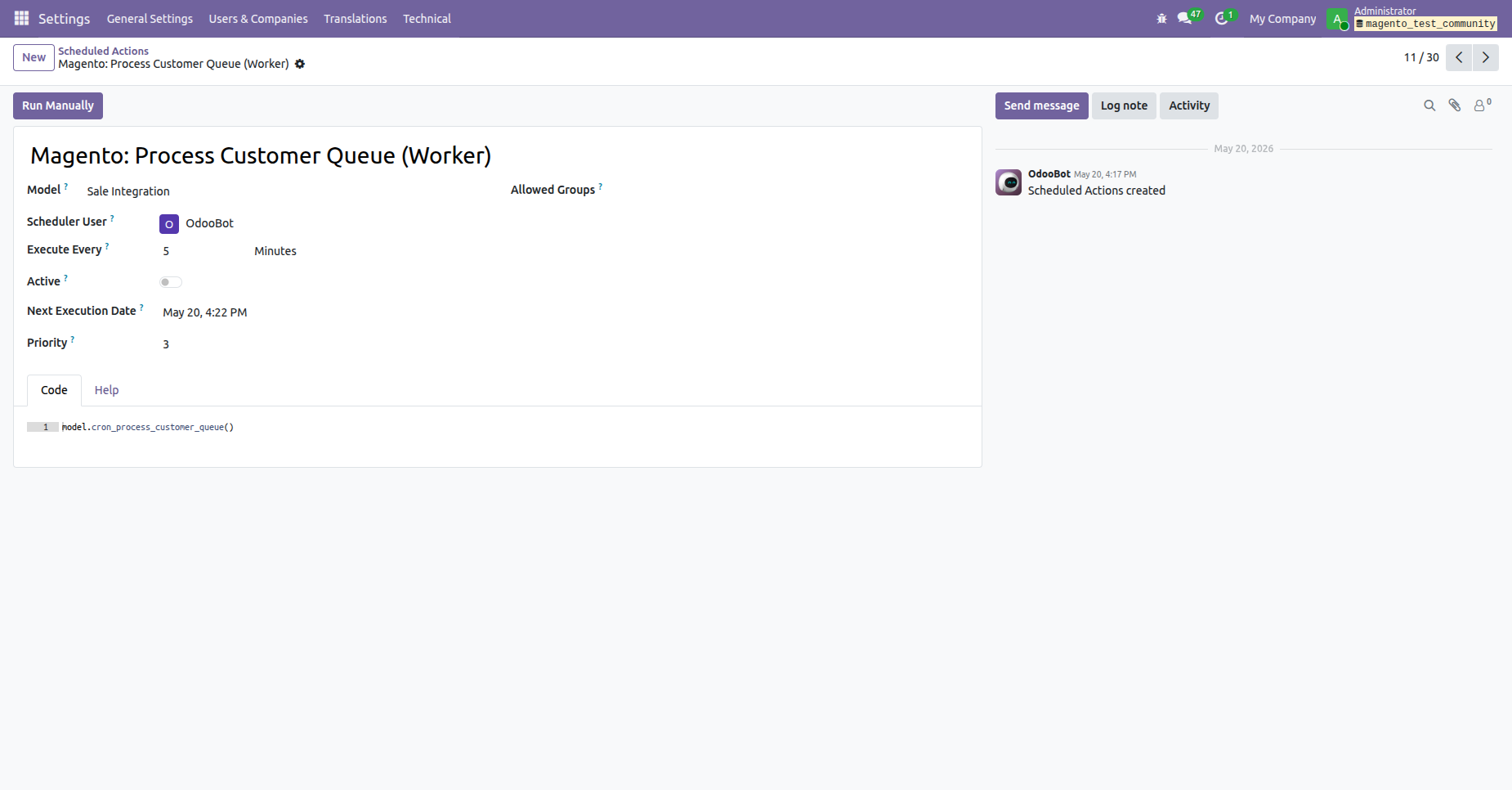 How it works?
Watch Video
How it works?
Watch Video
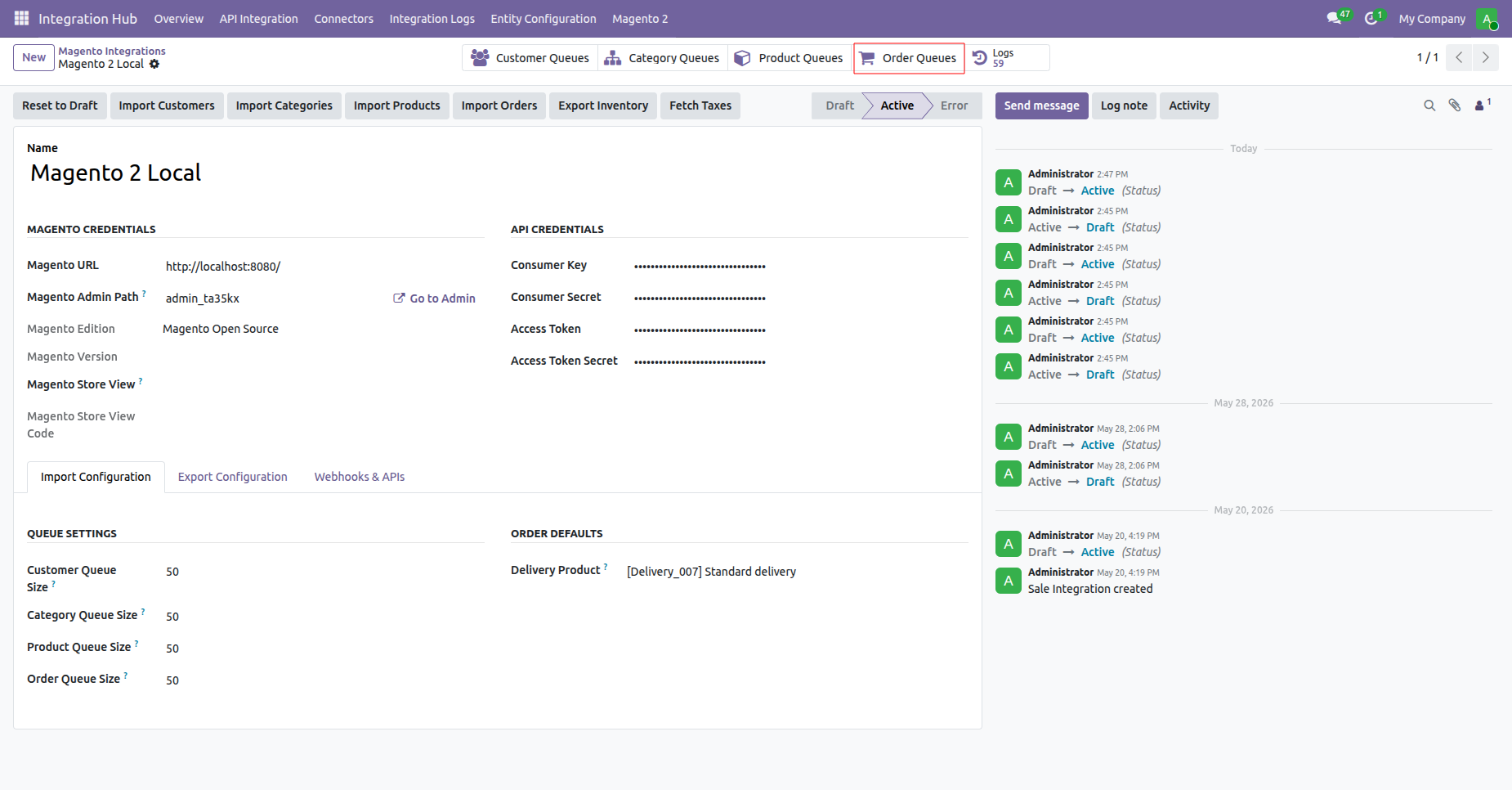
Click Import Orders to start fetching Magento sales orders into the synchronization queue.
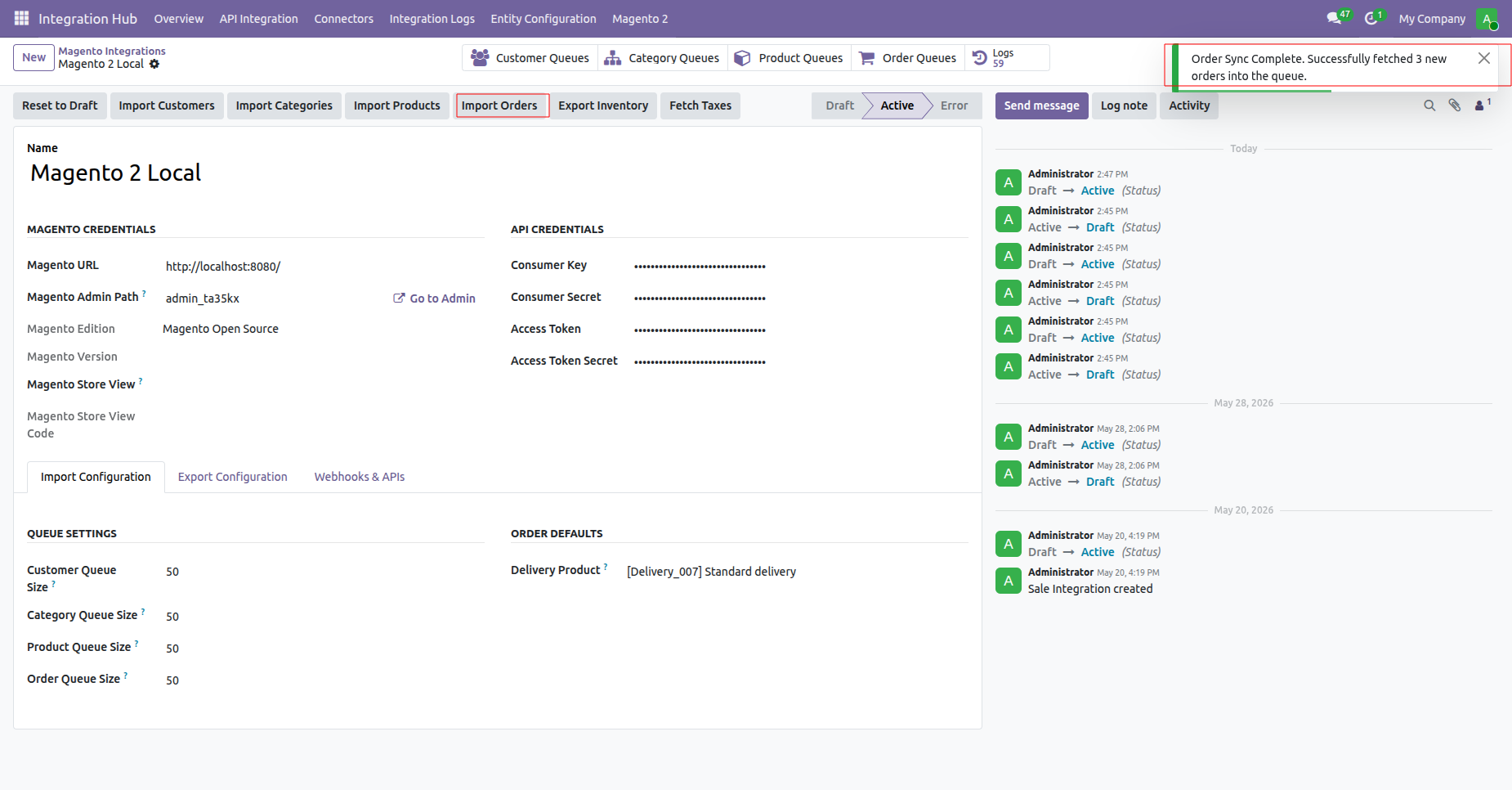
Select Order Queues from the Magento 2 menu to view sales order queue records.
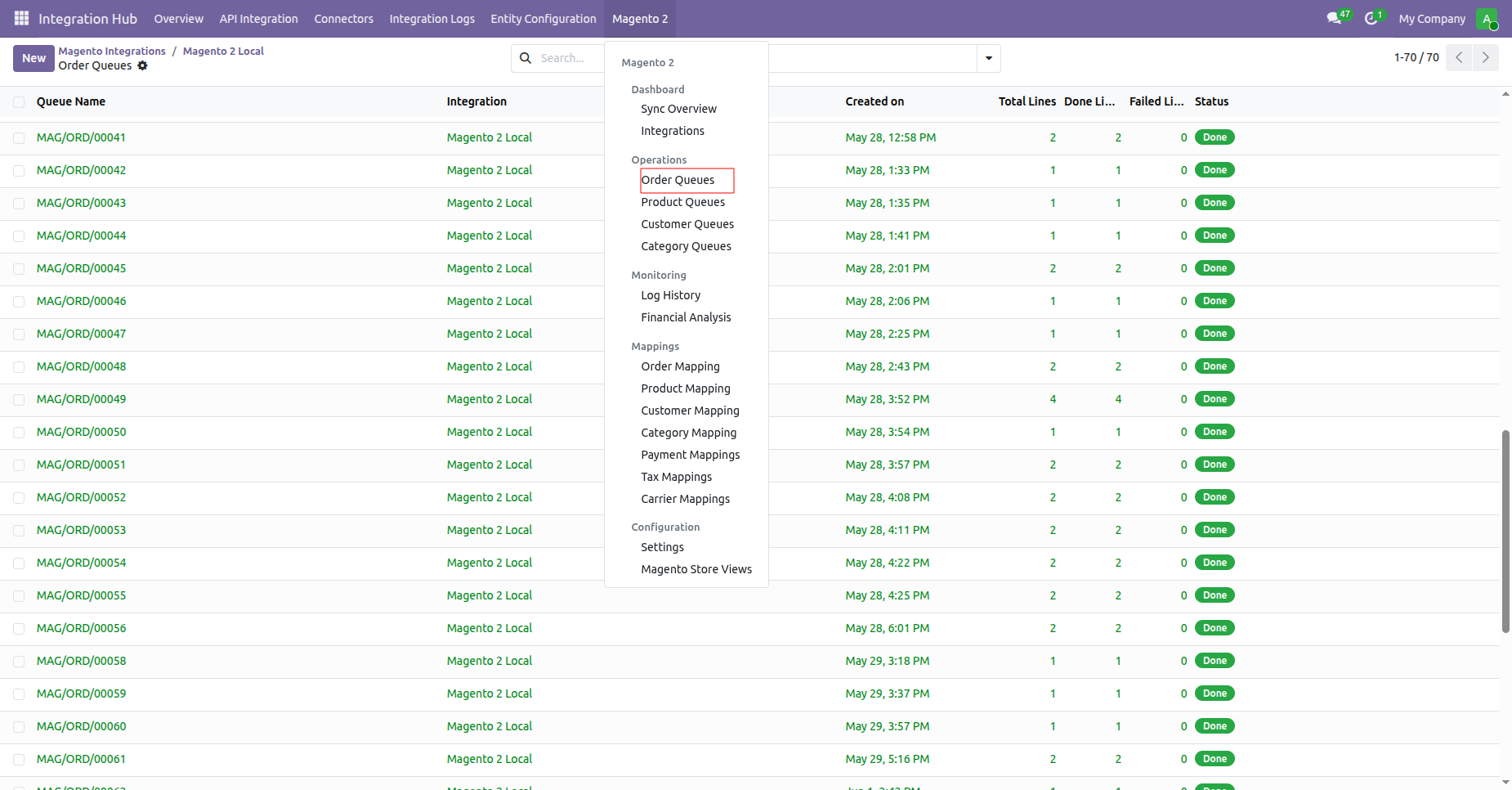
Use the Order Queues shortcut to open order synchronization jobs.
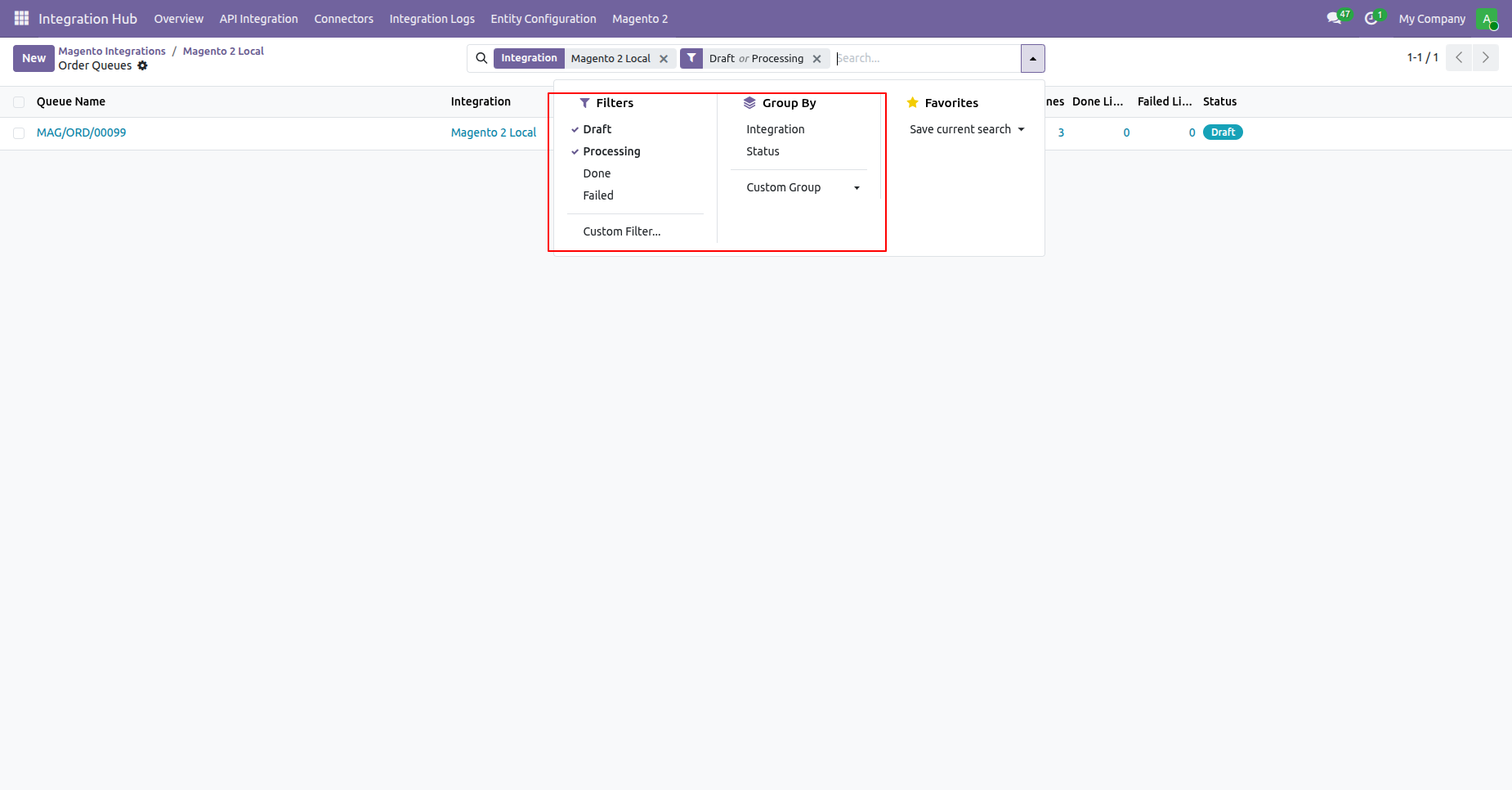
Use the filters panel to narrow order queues by status, integration, or custom criteria.
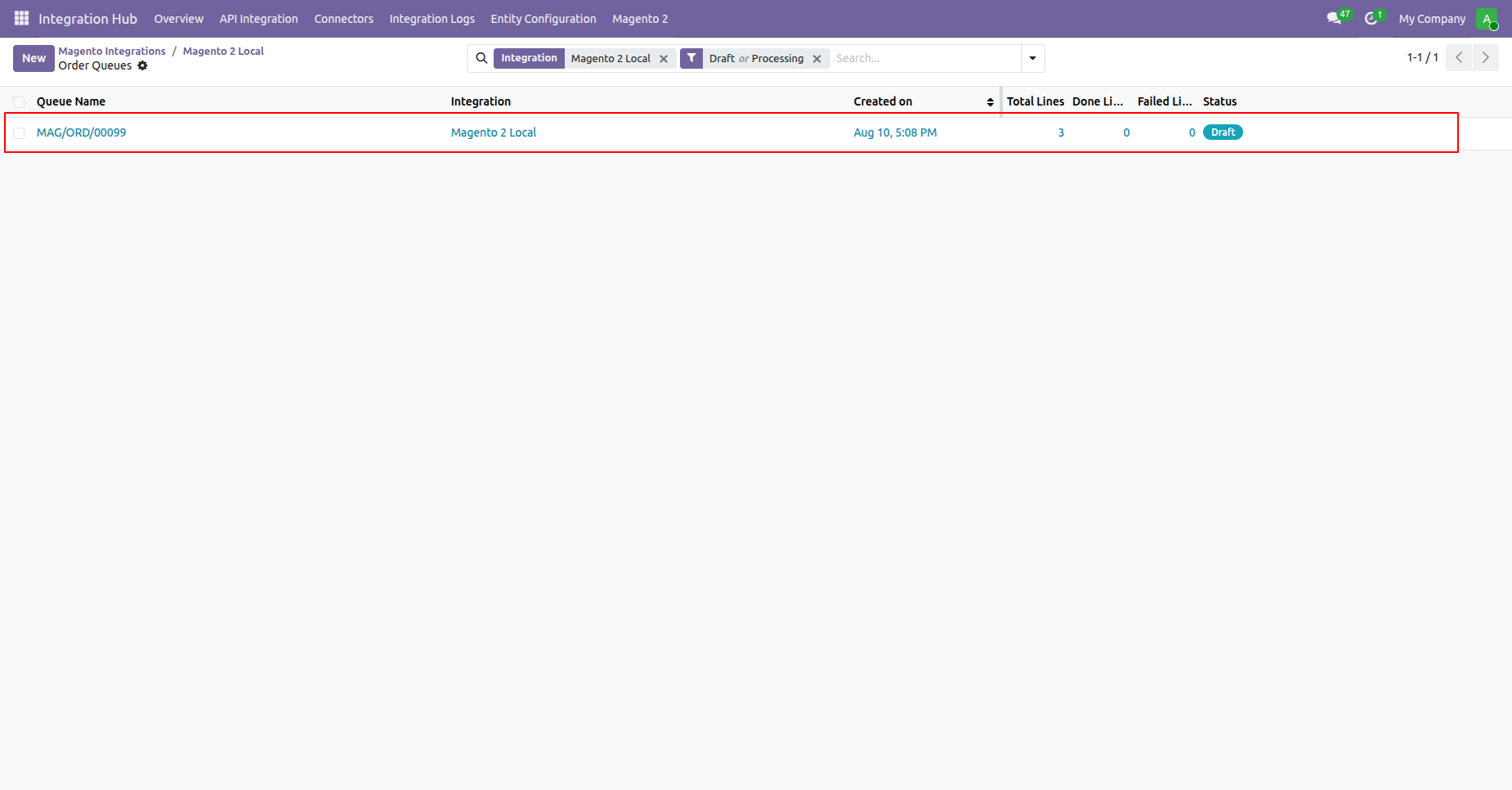
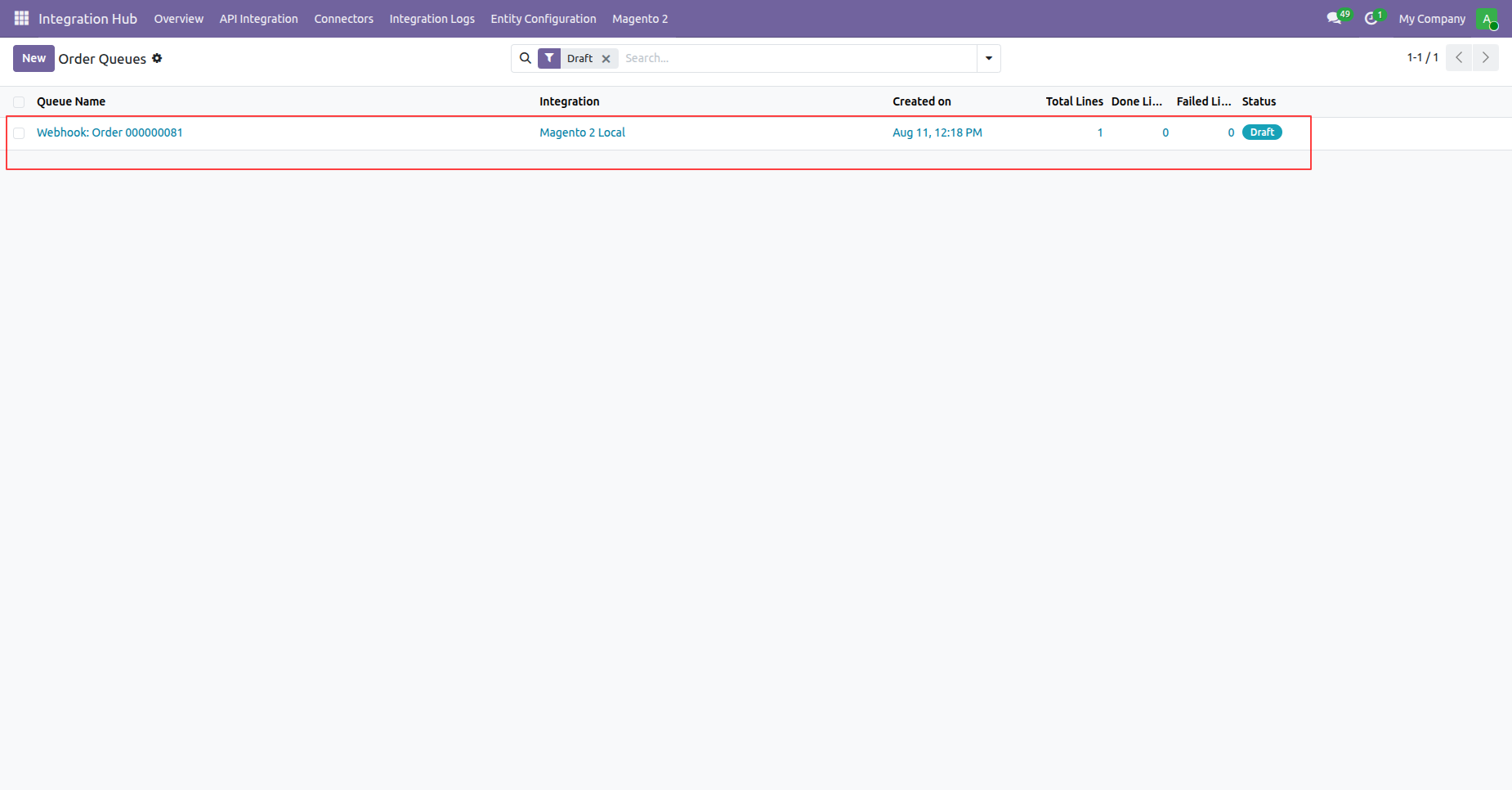
Select the draft order queue row to review its pending sales order lines.
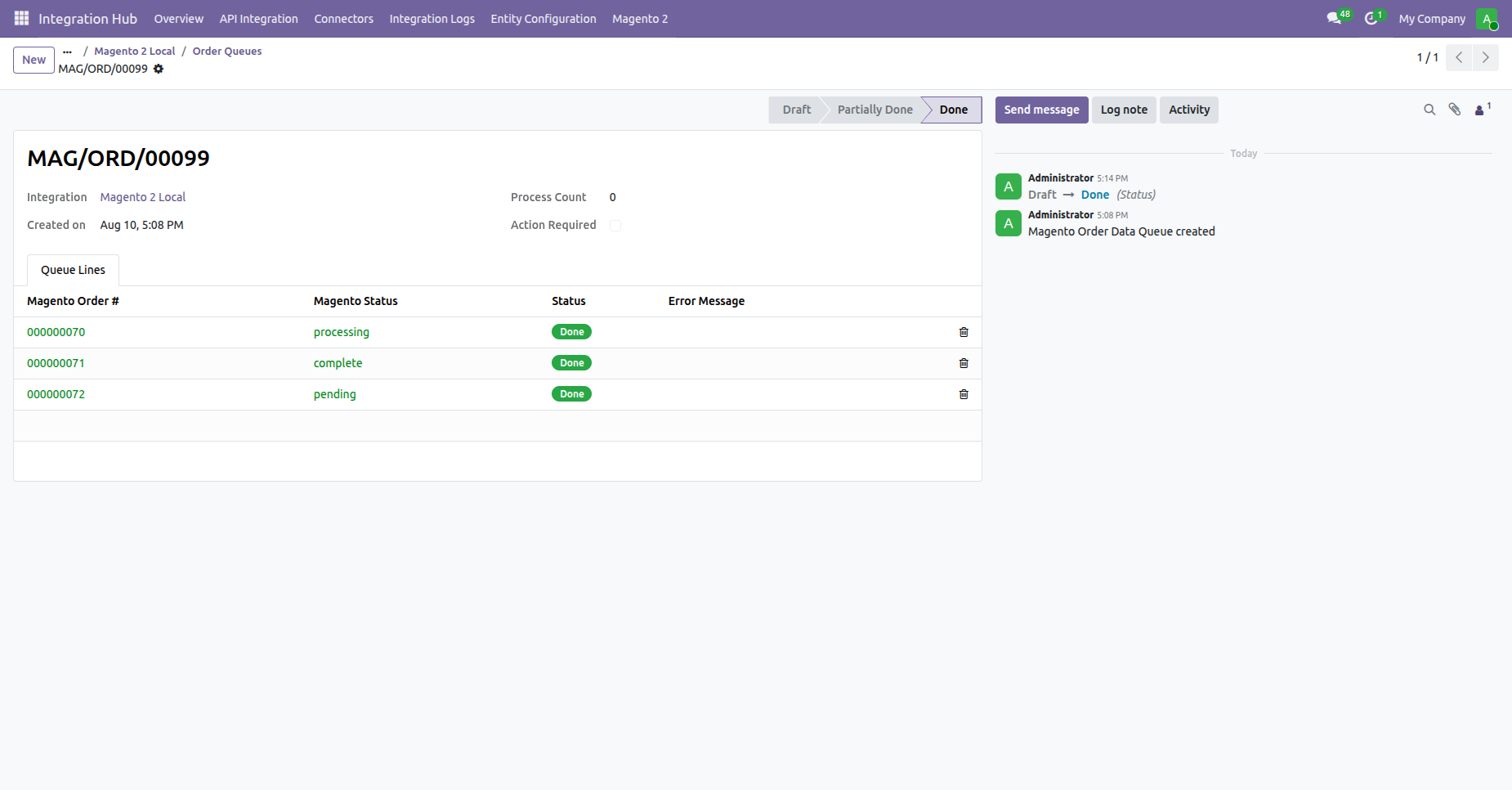
Review the queue after processing, with every order line marked Done.
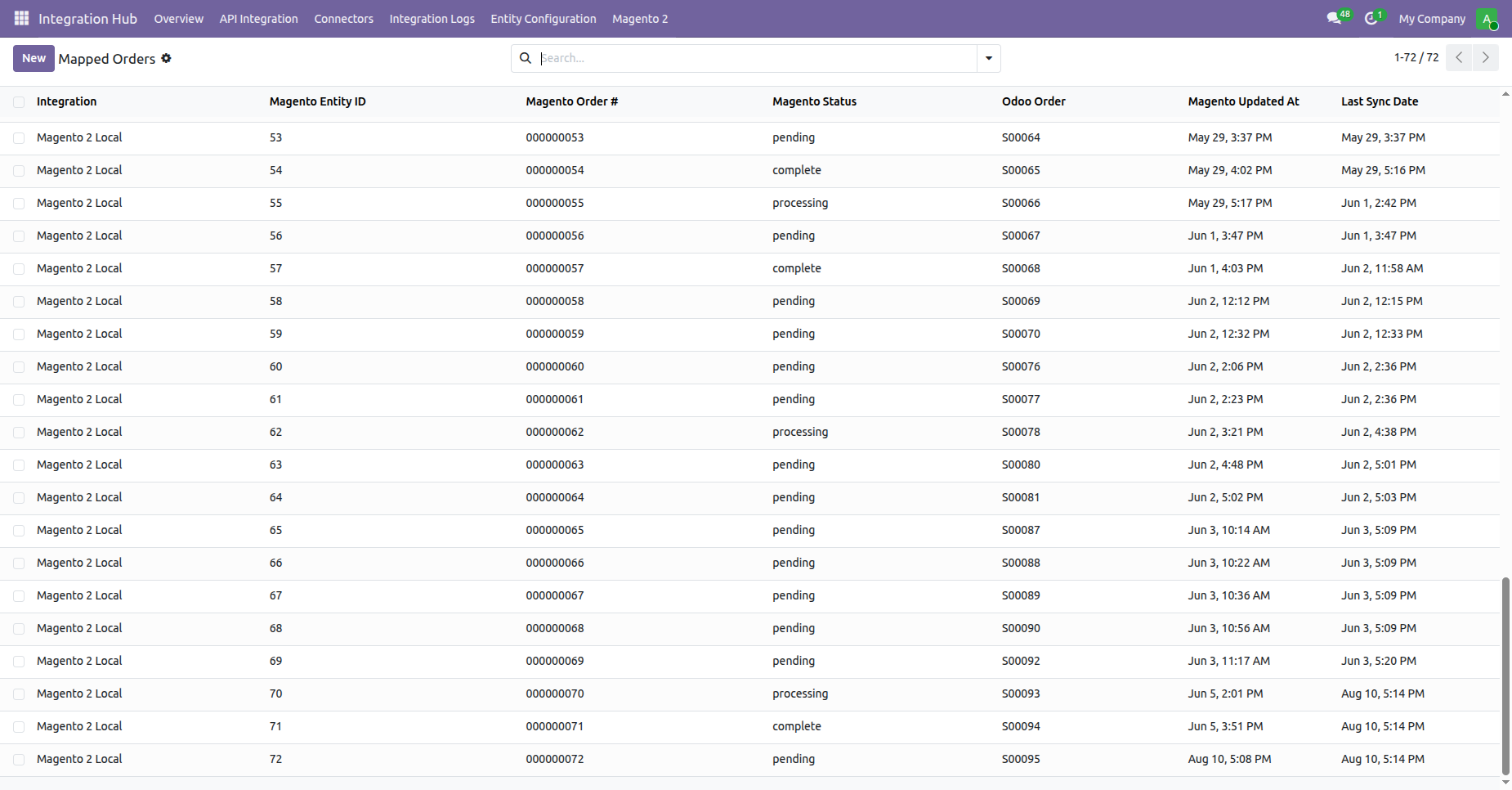
Open Order Mapping from the Magento 2 menu to review synchronized order links.
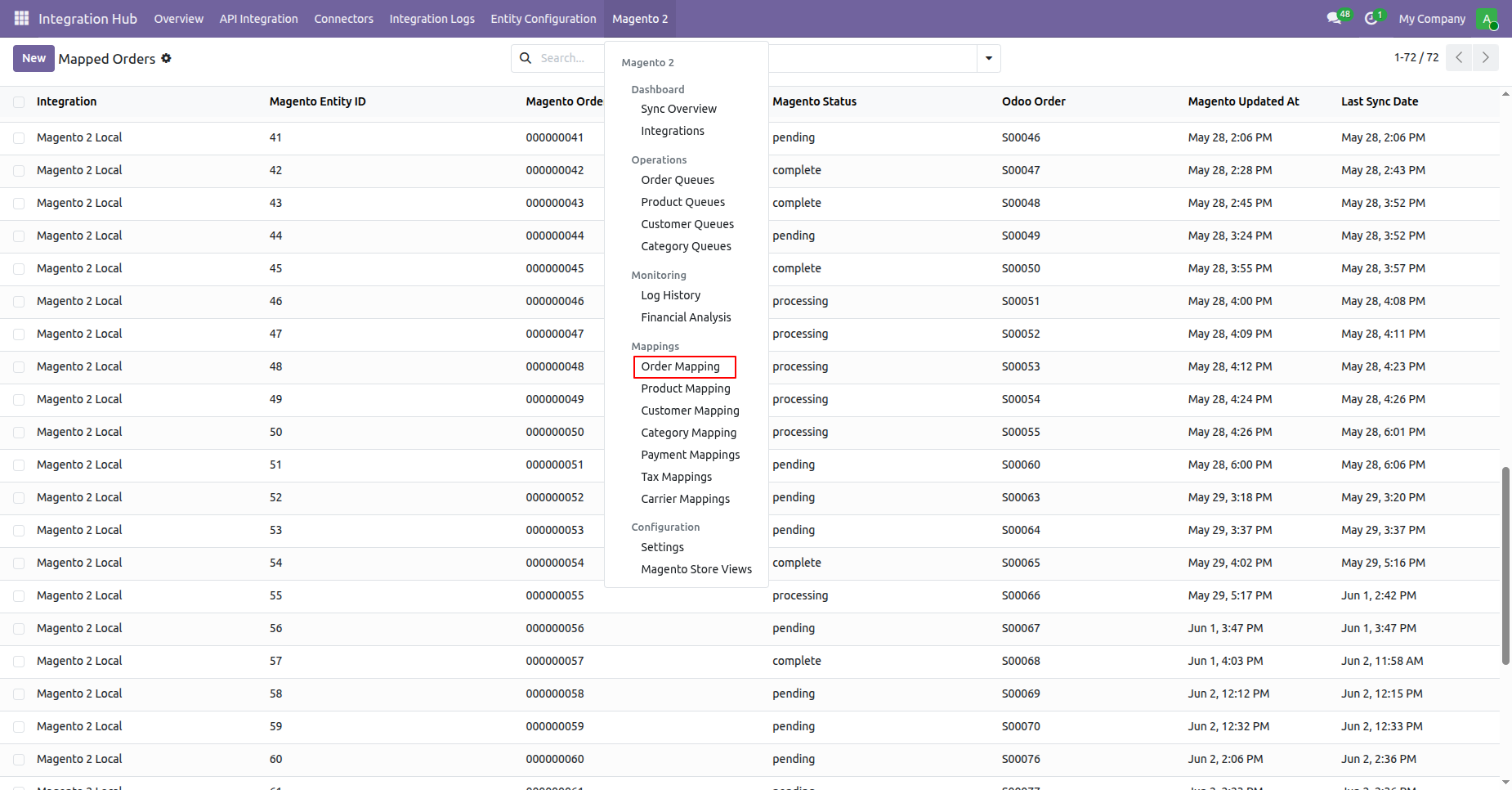
Review mapped orders.
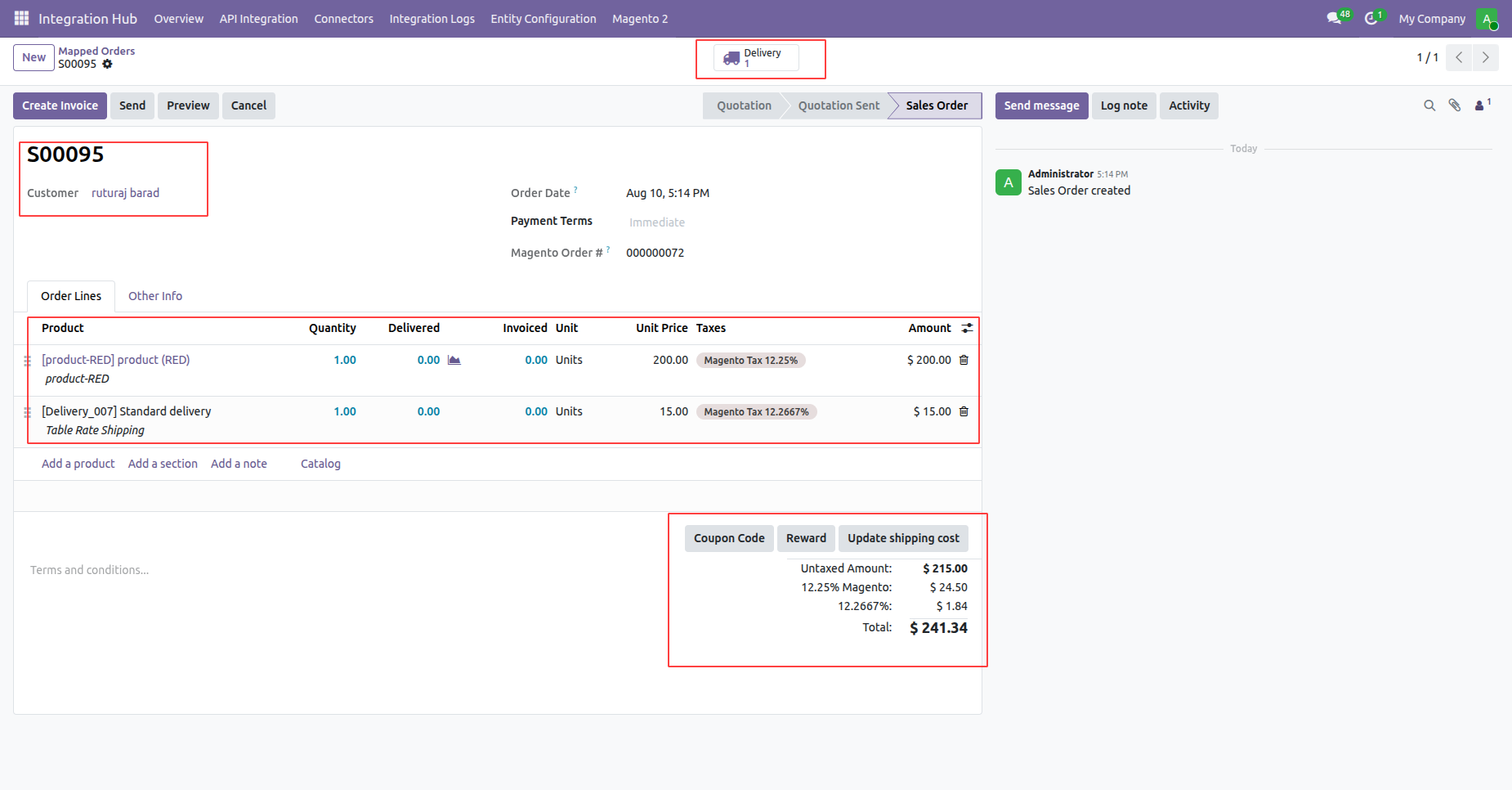
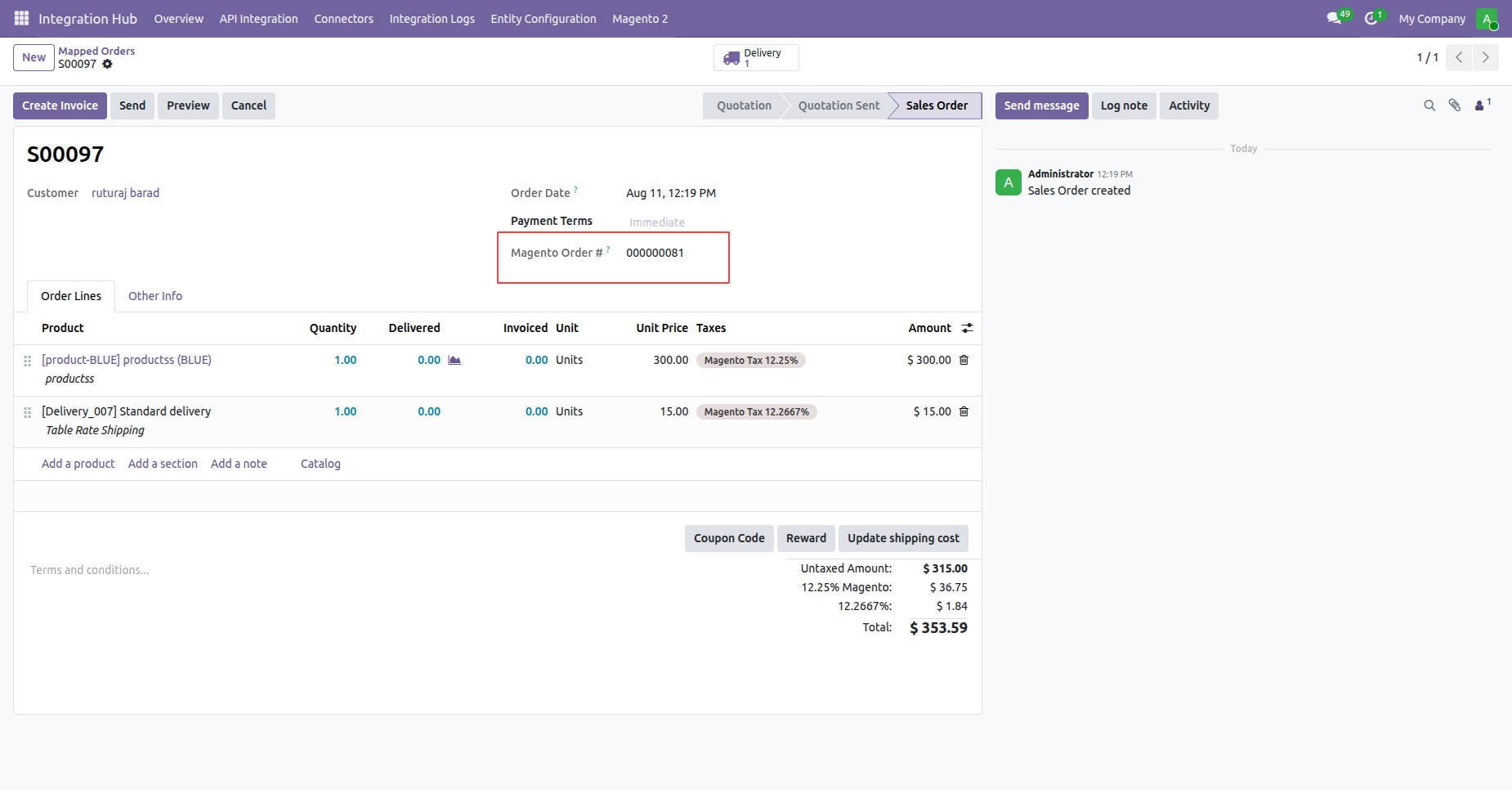
Review the confirmed sales order status and available invoice and delivery actions.
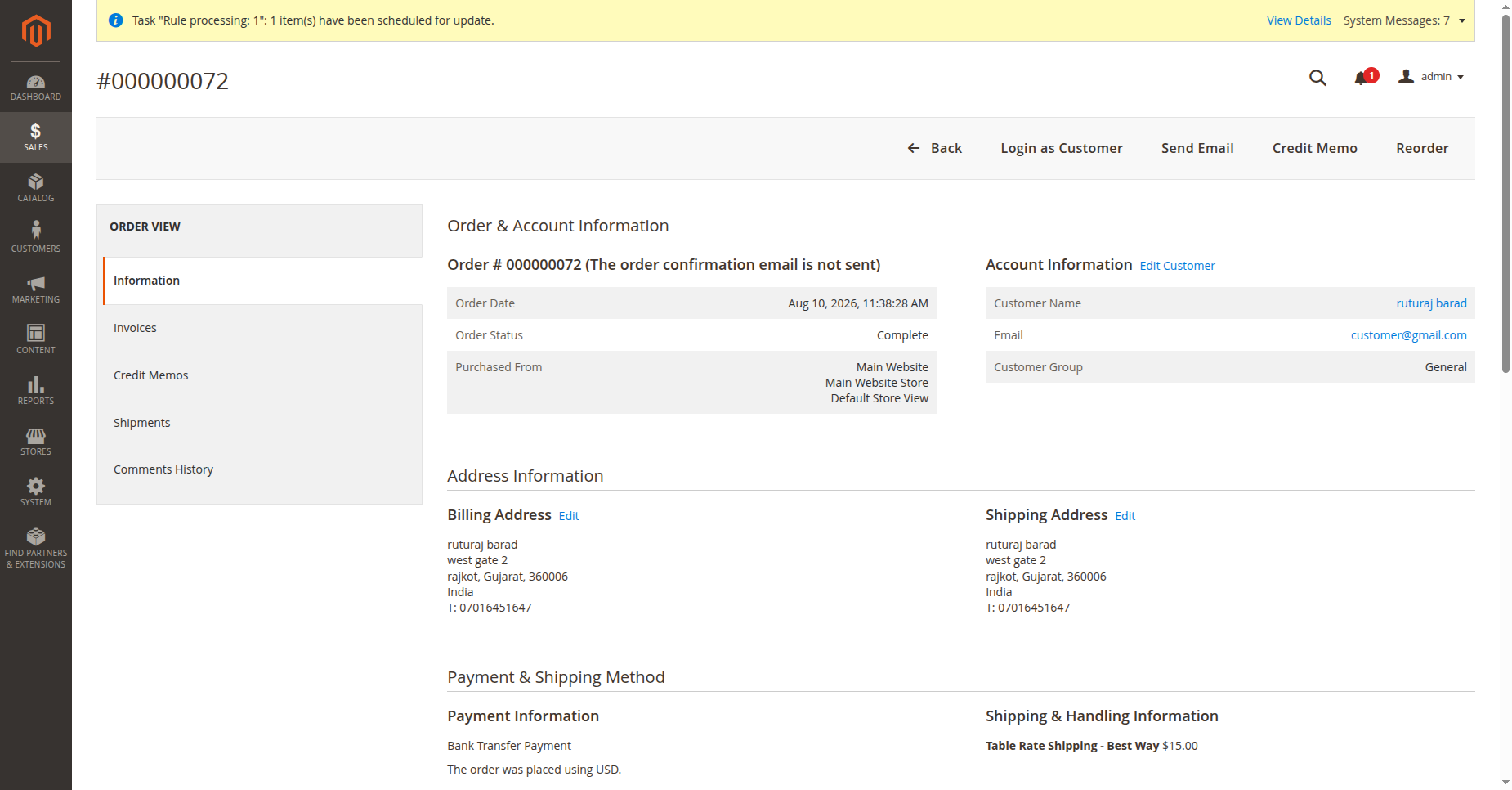
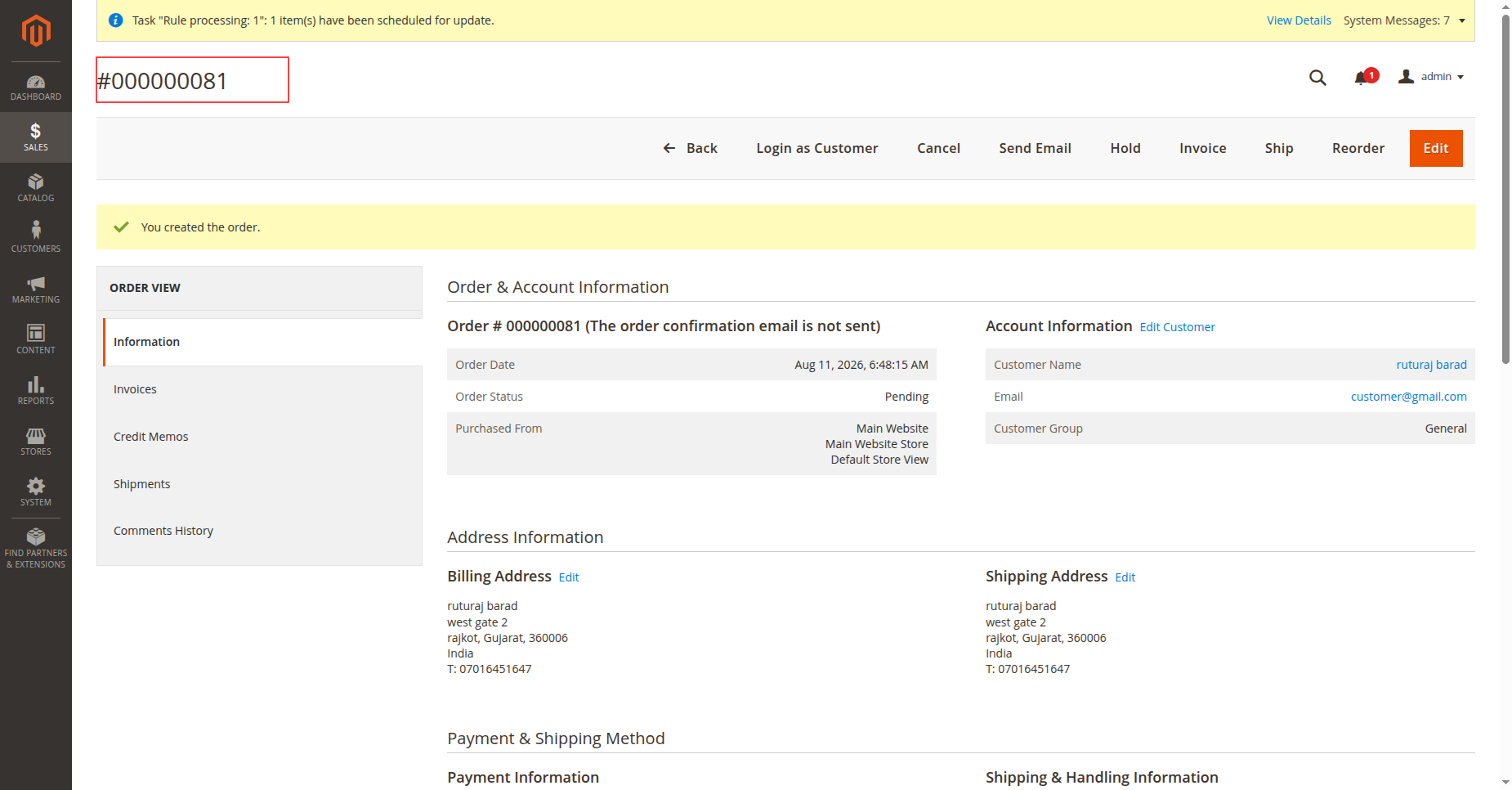
Open the order in the Magento.
Open the scheduled action that fetches Magento sales orders into the queue.
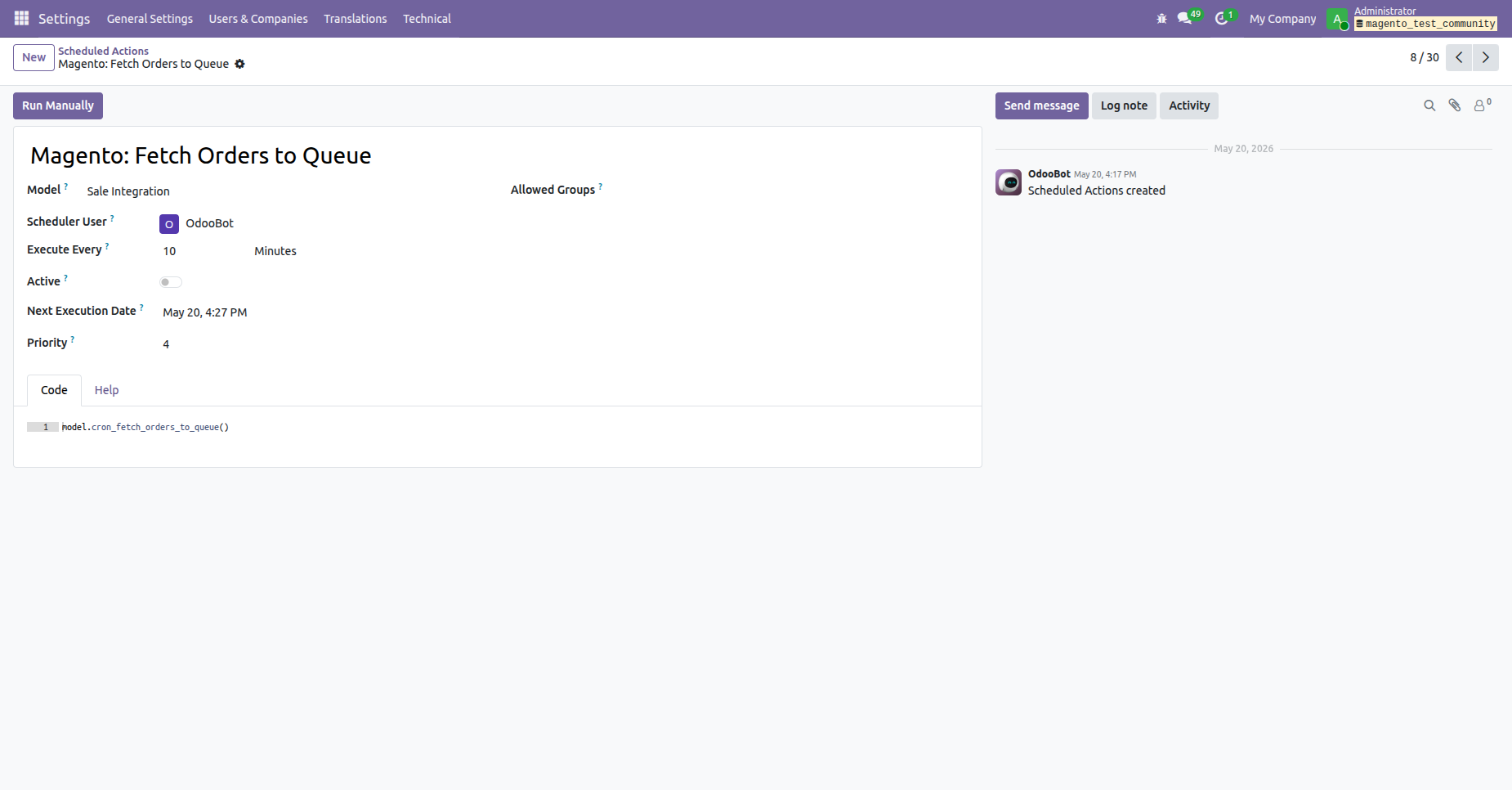
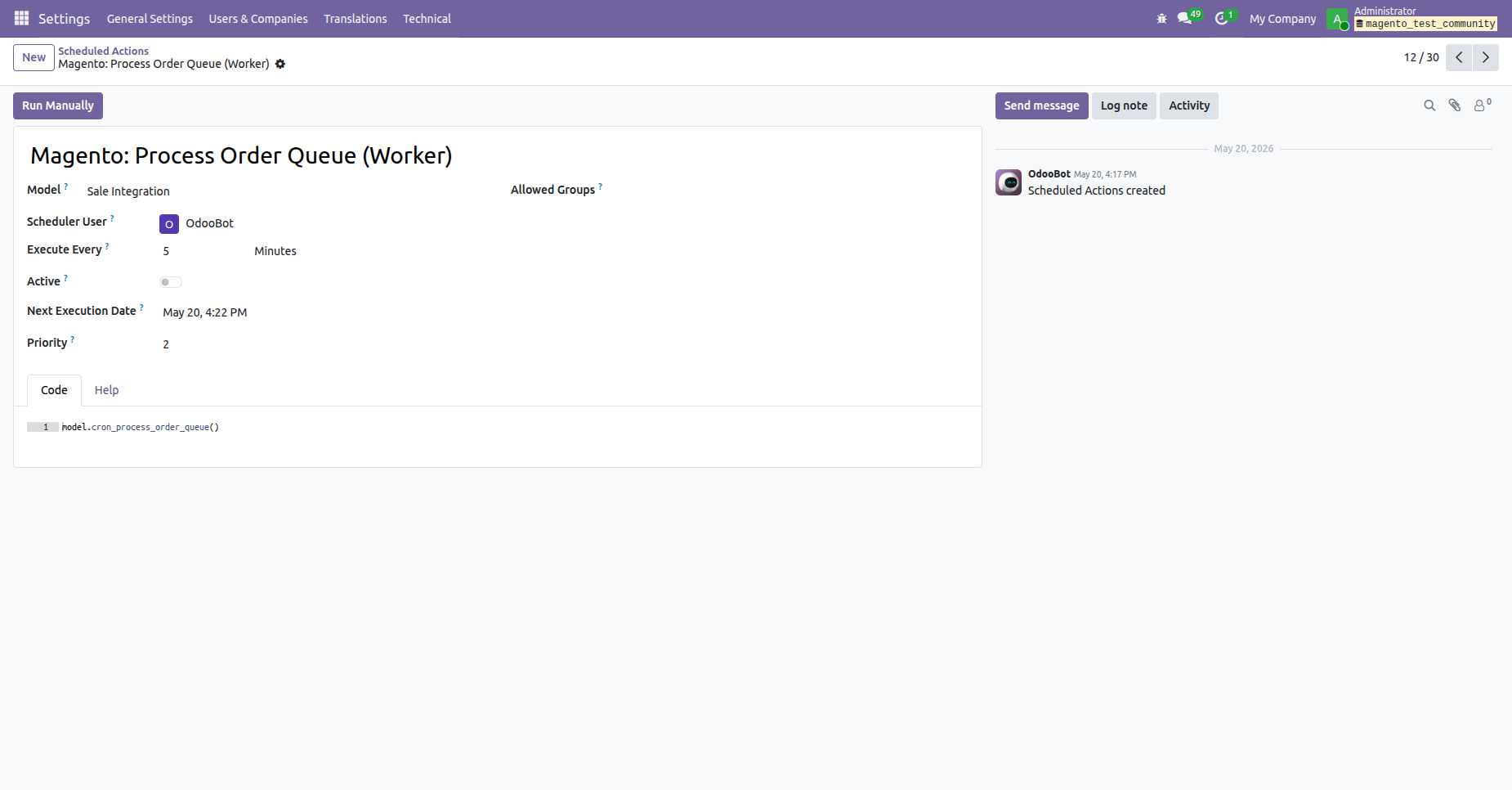
Open the scheduled worker that processes Magento order queues in the background.
 How it works?
Watch Video
How it works?
Watch Video
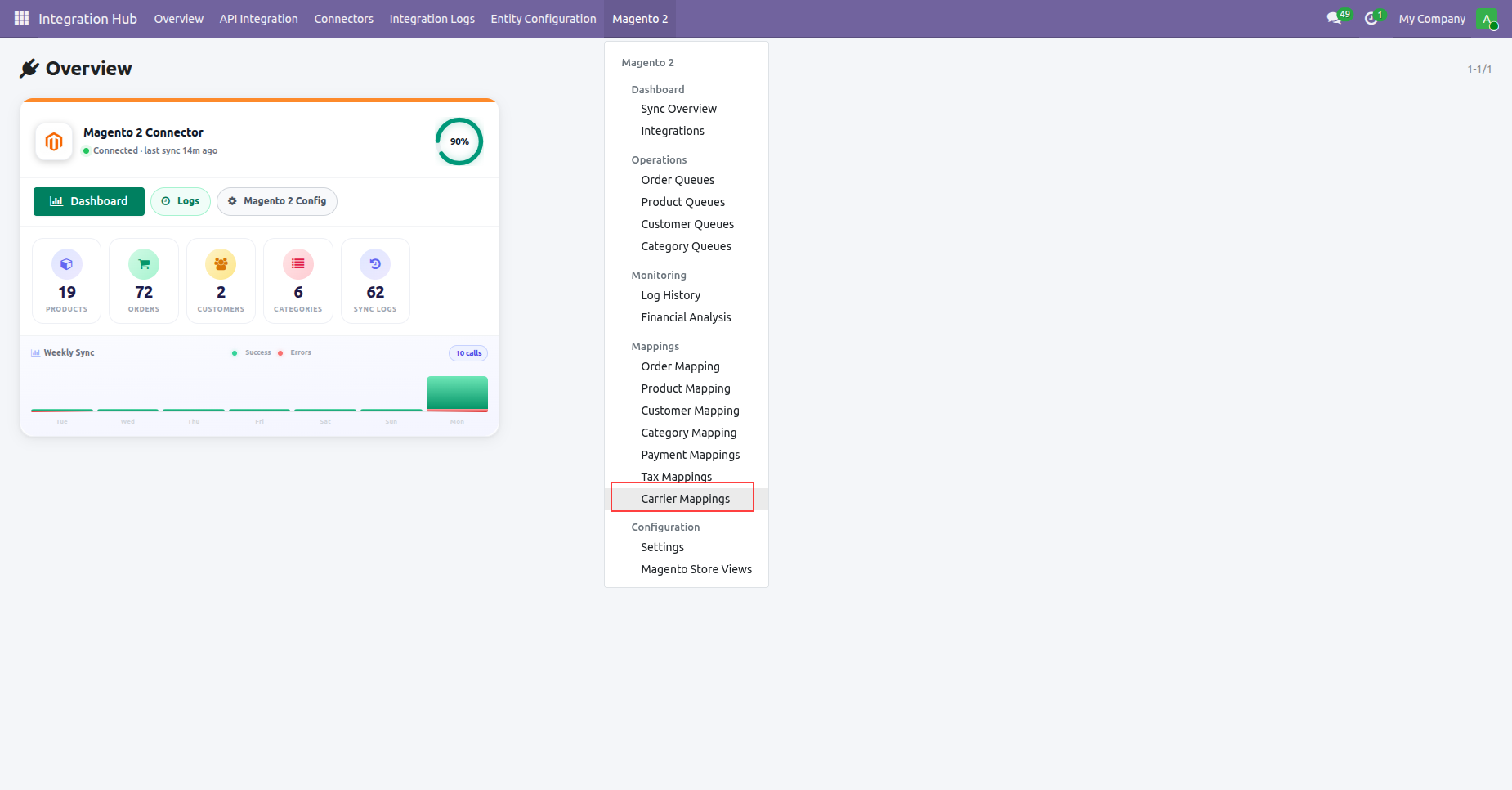
Open Carrier Mappings from the Magento 2 menu to configure delivery method links.
Enter the Magento shipping method and Odoo delivery method, then press Save.
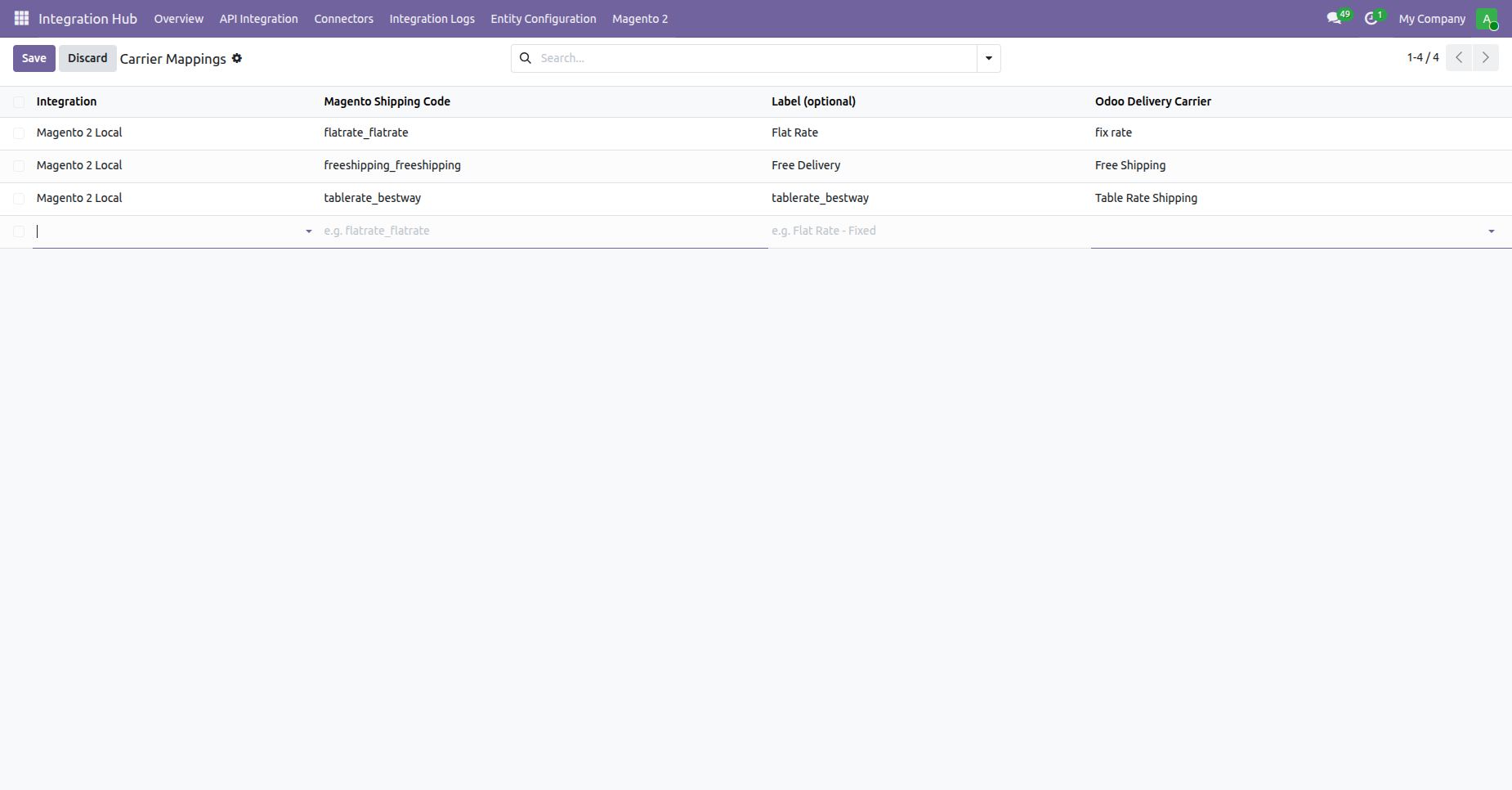
Review the carrier mapping in Magento.
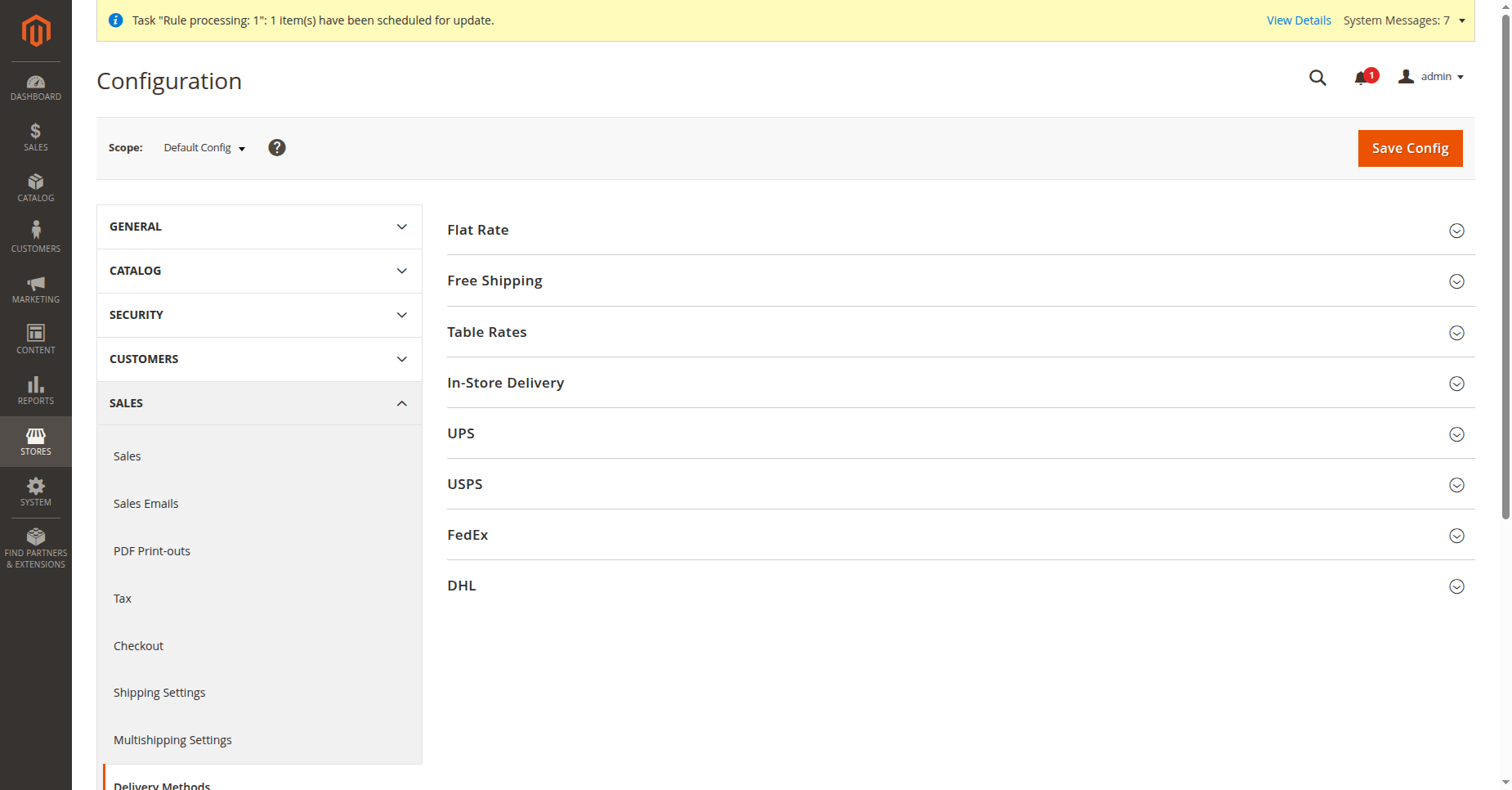
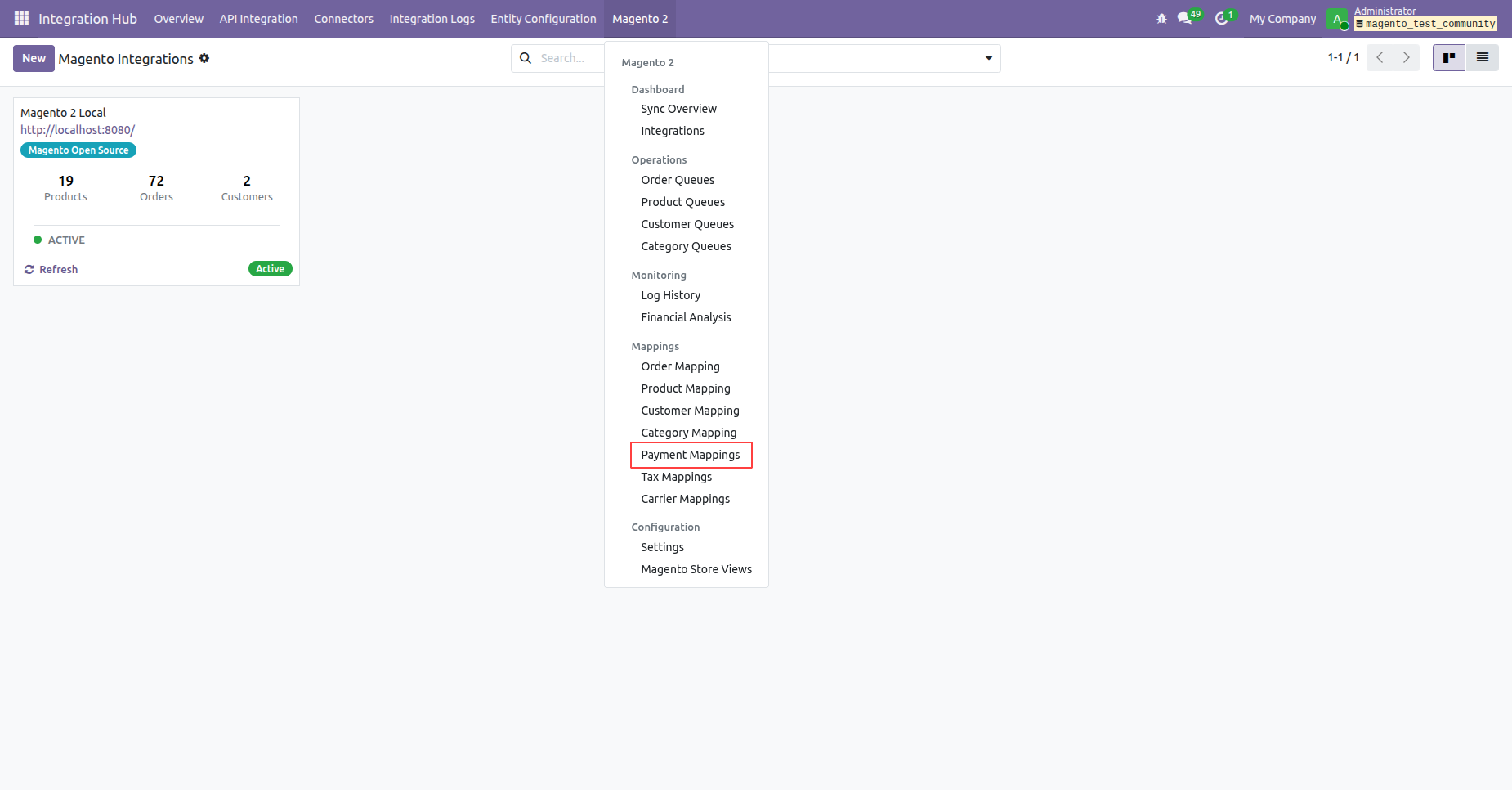
Open Payment Mappings from the Magento 2 menu to configure payment method links.
Enter the Magento payment method and Odoo payment method, then press Save.
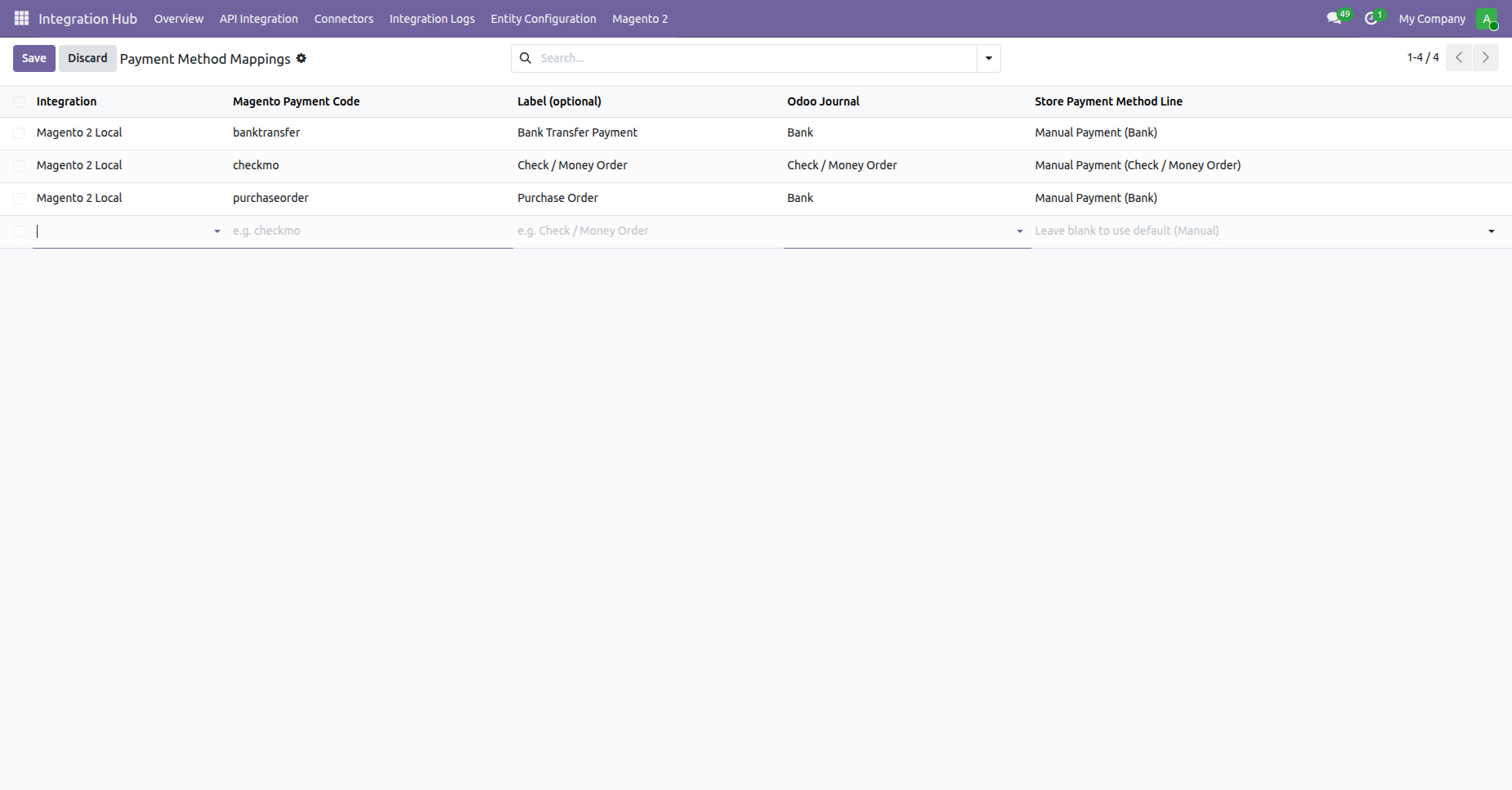
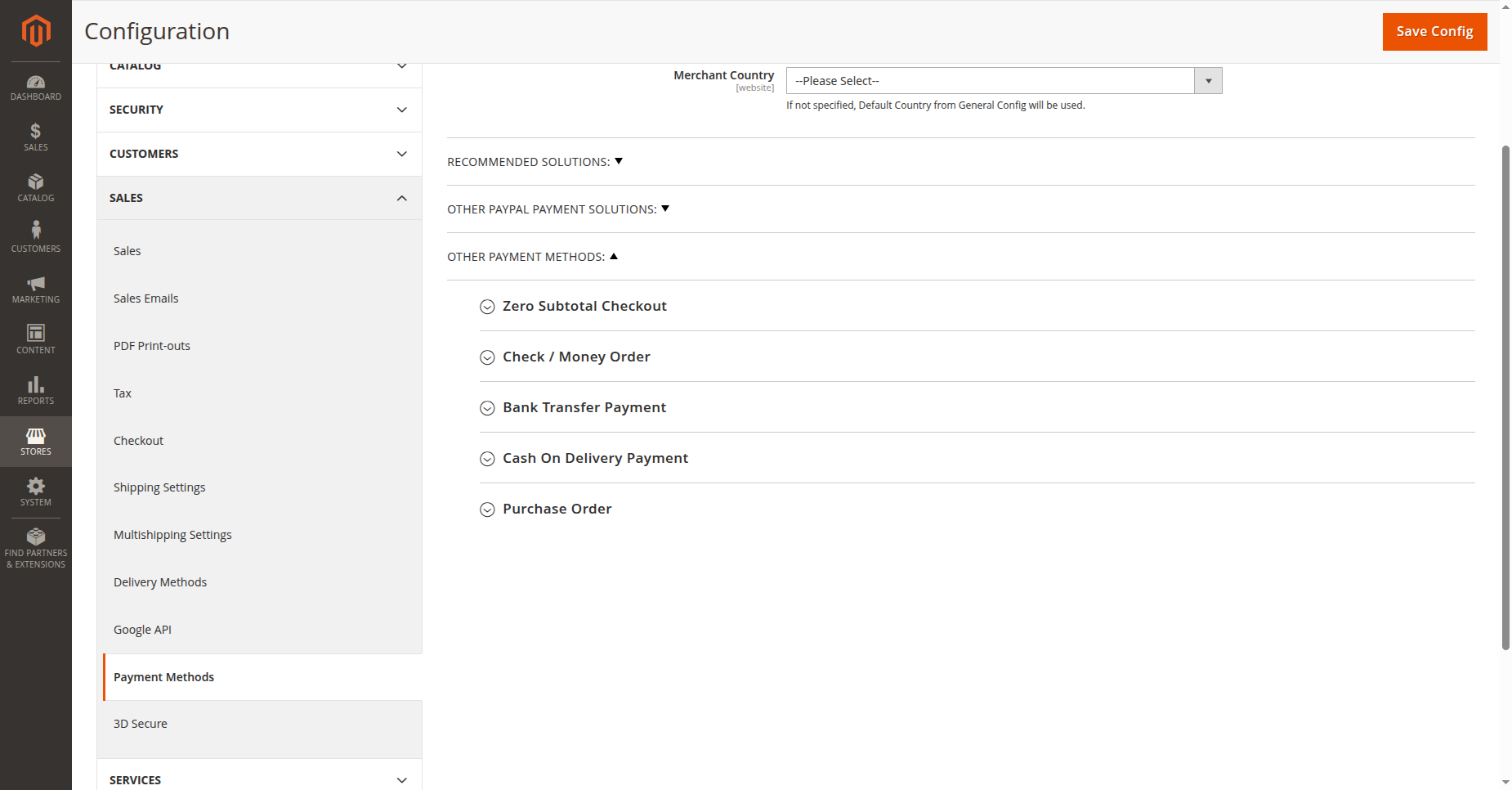
Review payment mapping rows.
Open Tax Mappings from the Magento 2 menu to configure tax mapping records.
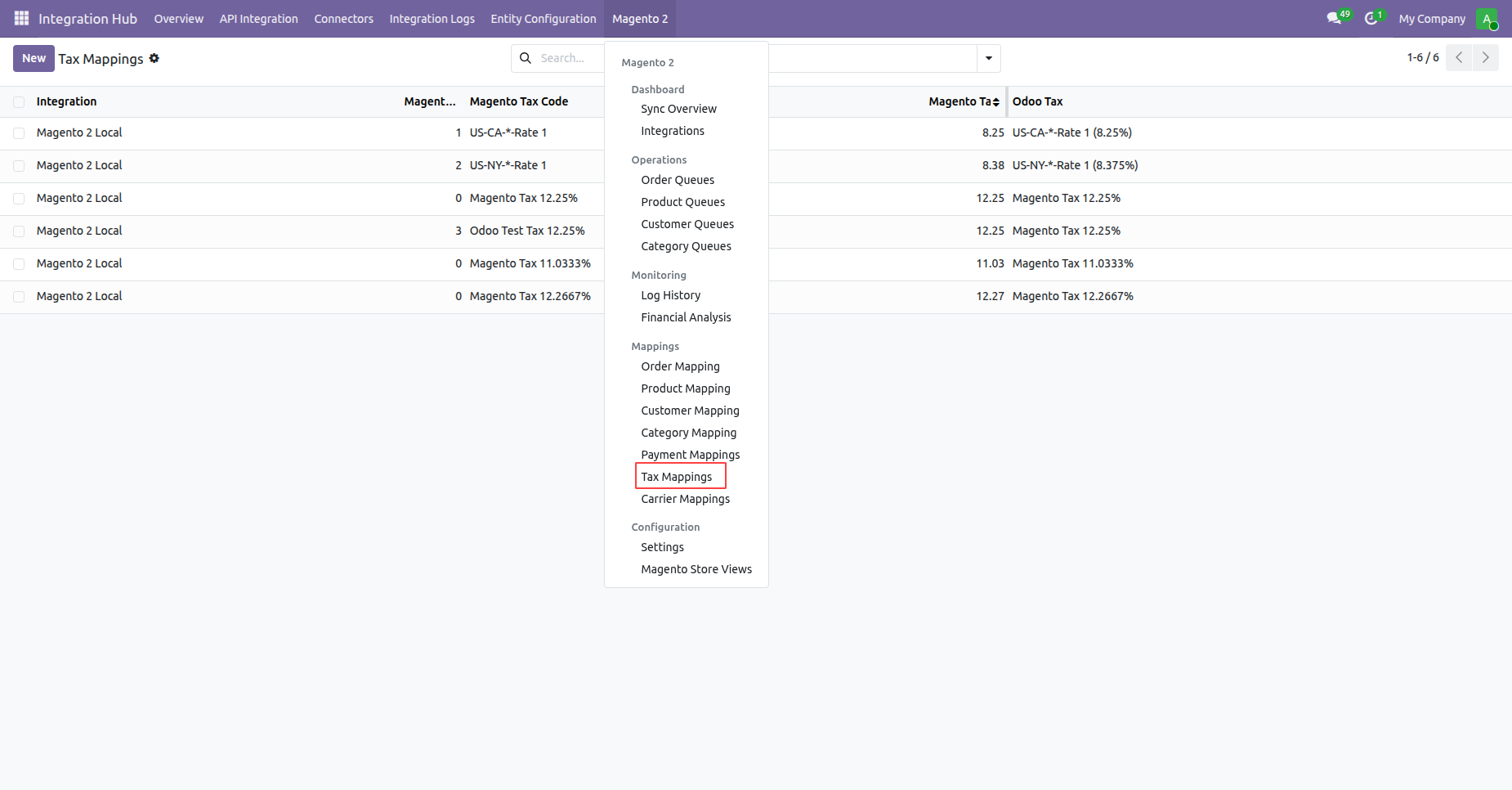
Enter the Magento tax class and Odoo tax, then press Save.
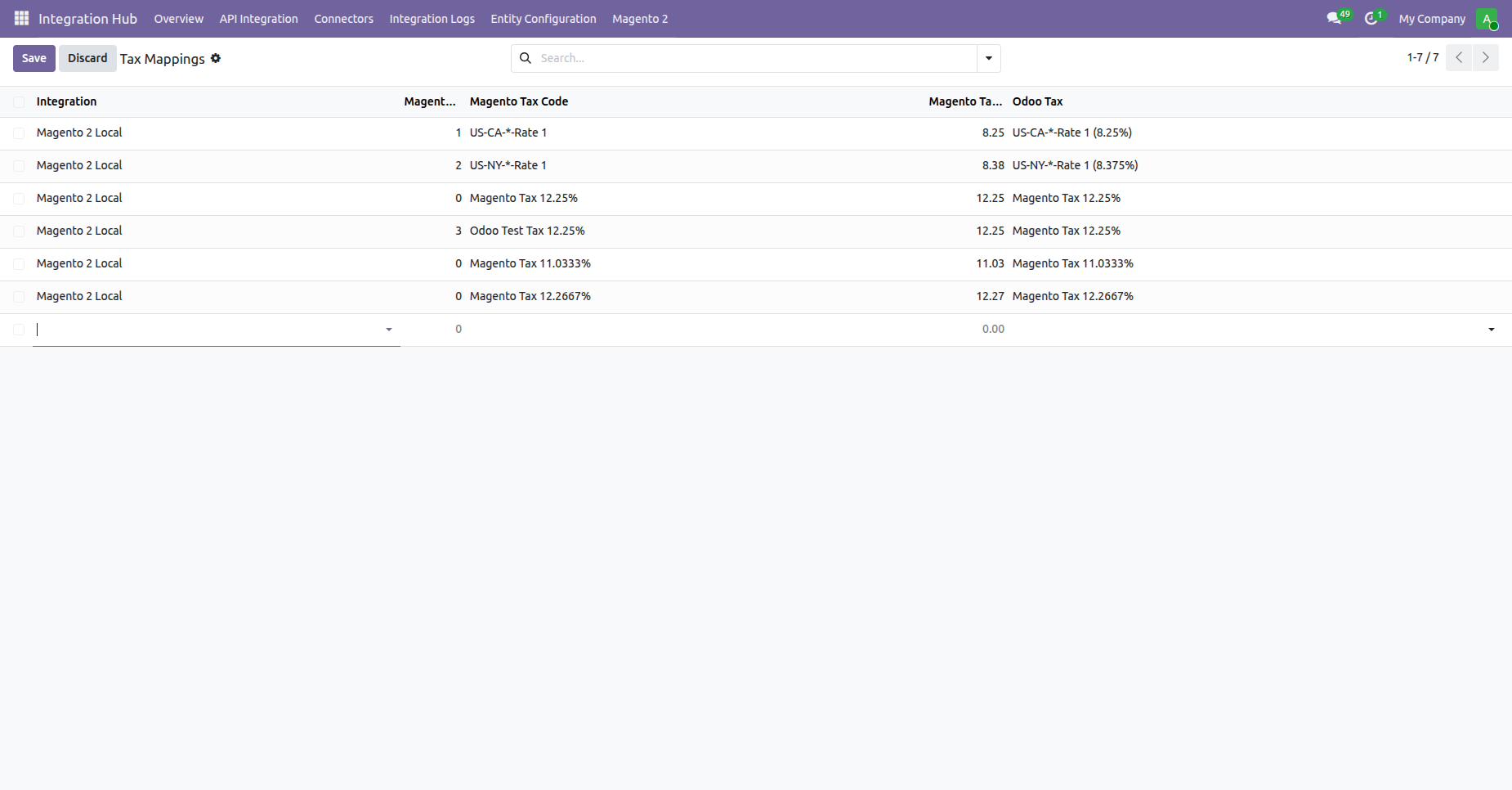
Tax inclusion in Magento.
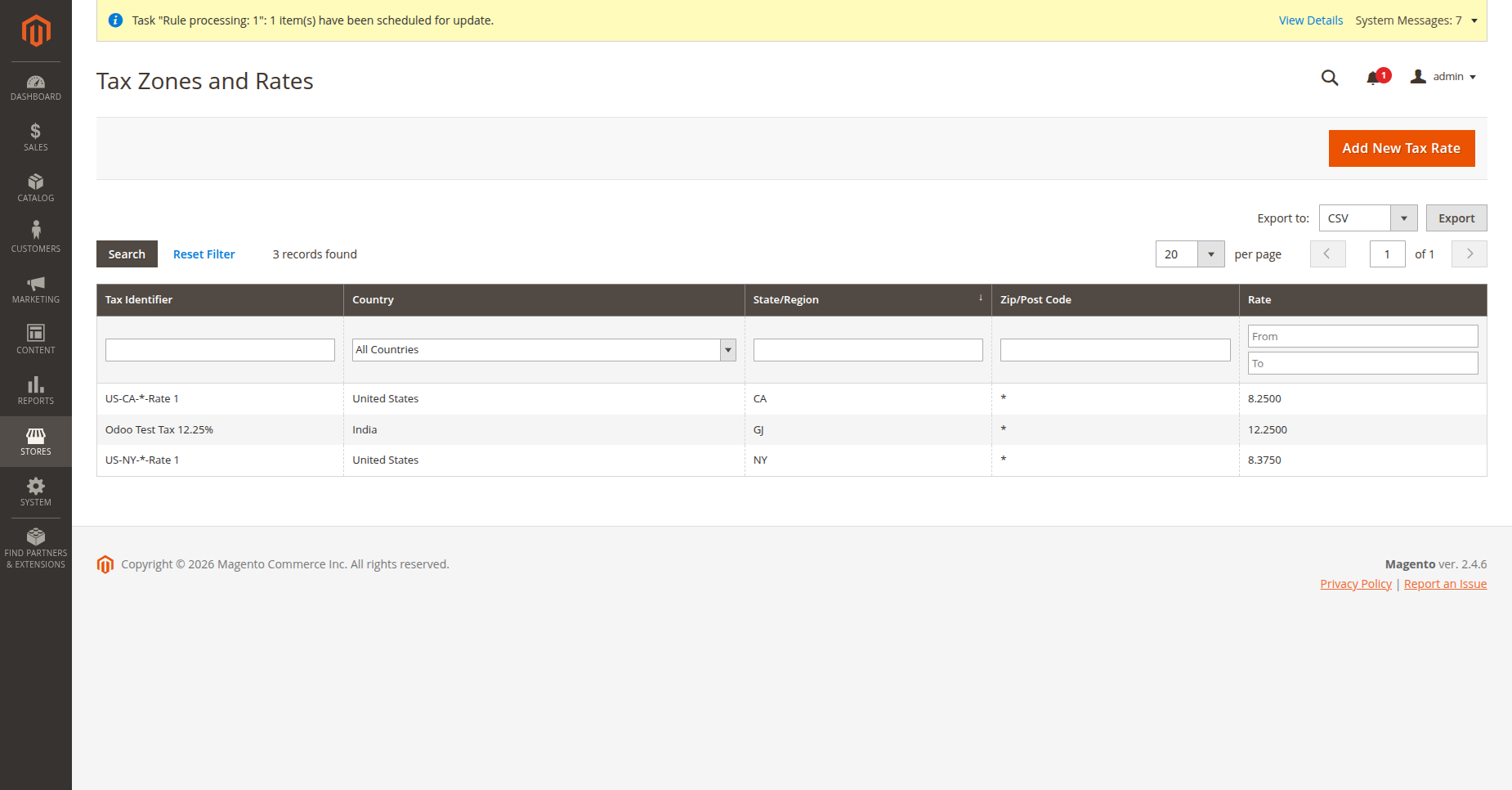
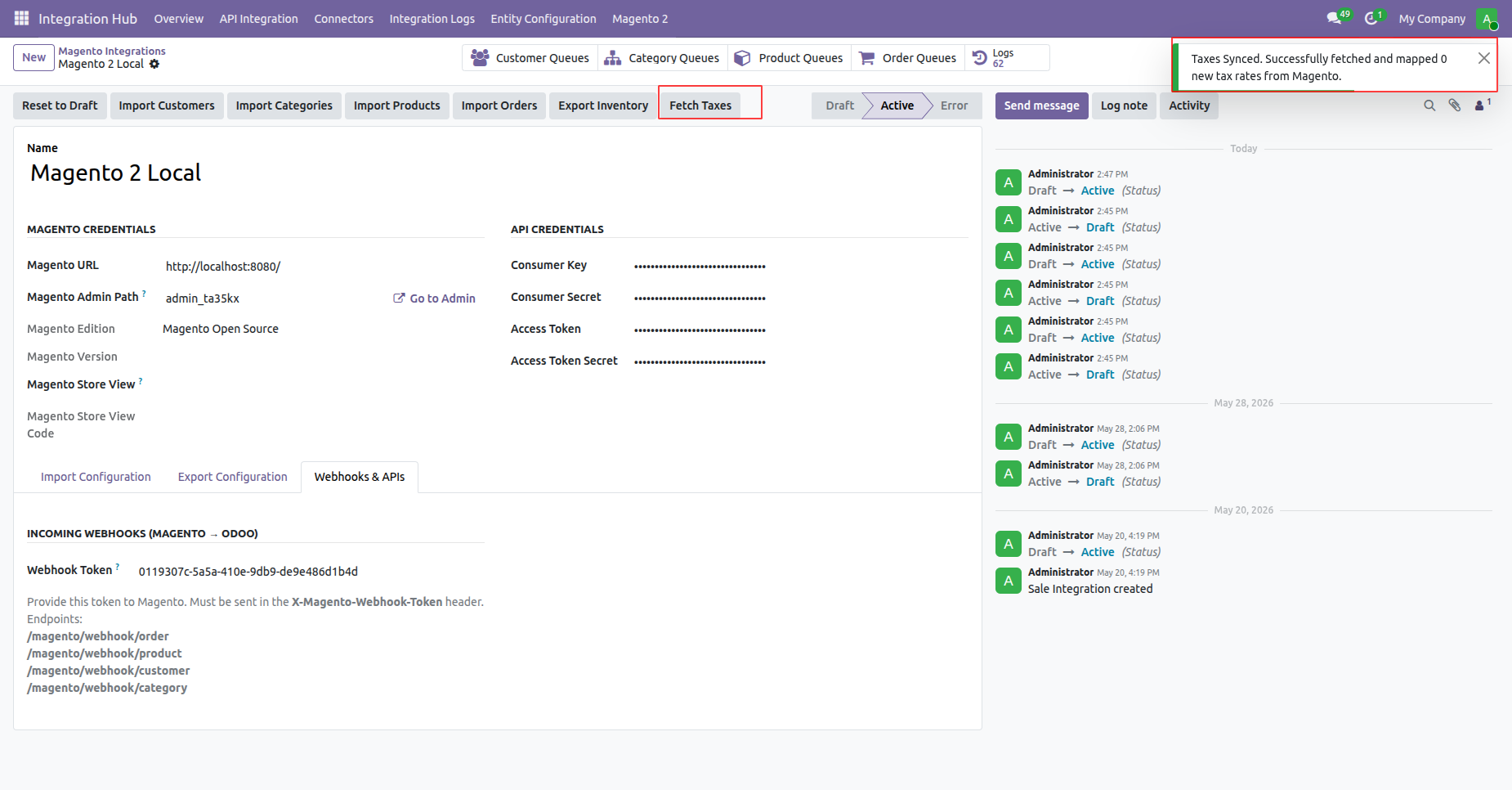
Click Fetch Taxes to start fetching taxes.
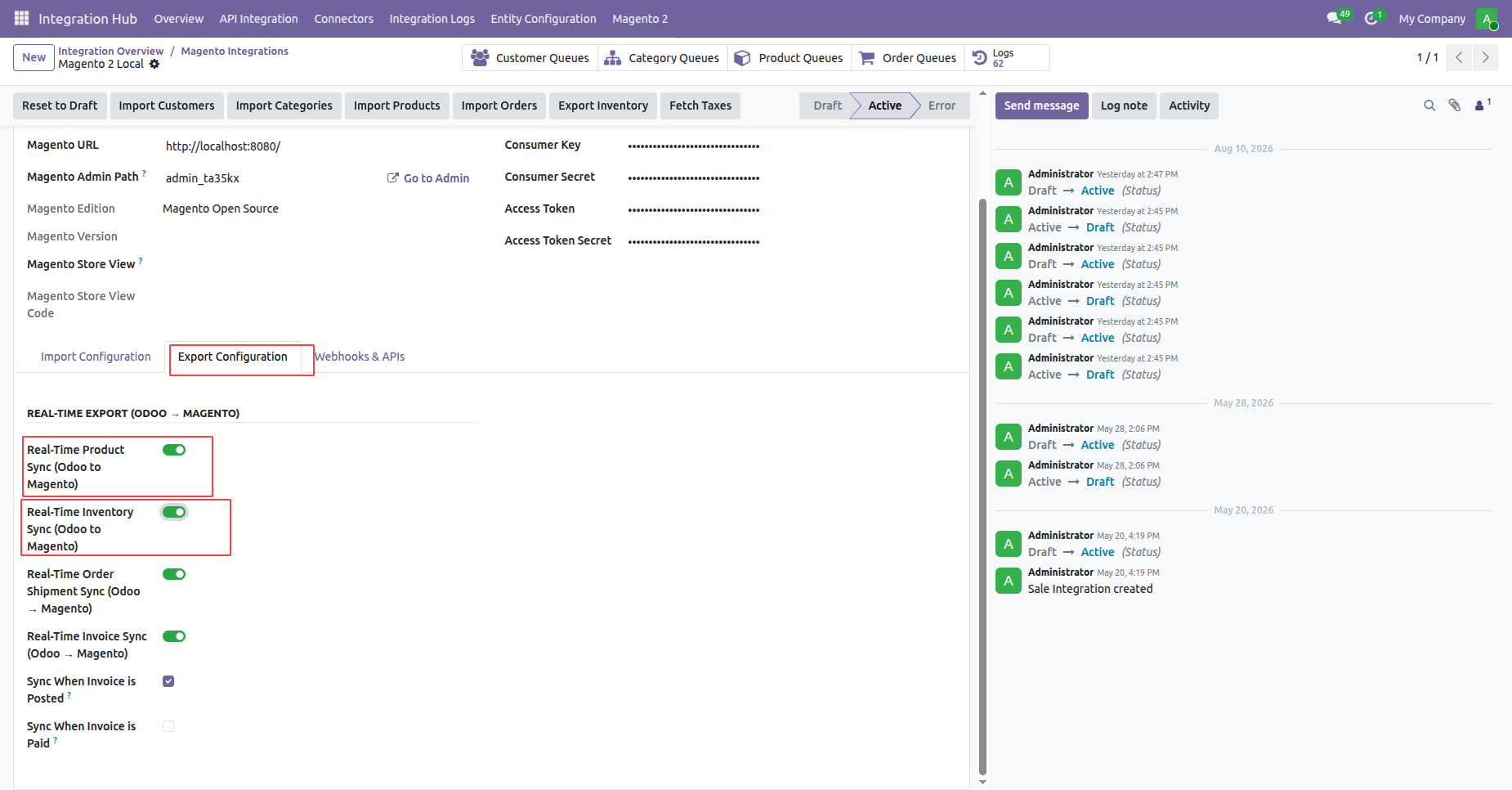
Open Export Configuration to review the selected Odoo-to-Magento synchronization settings.
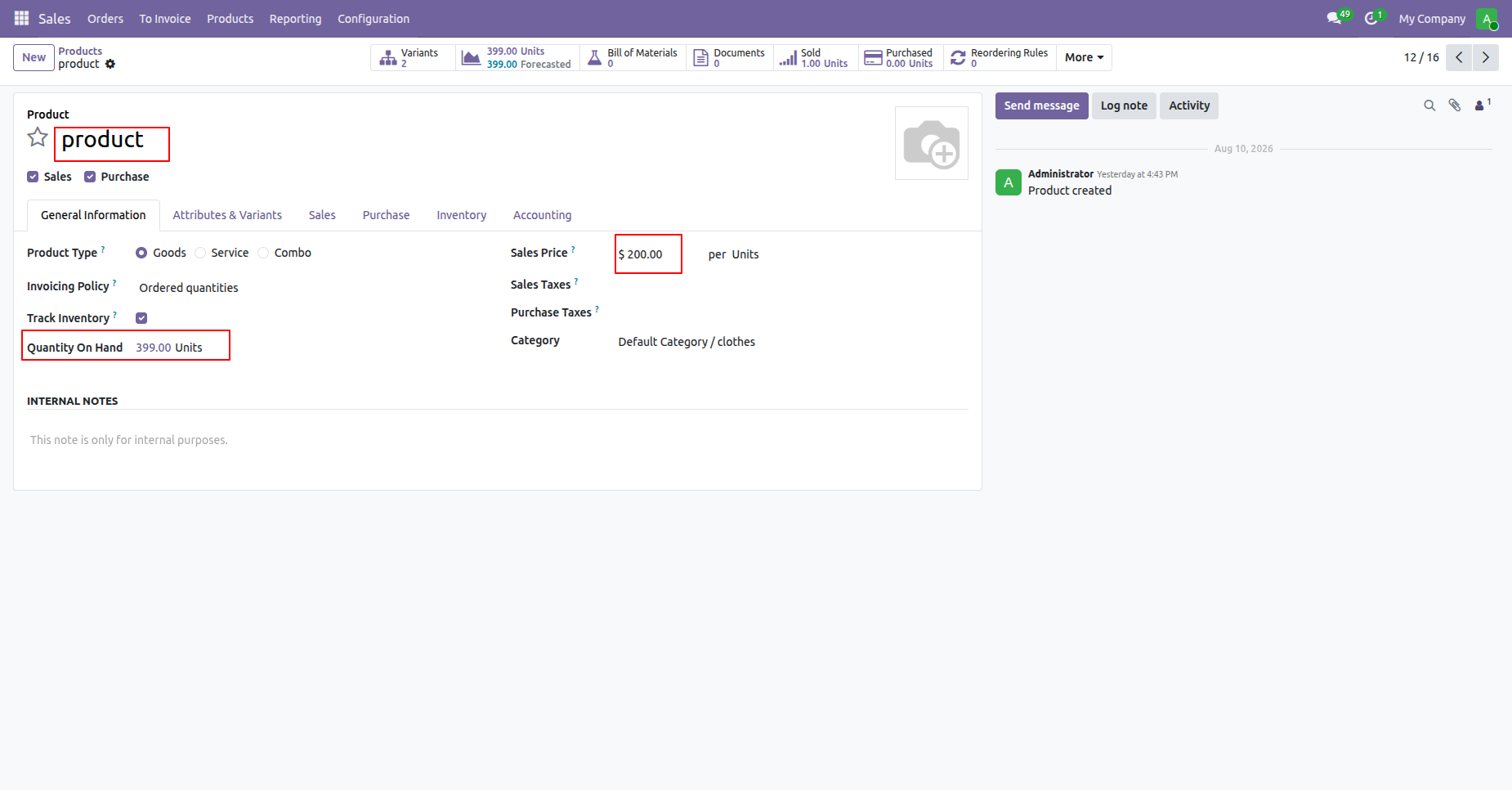
Review the product with on-hand quantity and price.
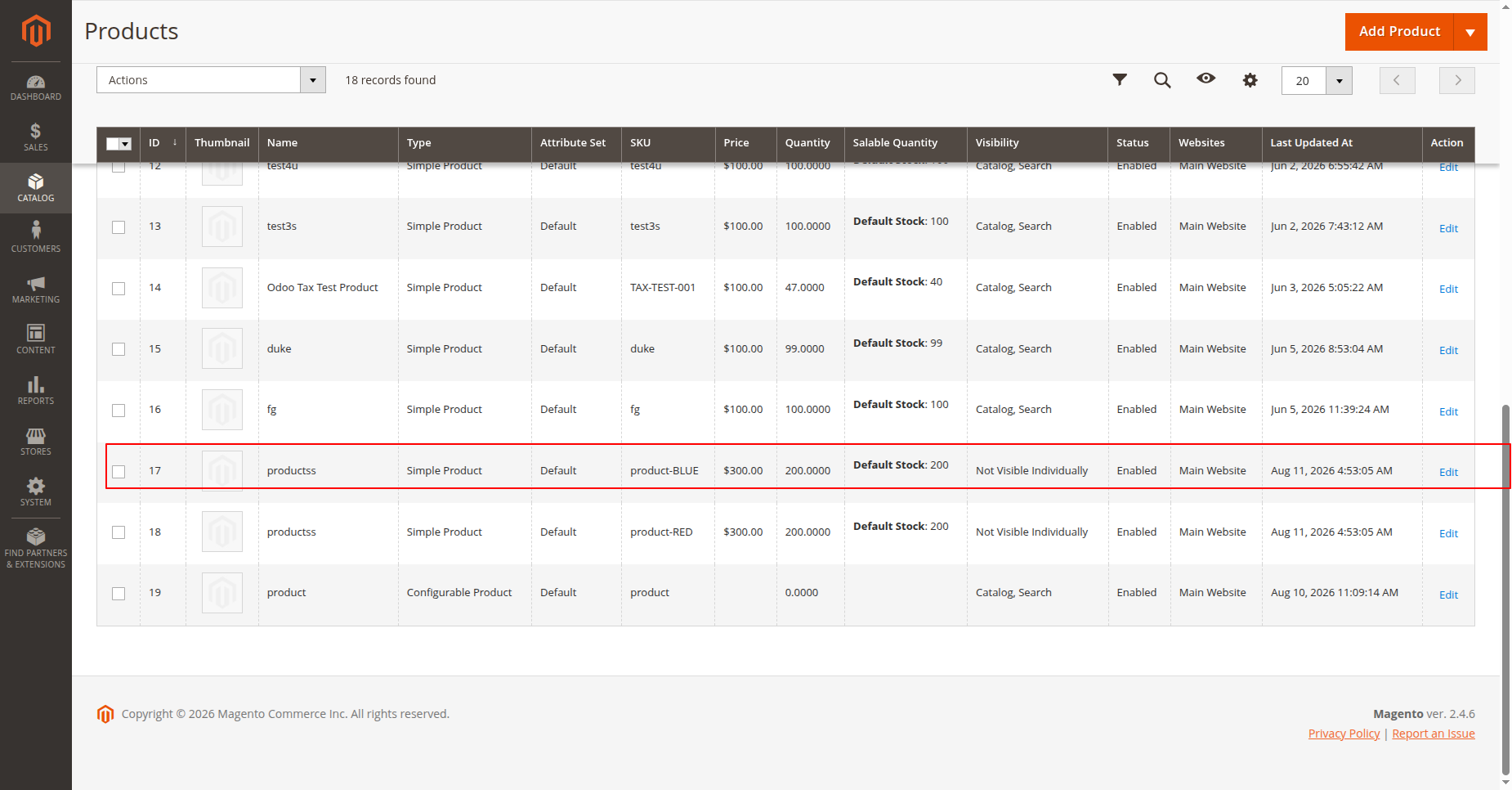
Review the exported products; click the 'Edit' button to edit.
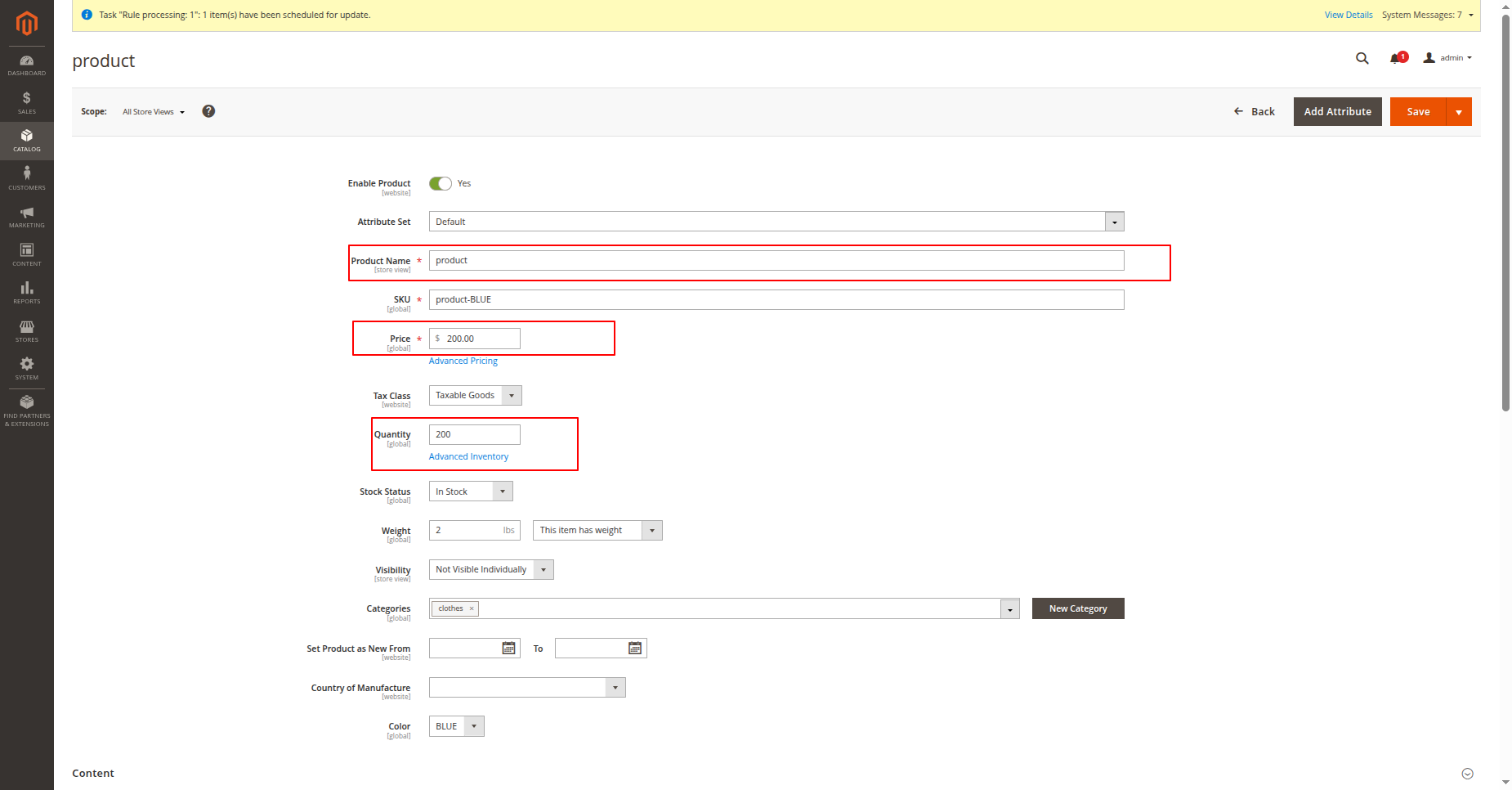
Edit details and save.
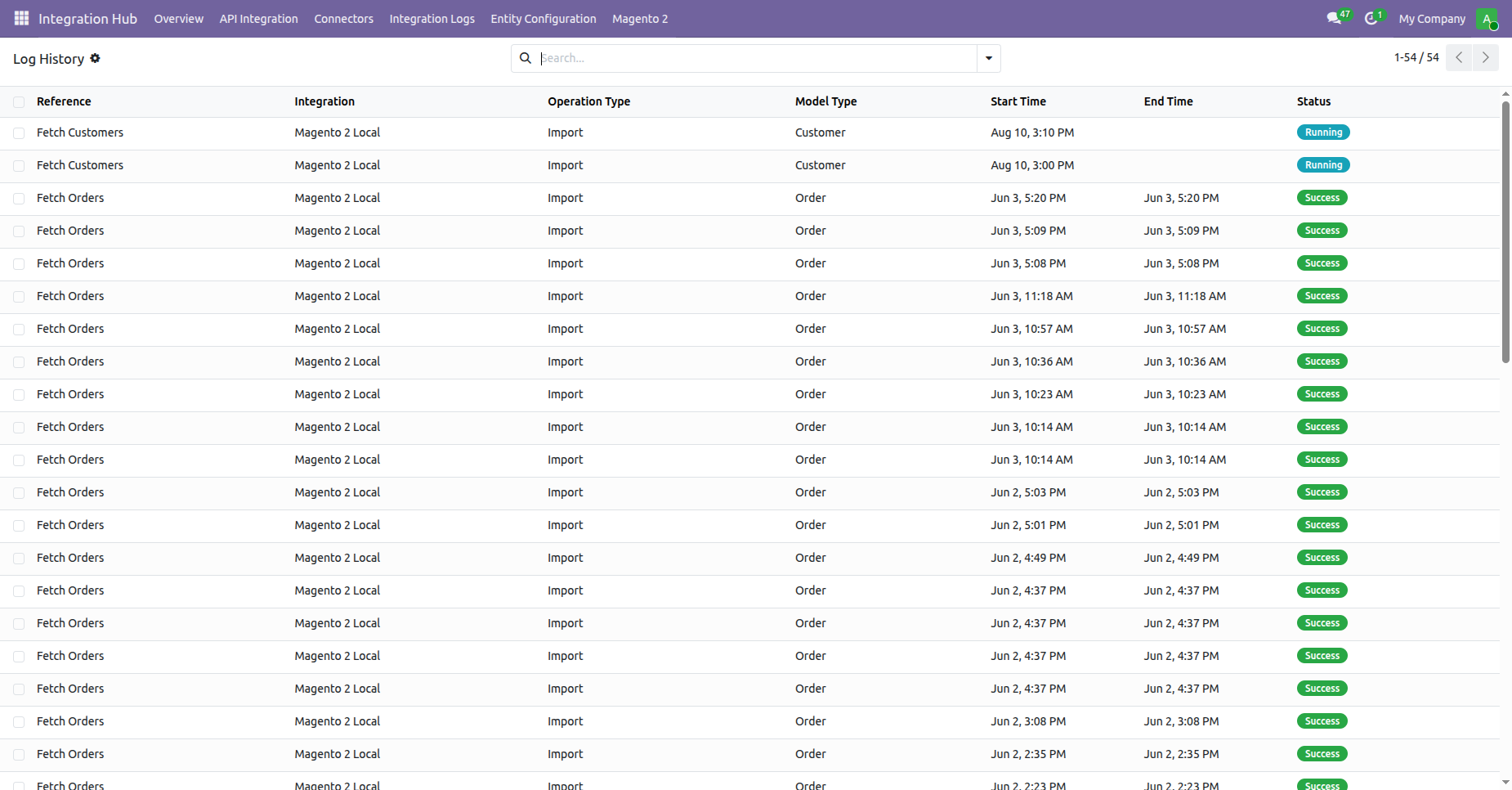
Open Log History from the Magento 2 menu to review integration activity records.
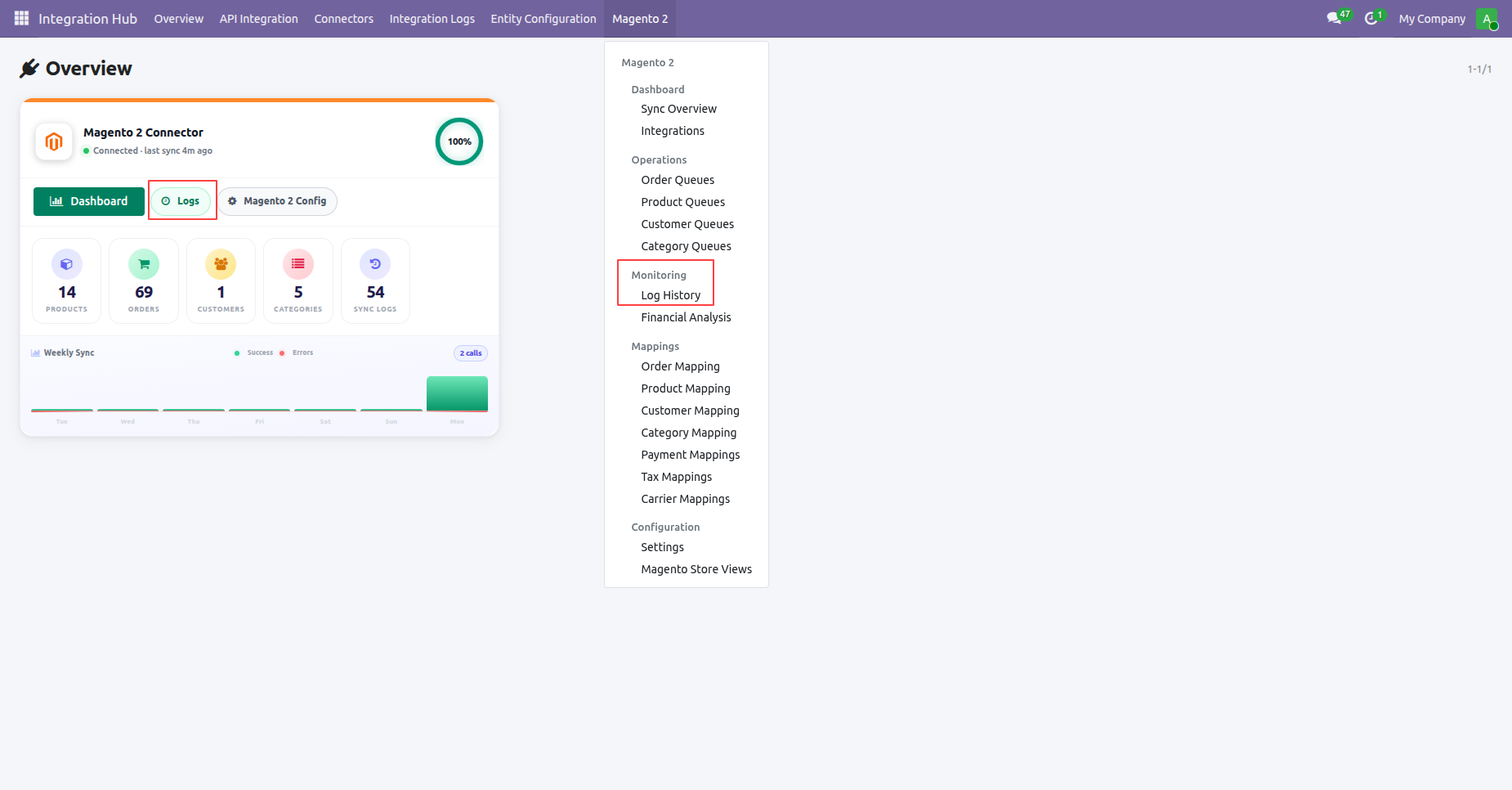
Log history list view.
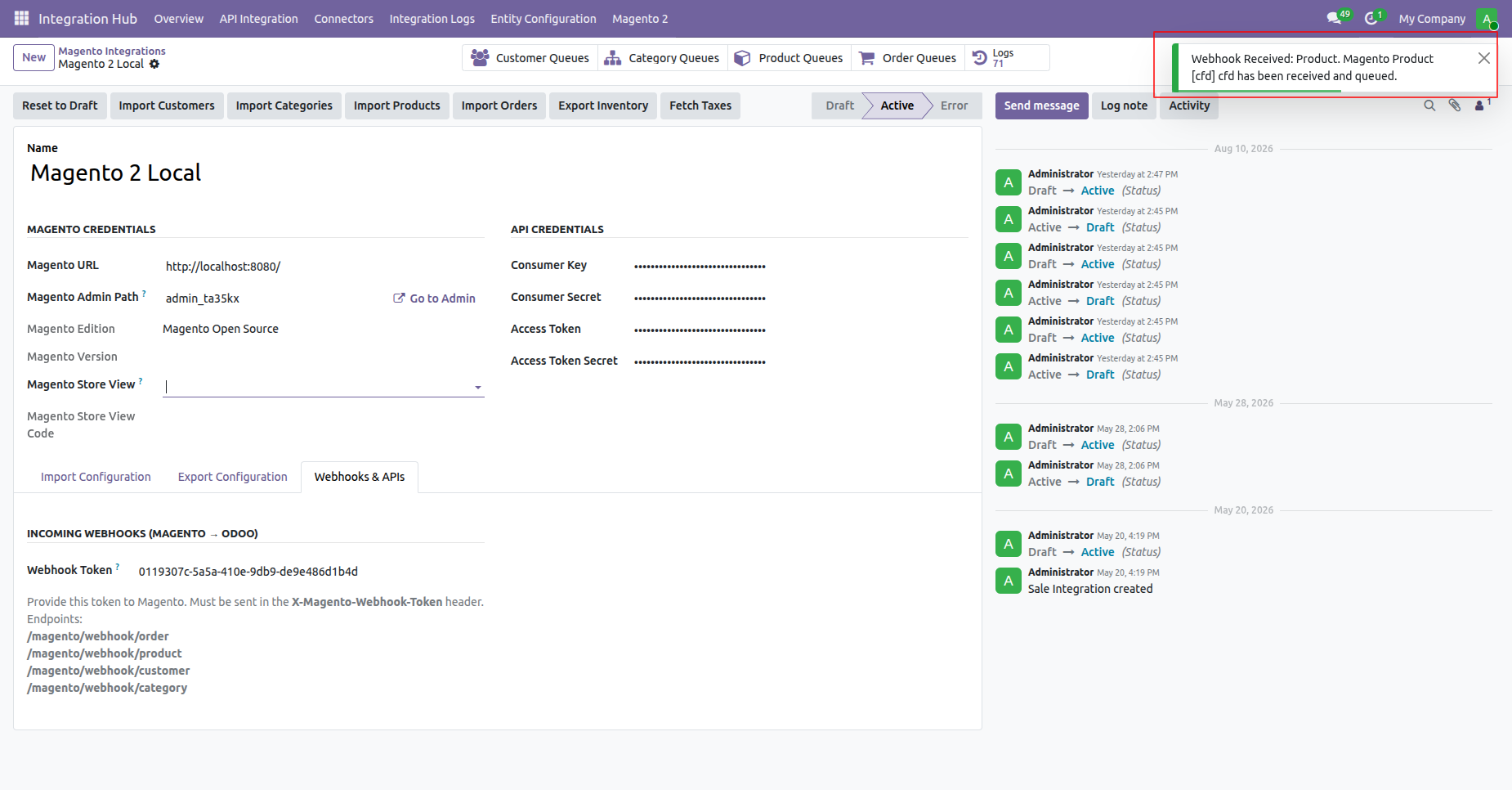
Open the Webhooks and APIs tab.
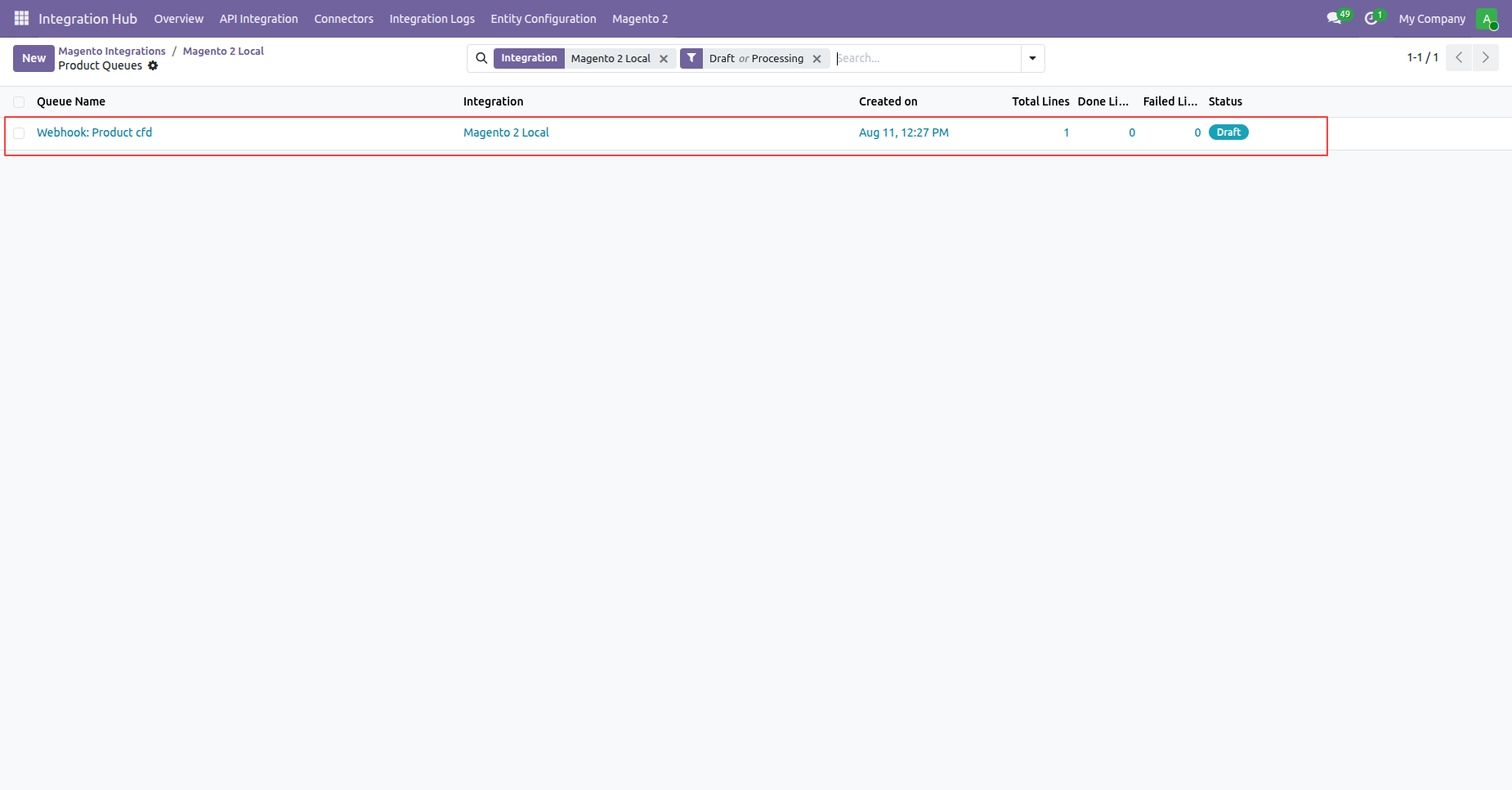
Review the queue.
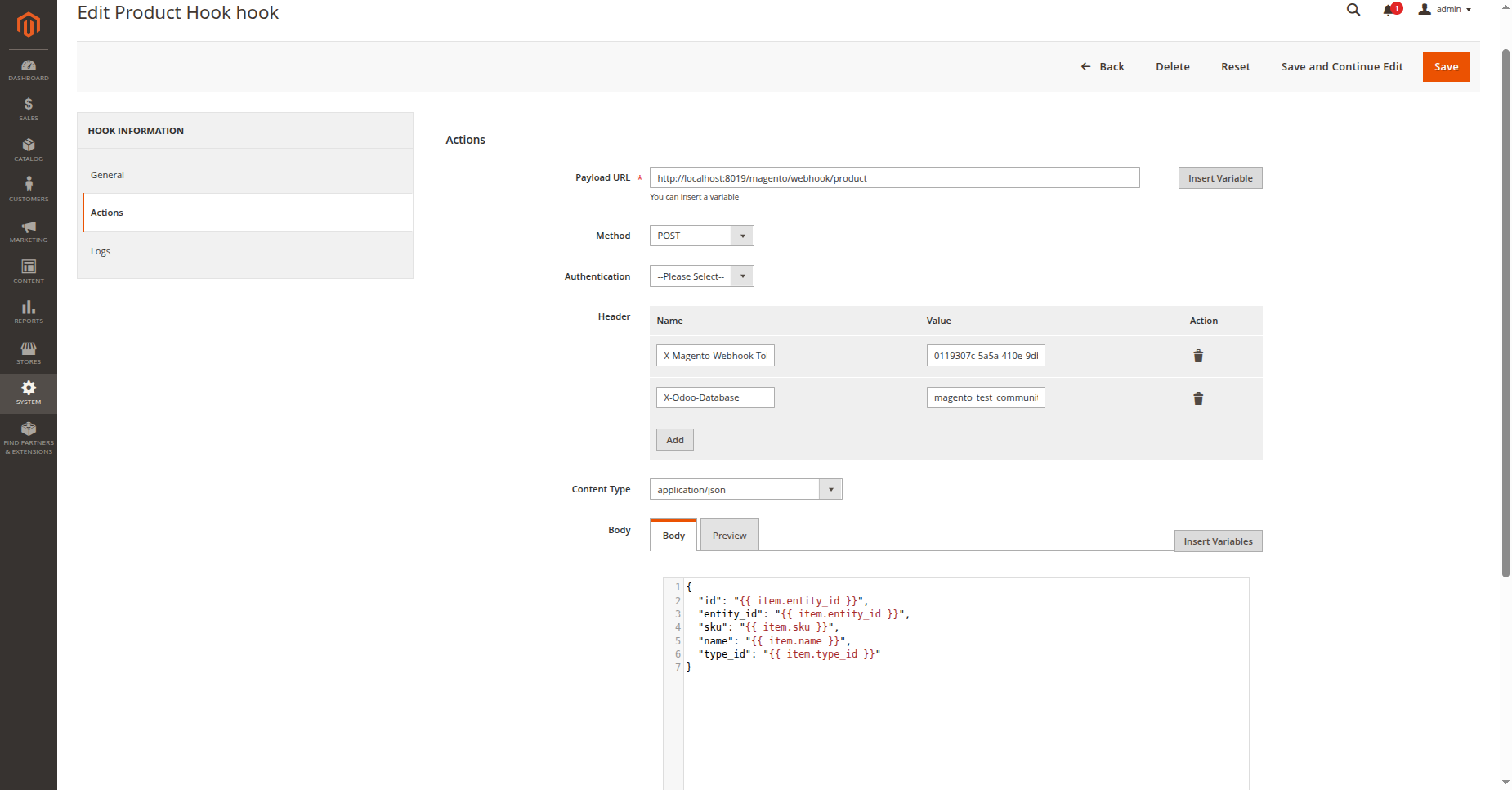
Review the product webhook details.
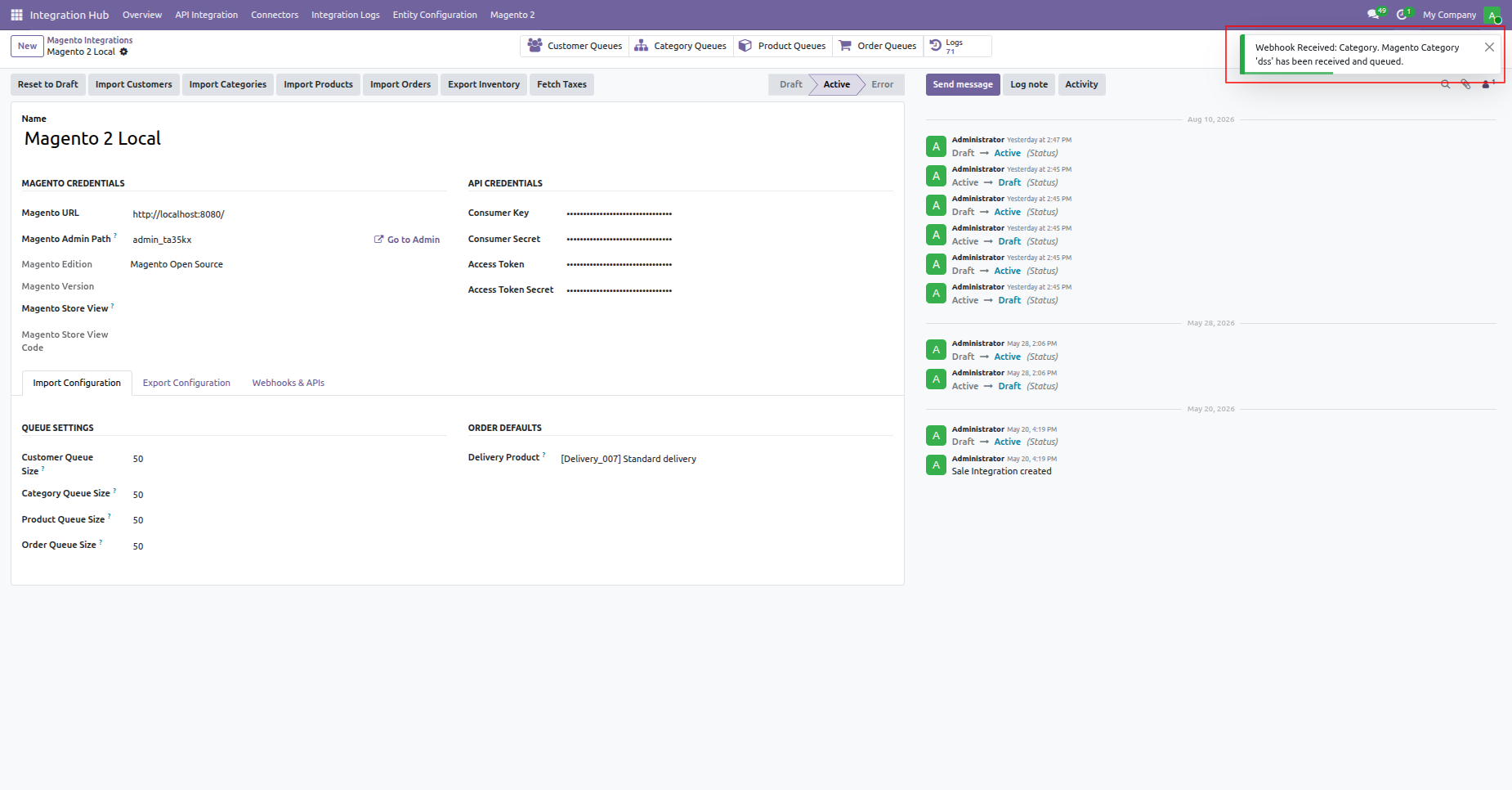
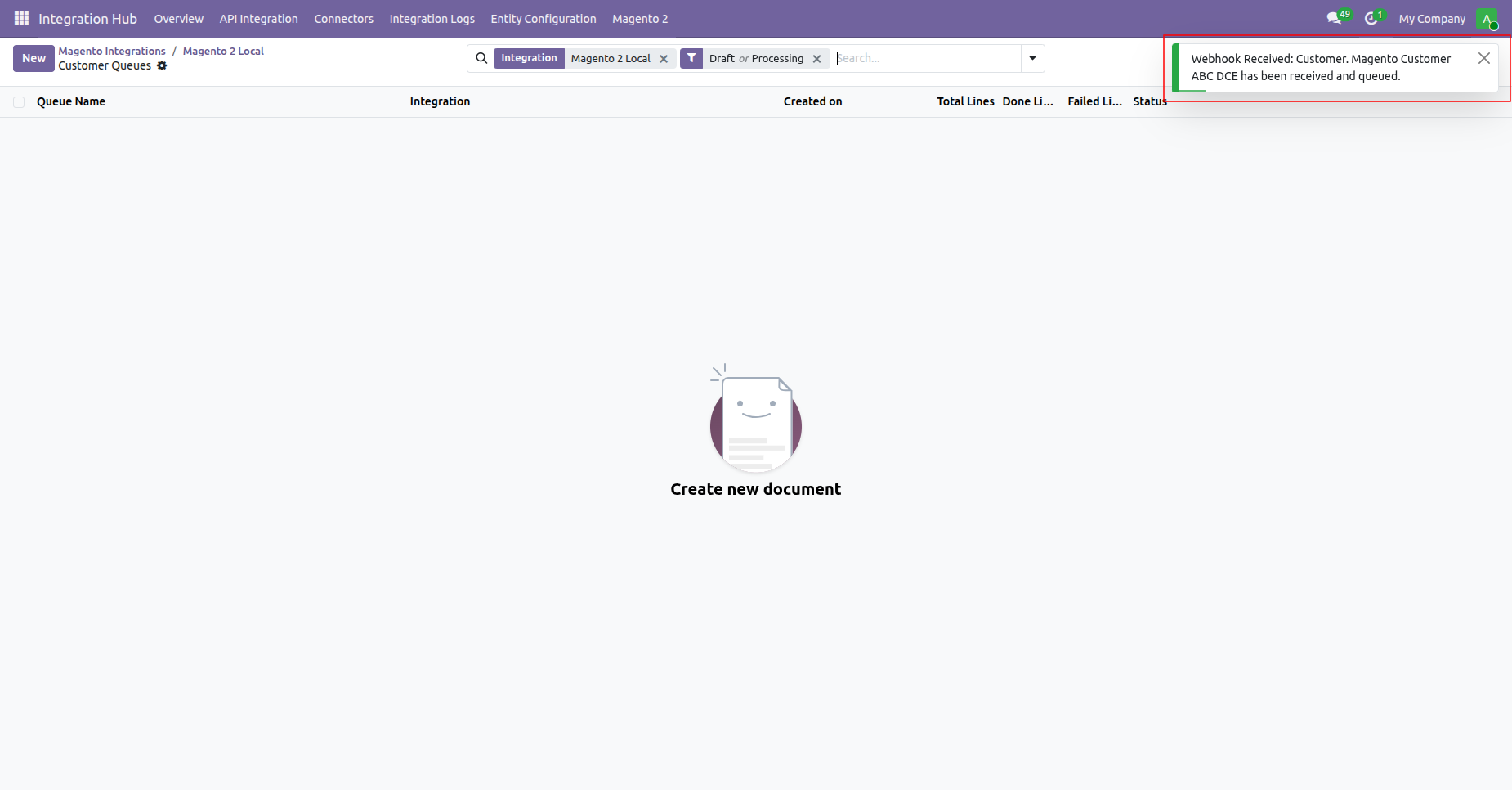
Webhook received notification.
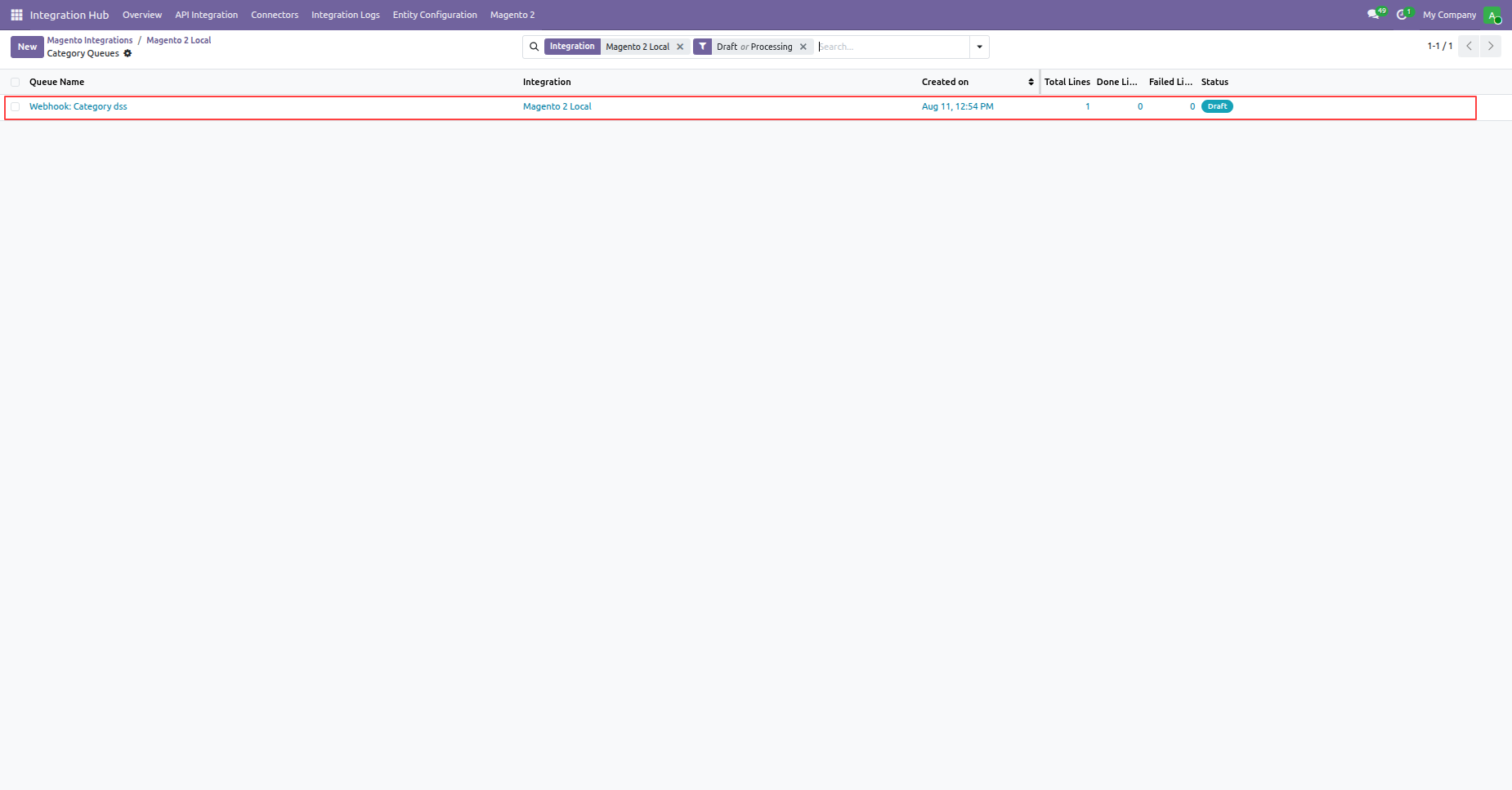
Review the category webhook queue record created for the incoming category event.
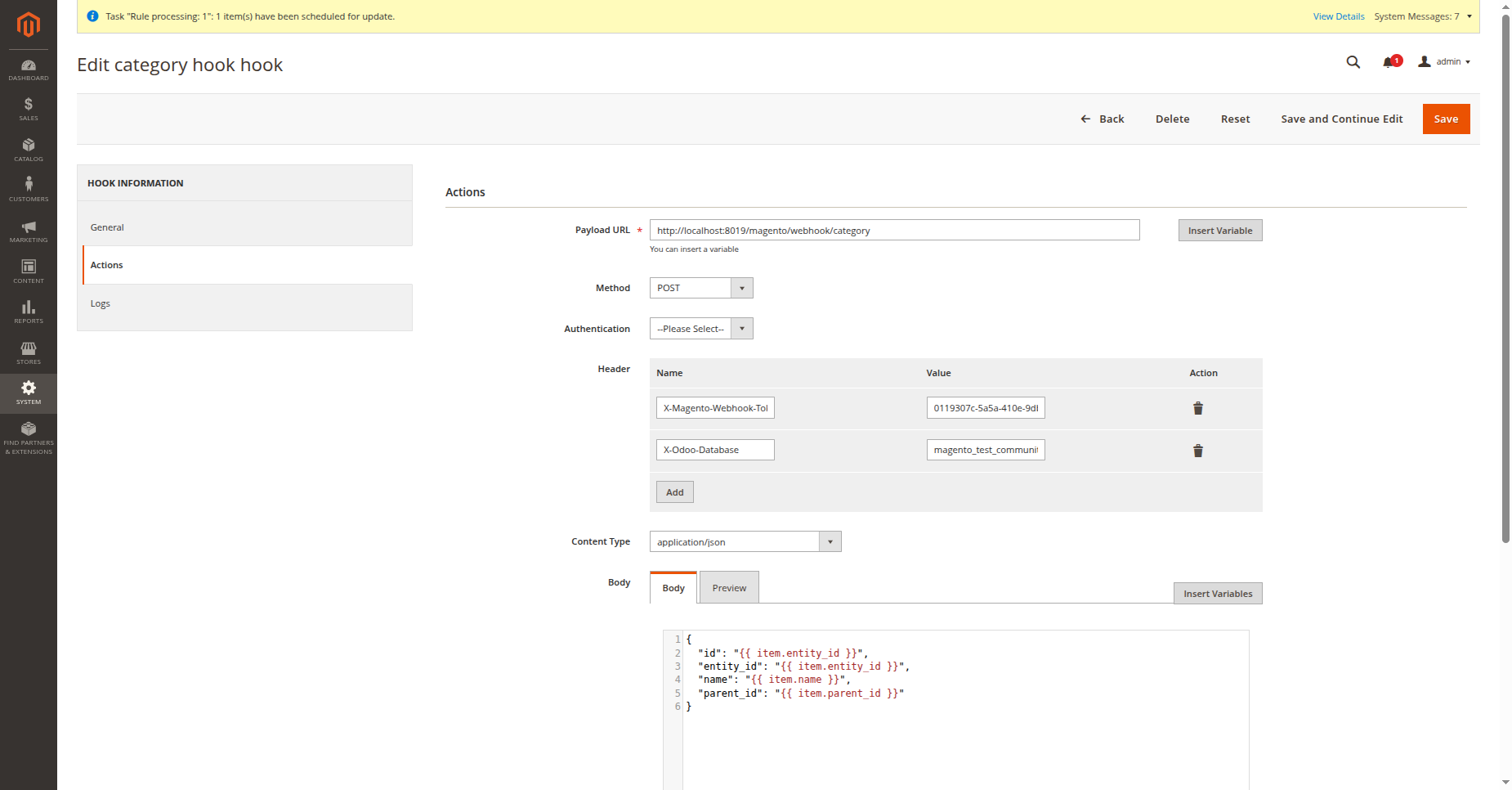
Review the category webhook details.
Webhook received notification.
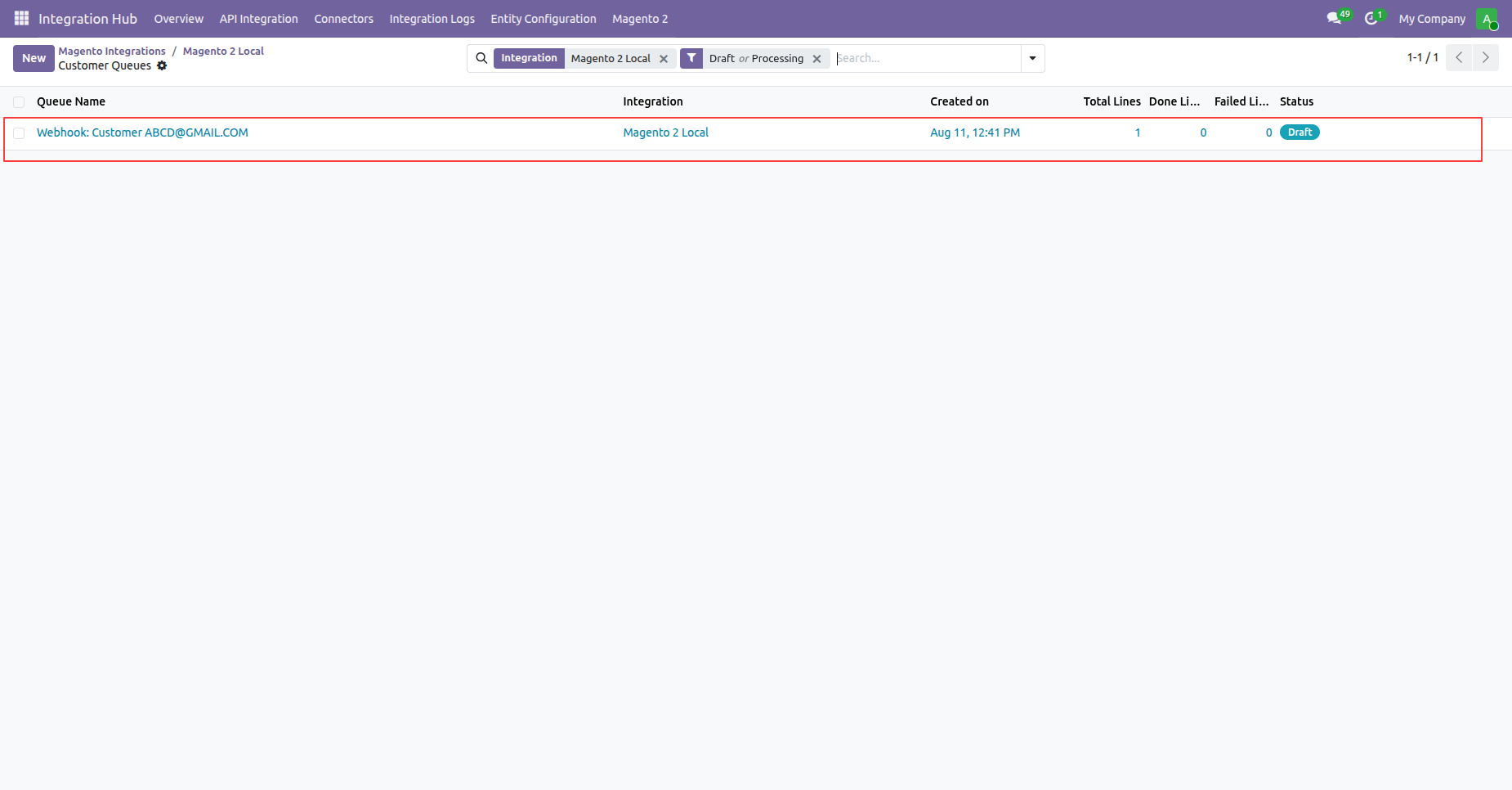
Review the customer webhook queue record created for the incoming customer event.
Review the customer webhook details.
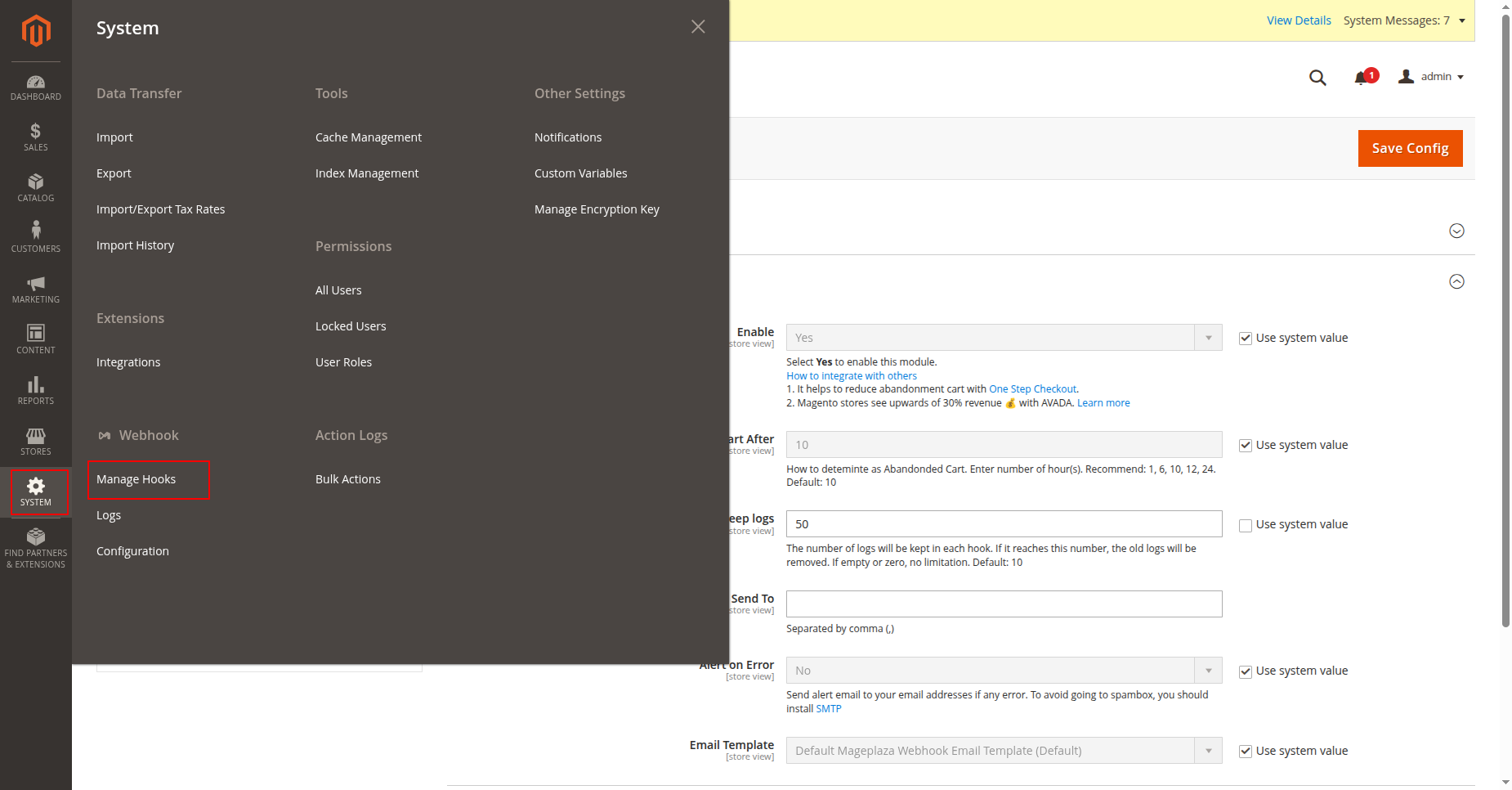
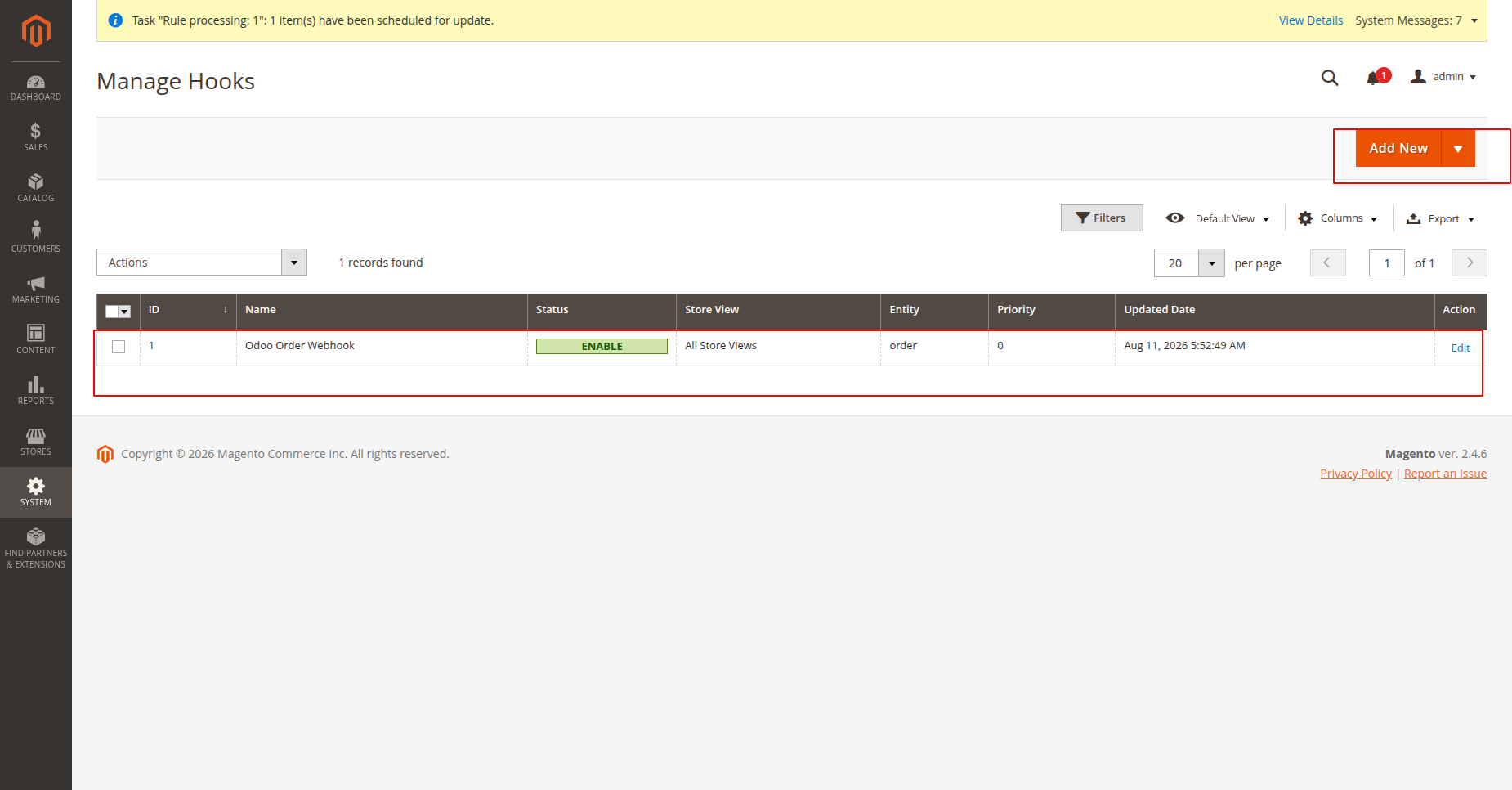
Open System and select Manage Hooks to configure Magento sales order webhooks.
Click Add New to create a webhook, or select an existing hook to edit.
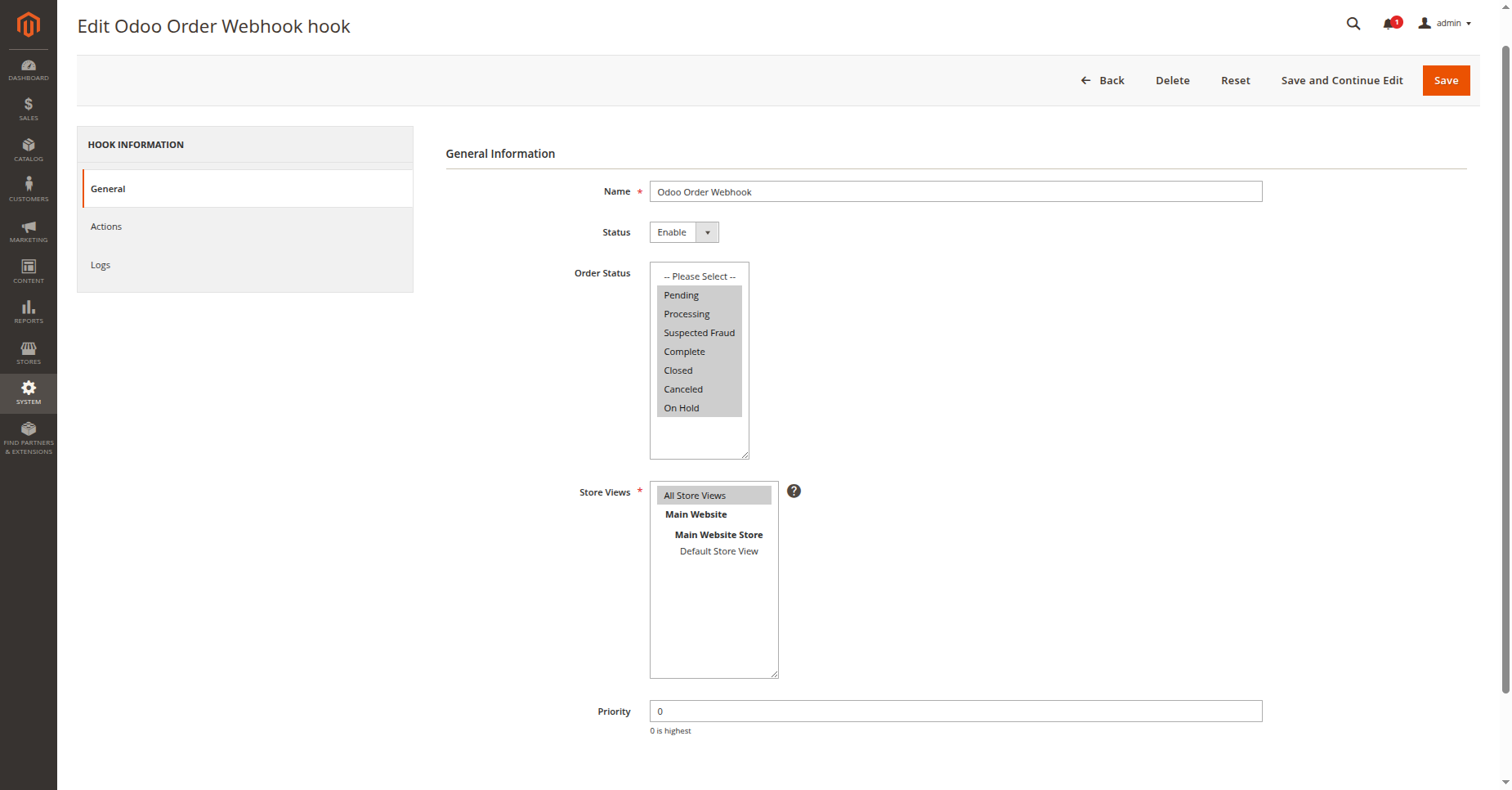
Enter the hook details, status, order status, and store views on the General tab.
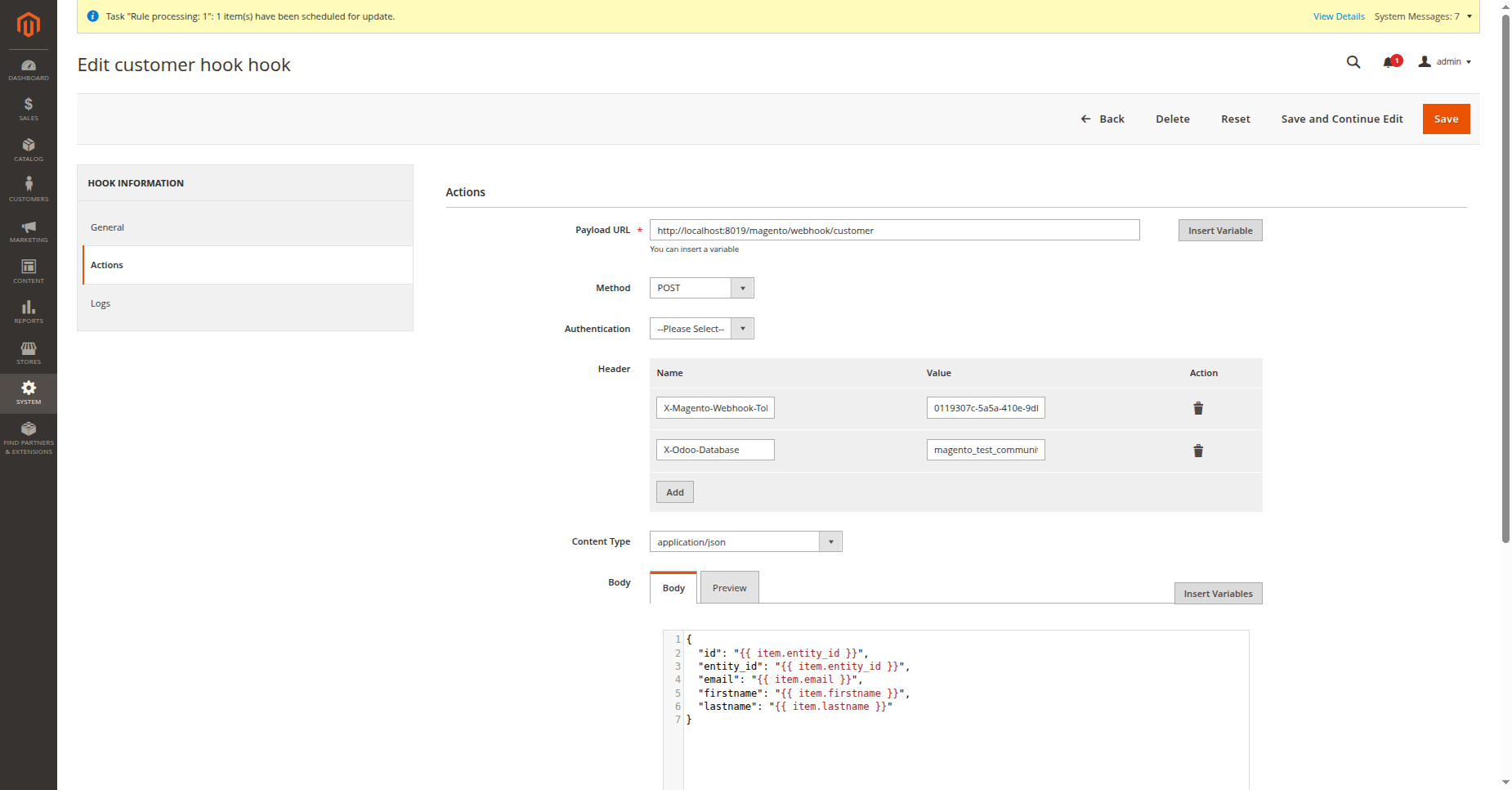
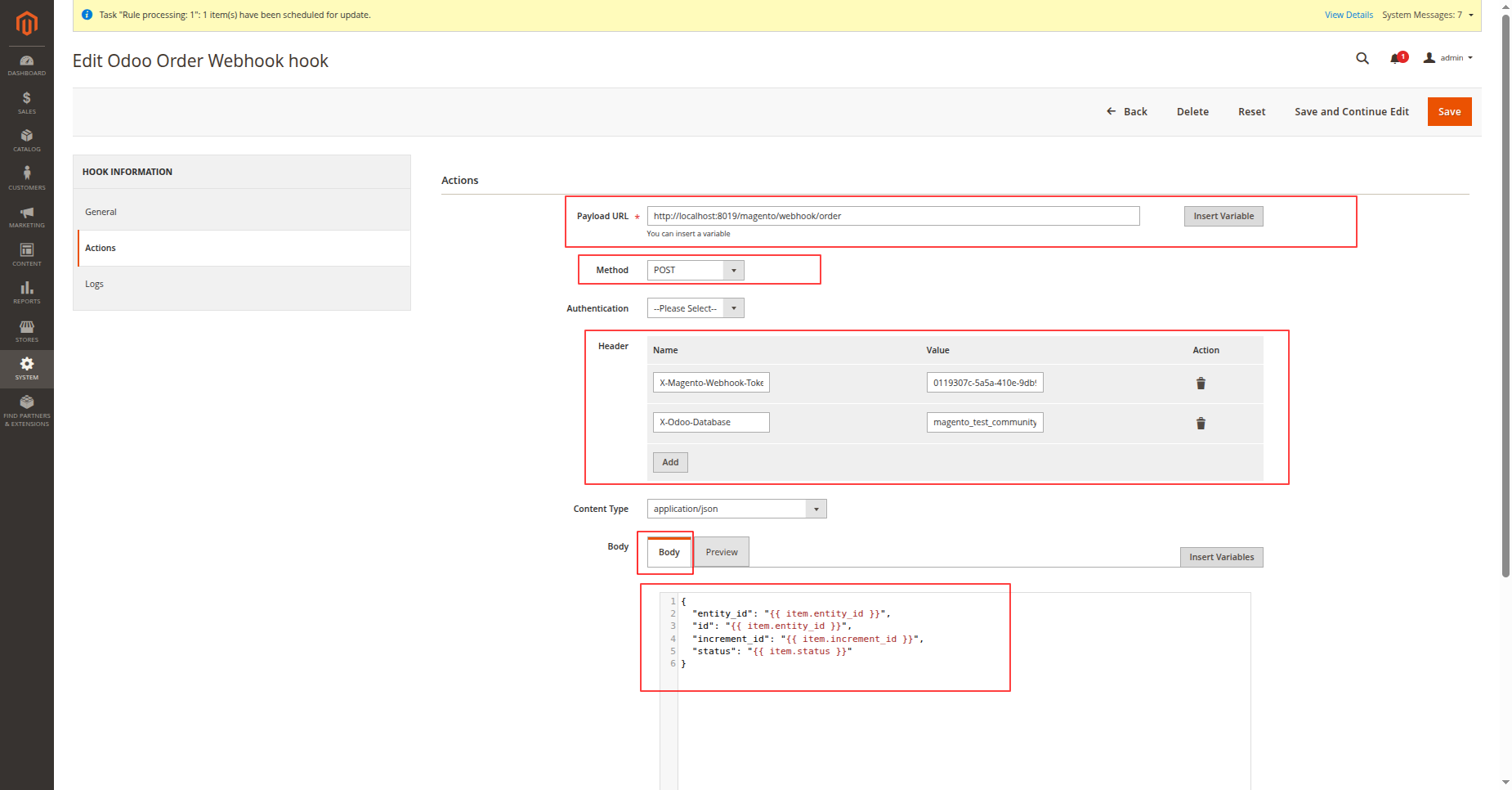
Enter the destination URL, POST method, headers, and JSON body on the payload tab.
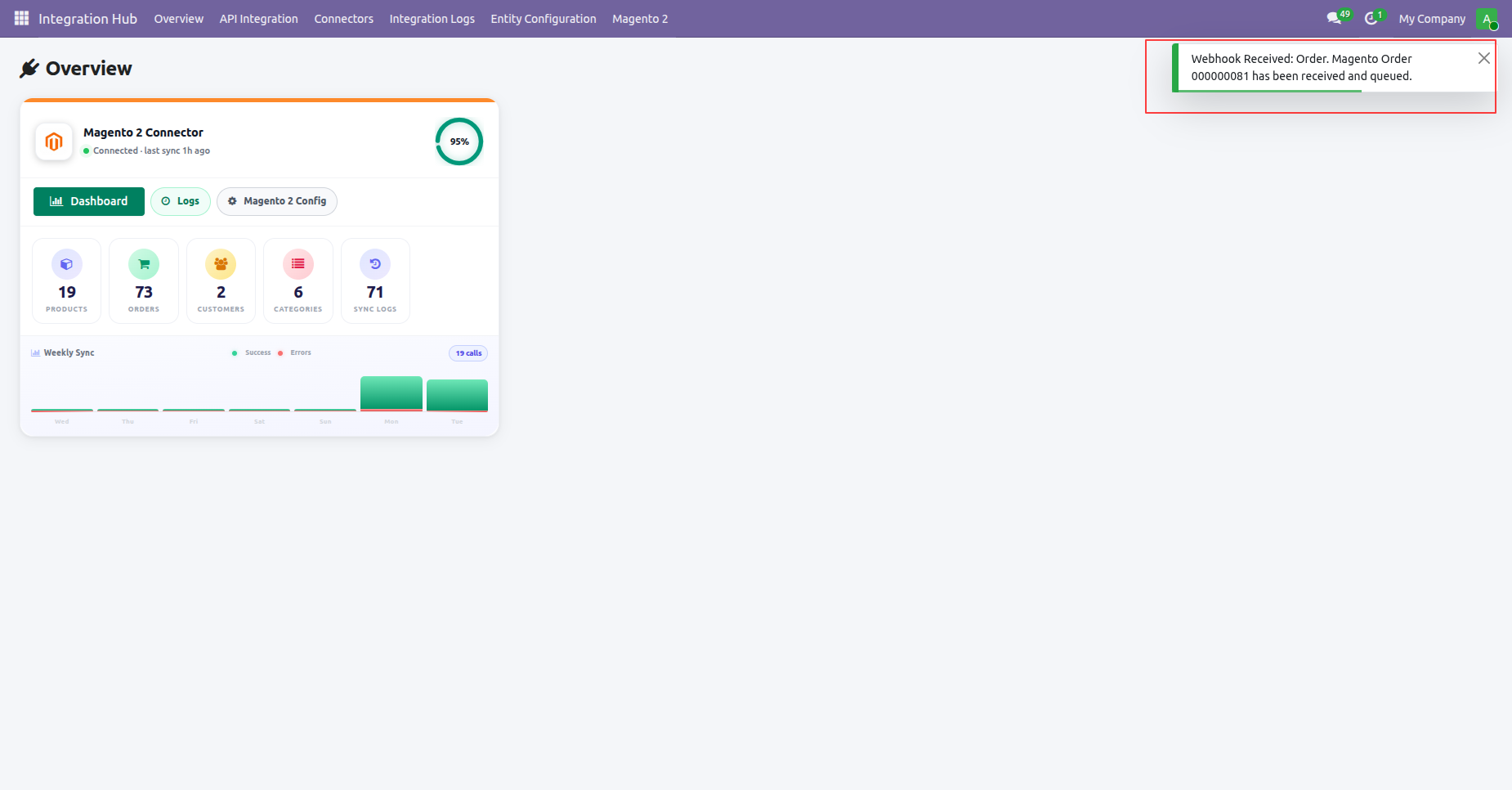
Review the success notification confirming that the incoming webhook was received.
Open the created order queue to review the webhook-generated sales order line.
Open the imported sales order to review its Magento reference and order lines.
Review the corresponding Magento order record and its customer order details.
Changelog
Track every update and new feature released for this module.
Initial Release.

 Buy Once,
Supported Forever
Buy Once,
Supported Forever



 Scan to email sales







 Your Ideas Shape
Our Roadmap
Your Ideas Shape
Our Roadmap

 Got an Idea?
We'll Build It
Got an Idea?
We'll Build It
Trusted by Businesses Worldwide


Abdulhamid Abdulwaheed
Best module for our online store. Highly adaptable, exceptional customer service, and very advanced modules.
Factura Venta POS
They have everything you need. Technical support is excellent, responds quickly, and keeps the module updated. 100% recommended!
Mehmet Muhanna
Great company and support team. Had a problem in my local Odoo server - they solved it in 5 minutes. Highly recommend.
Billy Jeffs
Customised an Odoo app for me which works perfectly. Many requirements, got it right every time. Very confident in their ability.
HP
Consistently excellent service over years of working together. Knowledge and commitment to keeping clients informed truly sets them apart.
Michal Kolasinski
Multiple addons + two custom modules. Communication always friendly and precise. Delivered on time, worked out of the box. Highly recommended!

Multi-Language
8 built-in translations







You May Also Like
Discover more Softhealer modules that integrate seamlessly with your Odoo environment.

Shopify-Odoo Connector
Connect Shopify with Odoo to synchronize products, orders, customers, inventory, and more.
View Module

Xero Connector with OAuth2.0 for Odoo
Securely synchronize contacts, products, orders, invoices, payments, and accounting data between Odoo and Xero.
View Module

Odoo QuickBooks Connector
Connect Odoo with QuickBooks to synchronize essential business and accounting data.
View Module

Hubspot Odoo Connector
Synchronize contacts, companies, leads, opportunities, tasks, emails, and meetings between Odoo and HubSpot.
View Module


Most Demanded Apps
The Softhealer modules our customers reach for most - trusted across 100+ countries.

Activities Management
Manage, schedule, and automate Odoo activities across all departments from one view.
View Module

Access Management
Granular access control over menus, fields, buttons, and records for every user role.
View Module

Backdate Advanced
Backdate any transaction across invoices, journals, pickings, and more with full audit.
View Module

All-in-One Helpdesk
Full-featured customer support with tickets, SLA, and customer portal built for Odoo.
View Module

All-in-One Mobile Backend
Access your full Odoo backend from any mobile device with an optimised interface.
View Module

All-in-One Import
Import data from Excel or CSV files into any Odoo model with smart field mapping.
View Module
Our Services
End-to-end Odoo expertise - from setup to scale.

AI & Business Integration

Odoo Implementation

Odoo Customization

Support & Maintenance

Mobile Apps

Migration Service

Third-Party Integration

Odoo Training
Ready to connect your AI to Odoo?
Join 10,000+ businesses - Softhealer, 11+ years of Odoo expertise across 100+ countries.

